


Oh My Hermes: Agent Plugins Need Ops
github.com/rlaope/oh-my-hermes | License: MIT
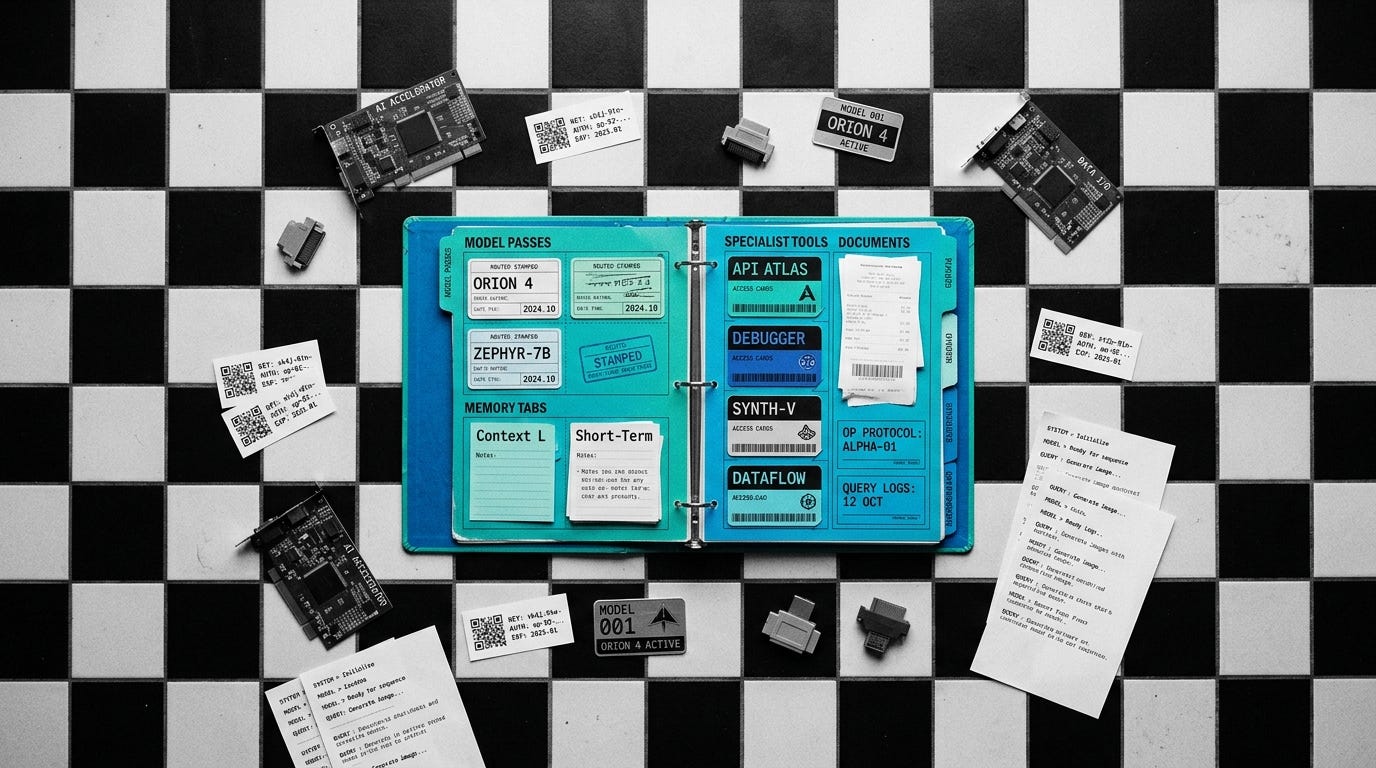
An AI coding session goes sideways in a very specific way. The model picks the wrong tool, burns context on busywork, forgets what happened twenty minutes ago, then hands back a confident summary with just enough truth to be dangerous. That failure mode is getting familiar across Claude Code, Codex, and every terminal-first agent wrapper. Oh My Hermes matters because it treats that mess like an operating problem, not a prompt problem. Honestly, that distinction is where a lot of the current agent stack still feels immature.
The Drop: When Smart Agents Act Scatterbrained
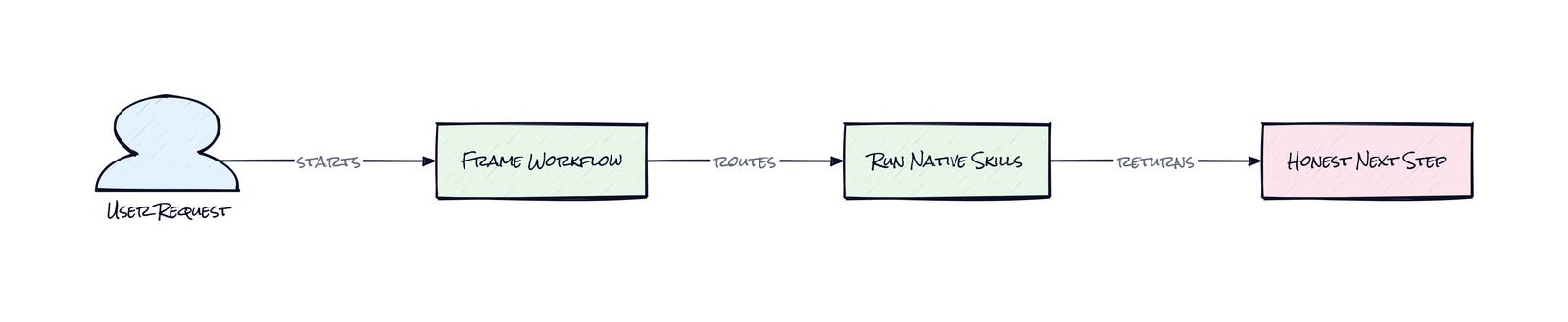
Plenty of agent tooling assumes the hard part is model quality. Yet the more painful issue is coordination drift, when a capable model gets dropped into a fuzzy workflow and starts freelancing. Hermes Agent already gives a natural-language interface for coding work, but teams still need routing, memory, specialization, and evidence rules that survive beyond a single chat turn.
OMH, the repo’s shorthand for Oh My Hermes, was built for that gap. A plain Hermes request gets upgraded into a governed path: which model should handle this category, which skill should fire, what counts as proof, and what should be remembered for later. That sounds slightly bureaucratic until the alternative shows up, an agent that silently downgrades models, loses project context, or reports progress nobody can verify.
The frustration here is not that AI agents are weak. It’s that they’re inconsistent in exactly the places where serious work breaks, handoffs, long-running tasks, and the awkward middle between “answer my question” and “own this project.”
The Stack: Python in Front, Multi-Agent Plumbing Underneath
Under the hood, Oh My Hermes is primarily Python, wrapped around Hermes Agent with a command layer, packaged installers, and a large library of skills and workflow modules. The repo also mixes in JavaScript for a few design-facing examples, but the core story is Python orchestration, local state management, model routing, and CLI-based executor integrations.
The Sauce: Evidence Gates Beat Raw Autonomy
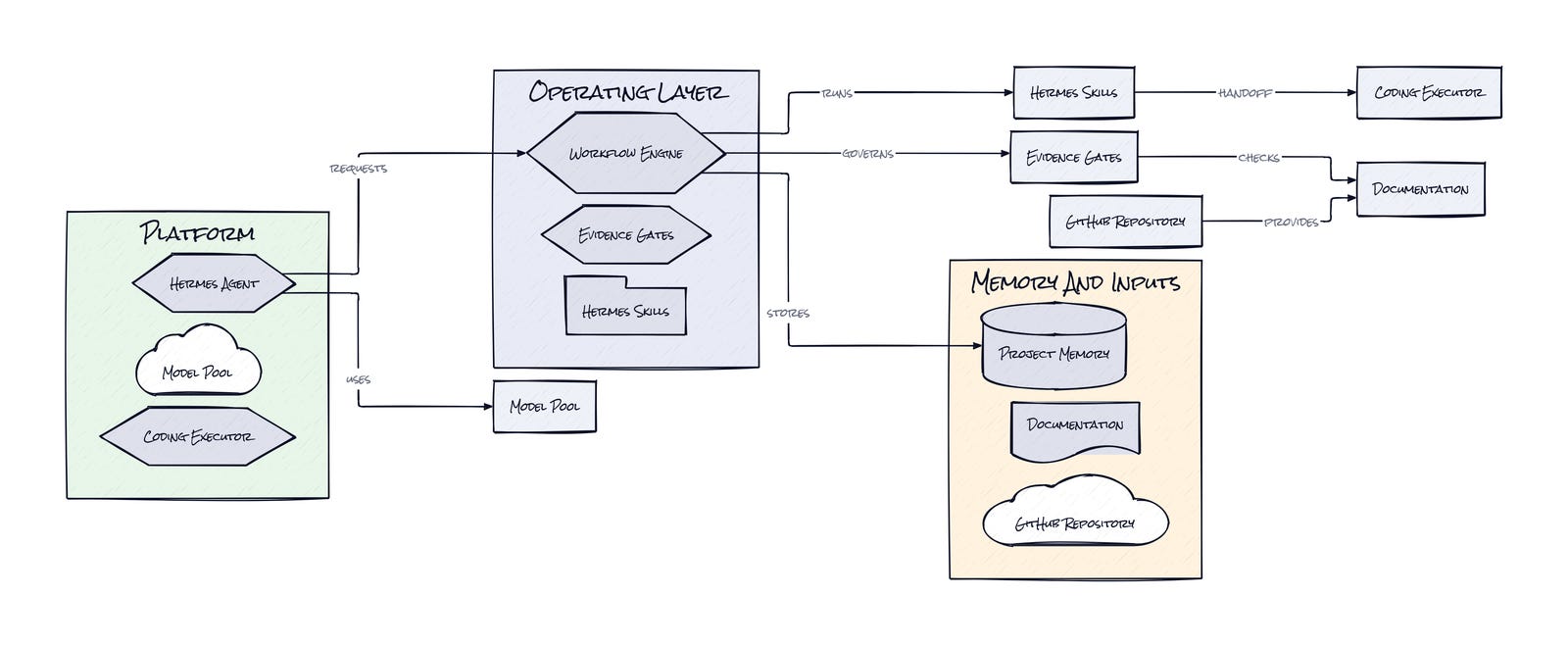
What makes Oh My Hermes interesting is its operating layer approach. The system does not just add more skills to Hermes. It inserts a policy and routing tier above the agent, then treats skills, model chains, memory, and executor handoffs as governed capabilities inside that tier. That architecture is way more important than the long feature list.
A few named concepts reveal the design. Model chains let categories like quick work, architecture, writing, or deep analysis map to different models and effort levels, with explicit refusal if an executor cannot serve the requested model. That sounds subtle, but it fixes a nasty trust problem: silent fallback makes users think a premium reasoning path ran when a cheaper or weaker one actually did. Oh My Hermes would rather block than pretend.
Then there are evidence boundaries, which are basically honesty rails for agent output. The repo keeps separating claims from observed results, and progress from proof. That matters because agent tooling often collapses those into one cheerful paragraph. Here, progress tracking, receipts, and validation logic are treated as first-class architecture, not UI garnish.
The third clever move is the plugin bundle itself. Instead of one monolithic “super agent,” Oh My Hermes packages many specialist skills, long-term memory components, workflow presets, and codebase mapping tools under a single install surface. Think Notion templates crossed with an MDM layer for AI agents. The plugin is opinionated about how work should flow, but still modular about which specialist capability gets invoked.
Honestly, the interesting part is not autonomy. It’s governed delegation.
The Move: Turn Hermes Into a Managed Worker
Founders, PMs, and technical operators could use Oh My Hermes in a very practical way: standardize how AI coding gets done across a team without forcing everyone into the same model vendor or IDE. Install it once on top of Hermes, run setup, and the result is a more structured worker that can route lightweight requests cheaply, escalate heavier tasks to stronger models, and keep a memory of project decisions.
That creates three concrete advantages. First, cost control. Per-category model routing means bug triage, refactors, research, and architectural planning do not all hit the most expensive option by default. Second, reliability. Evidence-gated outputs and progress receipts make handoffs safer when multiple people touch the same codebase over time. Third, portability. Because Oh My Hermes sits above Hermes rather than replacing it, teams can keep the natural-language interface they already like while layering in more discipline.
For anyone experimenting with AI-assisted product builds, this is less “toy plugin” and more internal operating playbook in repo form. That is useful.
The Aura: Trust Becomes a Product Surface
People are starting to expect AI systems to do more than answer. They should remember, choose tools sanely, explain what happened, and avoid bluffing when the evidence is thin. Oh My Hermes leans into that expectation and treats reliability as something users can feel, not just something benchmark charts claim.
That nudges behavior in a bigger way. Instead of babysitting every step, operators can start managing AI work like delegated work, with categories, standards, and auditability. The psychological shift is small but meaningful: confidence stops coming from charisma and starts coming from structure.
The Play: Governance Layers Usually Get Sticky
From a VC lens, Oh My Hermes looks less like a 0-to-1 new category and more like a sharp wedge into the emerging agent operations stack. TAM is broad because every company testing terminal agents, coding copilots, or internal AI workflows eventually hits the same bottleneck: orchestration quality, trust, and cost discipline. The early PMF signal is not just the 1,946 stars, it’s the speed of adoption for a repo created recently, plus the unusually opinionated documentation, benchmarks, and community touchpoints that suggest users are not merely starring, they’re operationalizing.
Moat is not data yet. The near-term moat seems like execution speed, workflow design, and switching costs created by encoded team habits. If users train their organization around governed model chains, evidence receipts, and reusable skills, LTV rises because the behavior change gets embedded in daily work, while CAC can stay low through open source distribution.
Winners:
Pipedream: More demand accrues for glue platforms that connect governed agents to the rest of a company stack, and that compounds as AI workflows need triggers, logs, and downstream actions.
Cursor: More serious adoption of coding agents benefits products already close to developer workflow, especially when external operating layers make model choice and orchestration feel safer at scale.
Oracle: More enterprise interest in auditable AI execution favors incumbents that can package governance, infrastructure, and procurement comfort into one budget line.
Losers:
Sweep AI: More standardized agent operating layers erode differentiation for point solutions built around “AI handles your coding tasks” when buyers start demanding policy, receipts, and modular control.
Replit: More workflow discipline around external agents weakens the all-in-one environment pitch, because serious teams may prefer portable orchestration over a bundled workspace.
Intuit: More trustworthy AI-assisted building lowers the friction to create internal tools and workflow automations outside legacy business software suites, which chips away at small-business software lock-in.
tl;dr
Oh My Hermes turns Hermes Agent into a managed operating layer with model routing, long-term memory, specialist skills, and evidence-aware receipts. The clever bit is the governance architecture, especially model chains and proof boundaries. Teams experimenting with AI coding, research, or ops workflows should take a look.
Stars: 1,947 | Language: Python
