



PentAGI: Security Teams, Minus the Busywork
github.com/vxcontrol/pentagi | License: MIT

A real pentest rarely fails because tools are missing. It fails because attention is finite. Someone has to chain recon, context gathering, exploit attempts, note-taking, and reporting without losing the thread halfway through. PentAGI goes straight at that bottleneck. Not by making another dashboard for alerts, but by turning offensive security work into something an autonomous system can actually sequence, remember, and document. That distinction matters. Plenty of AI security demos can call a tool once. Very few can sustain a coherent investigation.
The Drop: The Pain Is Not Scanning, It’s Chaining
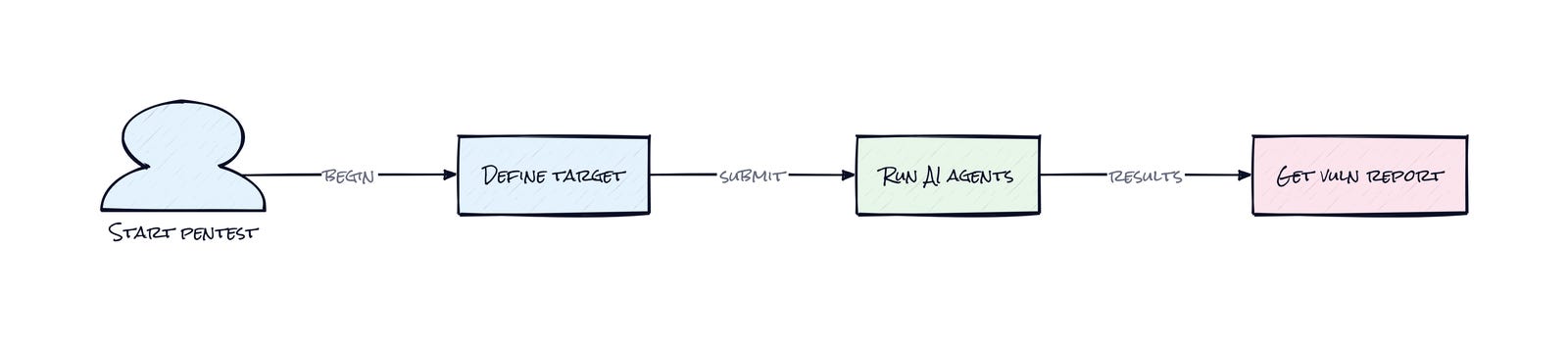
Security teams already have scanners, exploit frameworks, browser automation, search tools, and enough terminal muscle to fill a small warehouse. The annoying part is stitching those pieces into a real workflow under time pressure. A finding from one step needs to shape the next step. A dead end should stop wasting tokens and time. Evidence has to be preserved, not left scattered across terminals, screenshots, and half-finished notes.
PentAGI exists because autonomous security work breaks down exactly where generic agents break down. Penetration testing is not just “call a tool and summarize output.” It is a sequence of branching decisions inside an adversarial environment, where context changes constantly and mistakes are expensive. A model that forgets a prior port scan, loses track of credentials, or repeats the same failed path is not just annoying, it is operationally sloppy.
Plenty of products sell AI for security as a chat layer on top of logs. PentAGI points at a tougher category: offensive workflows that require memory, planning, and isolated execution. Honestly, the frustration here is older than AI. Pentesting has always had an orchestration problem. Large models just made that gap impossible to ignore.
The Stack: Go Where Reliability Matters
Under the hood, PentAGI pairs a Go backend with a React and TypeScript interface, then fans out into GraphQL APIs, PostgreSQL with pgvector, and optional Neo4j via Graphiti for graph memory. Containerized services handle tool execution, scraping, observability, and analytics, which makes the whole system feel less like a chatbot and more like a security control plane.
The Sauce: Memory Plus Isolation Beats Agent Theater
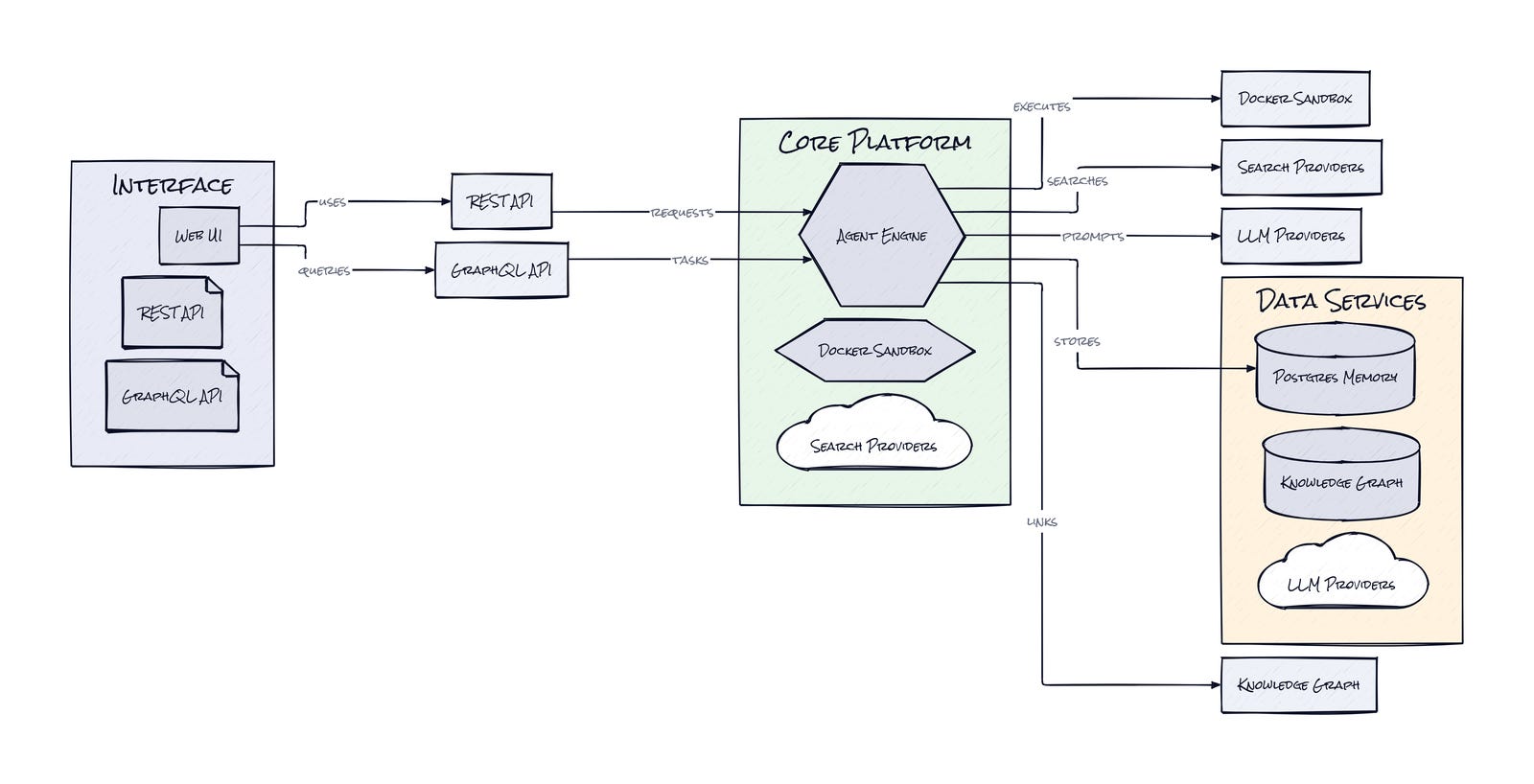
What makes PentAGI interesting is the way sandboxed execution and Smart Memory System get treated as first-class architecture, not nice-to-have extras. The project gives agents isolated Docker environments for actually running offensive tooling, while storing commands, outputs, and prior findings in a persistent retrieval layer. That means the model is not relying on a single giant prompt to “remember” what already happened. PentAGI externalizes state.
That design choice matters because penetration testing generates messy, high-volume context. Port enumerations, credential guesses, web artifacts, exploit notes, screenshots, external search results, all of that becomes too big and too volatile for naive chat memory. PentAGI splits this into a durable record in PostgreSQL and vector search, then optionally adds Knowledge Graph Integration, where Graphiti and Neo4j track relationships between entities and findings. A knowledge graph is useful here because security work is relational by nature. Host A exposed Service B, which reused Credential C, which unlocked App D. Vector search finds semantically similar notes, but graph structure preserves the why this connects logic.
Another smart call is the Team of Specialists model. Instead of one monolithic agent juggling recon, research, tooling, and infrastructure reasoning, PentAGI delegates across specialized roles with supervision. Think less “one genius bot” and more “small offensive crew with shared memory and a manager.” That is clever because specialization reduces prompt overload, and supervision creates a checkpoint layer where failure can be inspected instead of silently compounded.
The Move: Turn Pentests Into Repeatable Systems
Plenty of teams could use PentAGI as a force multiplier long before trusting it with full autonomy. A consultancy could run it inside isolated client environments to accelerate recon, preserve every action, and produce cleaner reports with less analyst drudgery. An internal security team could point PentAGI at staging environments after major releases, using the system as a persistent operator that remembers what worked in past assessments and retries those paths when the app changes.
Founders building security products should notice the API surface too. PentAGI exposes both REST and GraphQL, which means it can be embedded into a broader workflow, e.g. ticket creation, retest queues, or compliance evidence pipelines. That is where the strategic edge shows up. Not in replacing elite red teamers overnight, but in productizing the repetitive scaffolding around offensive work.
Smaller teams also get a budget angle. PentAGI supports multiple model providers, including local and self-hosted options, so the economics are tunable. That matters when autonomous systems are burning context across long sessions. The practical play is to start with bounded scopes, e.g. web app recon or recurring verification tasks, then expand once the memory and reporting loop proves reliable.
The Aura: Expertise Starts Looking More Available
Security work changes when good process becomes easier to instantiate than to explain. A junior analyst with a strong environment and persistent context can behave more like a coordinated team than a lone generalist tabbing between tools. That does not erase expertise, but it does compress the distance between knowing about a workflow and executing one consistently.
PentAGI hints at a future where operator quality is partly encoded in systems, not just individuals. Users may start expecting investigations to come with complete evidence, repeatable logic, and machine-readable memory by default. That expectation seems sticky.
The Play: Agentic Security Has Real Budget
PentAGI looks less like a 0-to-1 market creation and more like a sharp wedge into the enormous security ops and offensive testing TAM. The category already has spend, urgency, and painful labor costs. What this repo demonstrates is early PMF signal for autonomous workflow tooling inside security, especially given 23,821 stars, strong community channels, and a design that goes beyond demo-grade agent wrappers. The moat is probably not raw model access. It is execution quality, deployment trust, workflow memory, and the dataset that accumulates once teams run recurring assessments through the same system.
Winners:
Archipelo: Faster lightweight exposure testing for cloud estates compounds because autonomous offensive checks can become a default layer in every account onboarding flow.
Snyk: Stronger positioning around developer-to-security workflow continuity grows if offensive validation becomes another automated step beside code and dependency scanning.
Palo Alto Networks: Broader platform gravity increases when customers want AI-assisted verification and reporting attached to existing security spend, not bought as another point tool.
Losers:
HackerOne: Margin pressure rises on lower-complexity pentest engagements because some recurring validation work gets pulled in-house with autonomous tooling.
Bishop Fox: Services differentiation erodes at the commodity end of the market when clients can automate recon, evidence capture, and retest loops themselves.
Qualys: Scanner-centric value looks thinner when buyers start expecting planning, chained execution, and persistent investigative memory rather than static findings lists.
tl;dr
PentAGI turns autonomous penetration testing into a structured system with isolated tool execution, persistent memory, and specialist agents that can coordinate over longer investigations. The clever bit is the architecture, especially the mix of vector memory, optional graph memory, and supervised delegation. Security teams, consultancies, and founders building AI security products should look.
Stars: 23,822 | Language: Go
