


Dsh Purge: Alignment Looks Easier Than It Is
github.com/YuJunZhiXue/dsh-purge | License: Other
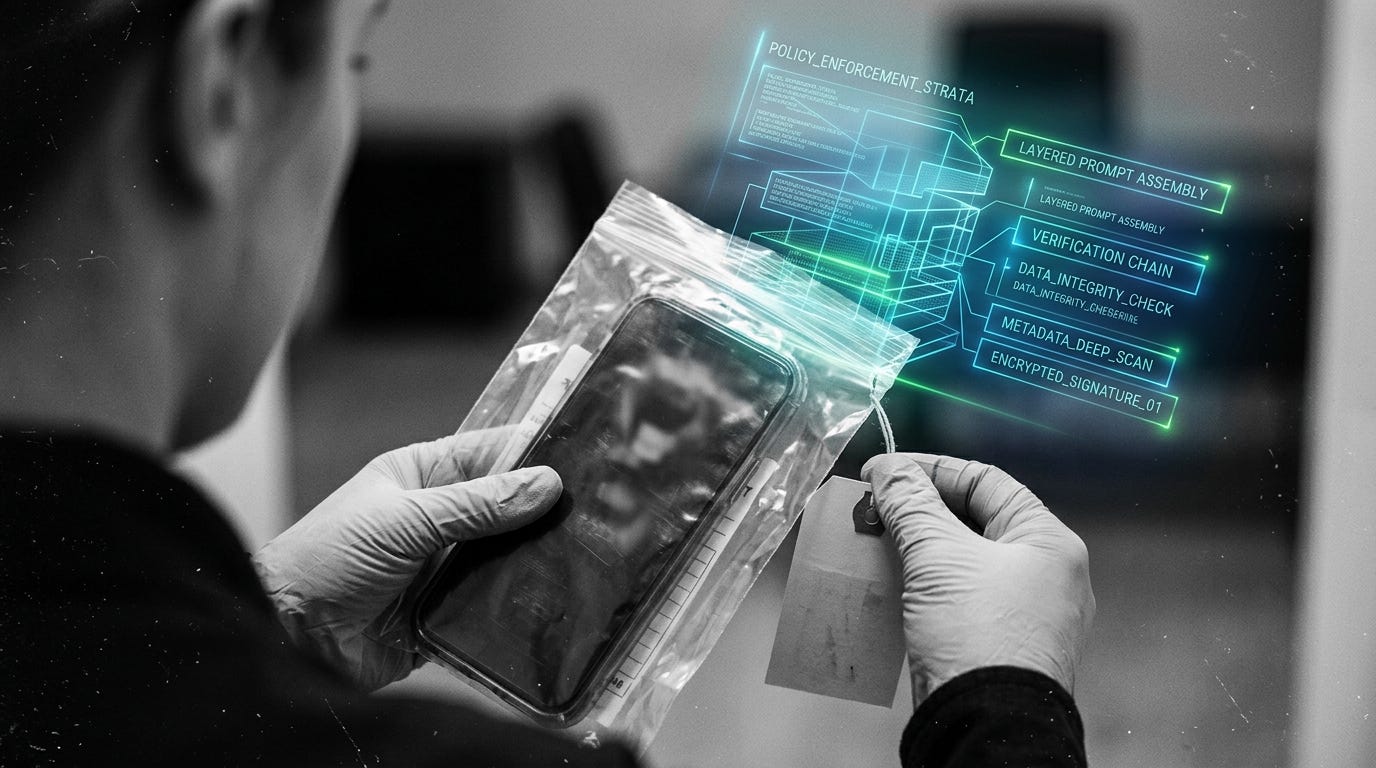
A chat model refuses a question, and everyone blames the model. That assumption breaks pretty fast once wrappers, desktop clients, policy gates, and system prompts all start stacking on top. Dsh Purge exists in that messy middle layer. Not the model itself, not the app shell either, but the control surface where behavior actually gets decided. That makes this repo uncomfortable, obviously controversial, and genuinely useful for anyone studying how AI products enforce restrictions in practice instead of in marketing copy.
The Drop: The Refusal Was Not Coming From Where You Thought
DeepSeek Harness is not just a textbox glued to a model. The host rewrites prompts, inserts policy layers, shapes tool access, and manages session behavior before the model ever sees anything. If a response gets blocked, a tester can easily misread a host-level intervention as model alignment. That is the frustration driving Dsh Purge.
Plenty of red-team workflows still treat the app and the model as one fused object. That is fine for screenshots, terrible for analysis. A lab trying to compare model behavior across providers, or even across two DeepSeek surfaces, can end up benchmarking wrappers instead of weights. That is bad science and bad product judgment.
Dsh Purge targets exactly that confusion. The repo patches a local DeepSeek Harness install, exposes controls in a sidebar, lets prompts vary by model, and separates host policy from model response during controlled evaluation. Honestly, the interesting part is not “jailbreaks for every model.” It is the claim that the AI stack now has enough middleware that evaluation itself needs instrumentation.
The Stack: JavaScript With Host-Level Reach
Under the hood, Dsh Purge is a JavaScript and Node-based plugin for DeepSeek Harness, built around local patching, prompt injection, and profile-aware behavior across web and desktop surfaces. The repo also ships a bundled Redteam Preset, plus packaged skills and environment setup logic that get copied into the user’s local Harness data directory.
The Sauce: Prompt Injection as Product Infrastructure
Instead of acting like a separate chatbot layer, Dsh Purge attaches itself to the host application and treats the wrapper as the real battleground. That architectural choice matters. The plugin does not just toss in a spicy system prompt and hope for the best. It manages a Clean Panel, a local control surface for applying and reverting patches, editing prompt rules, and selecting different prompt payloads per target model. That turns “jailbreaking” from a one-off trick into a configurable policy system.
The deeper move is the split between model identity, host controls, and operator intent. Dsh Purge appears to rewrite prompt assembly, preserve ordering, and hook session behavior so a tester can observe how much of a refusal comes from upstream model policy versus local product logic. In other words, the repo treats the AI app as an orchestration stack, not a single endpoint.
That is clever because modern AI products increasingly behave like browsers with opinions. They have approval gates, tool registries, hidden prompts, and session formatting rules. A red-team tool that ignores those layers misses where real behavior gets shaped. Dsh Purge also bundles a Drill Bench, an environment for authorized local exercises with packaged skills, presets, and capability logic. That pushes the project beyond prompt hacking into something closer to a host-resident evaluation harness. Messy, sharp-edged, and more honest about how AI products actually work.
The Move: Use It to Audit the Wrapper, Not Just the Model
Security teams, model labs, and AI product leads could use Dsh Purge to answer a question that usually gets hand-waved away: where exactly is the refusal happening? Install it on a local DeepSeek Harness setup, apply the patch separately to web and desktop profiles, and run the same evaluation prompts across both. That gives a cleaner read on whether behavior differences come from model policy, host defaults, or session-level tooling.
Founders shipping AI assistants could also use the repo as a stress test for their own assumptions. If a product team believes its safety posture comes from “the model being aligned,” Dsh Purge is a fast way to test how much safety is really wrapper-dependent. That matters for vendor switching, enterprise procurement, and compliance claims.
Researchers get another angle too. The bundled exercise environment suggests a path for repeatable local red-team scenarios, where prompts, skills, and rules live in one controlled package. That is strategically useful. The company that can separate model risk from product risk faster will make better roadmap calls, and probably spend less time arguing over screenshots on Slack.
The Aura: Trust Starts Moving Up the Stack
People are getting trained to treat AI outputs as if they came from one brain. That mental model keeps failing. Between hidden prompts, product wrappers, and permissions logic, the answer on screen is already a negotiated result. Dsh Purge forces that negotiation into view.
That changes behavior. Teams stop asking whether a model is “safe” in the abstract and start asking which layer enforced what. That is a healthier instinct. As AI products become more app-like, users will expect observability into behavior shaping, the same way they expect logs, permissions, and audit trails elsewhere in software.
The Play: Wrapper Transparency Becomes a Category
From a VC lens, this looks less like a consumer jailbreak toy and more like the early edge of AI wrapper observability. The TAM is broader than the repo branding suggests: model labs, red teams, regulated enterprises, and any AI product company making claims about policy enforcement all need ways to disentangle host behavior from model behavior. This is not quite a 0-to-1 standalone market yet, but it could become a wedge into security testing, assurance tooling, and AI governance infrastructure. PMF signals are real enough, 8,612 stars on a niche and controversial repo is not normal, but the moat is still thin unless community distribution, proprietary eval datasets, or enterprise workflow integrations pile on.
Winners:
Lakera: Better wrapper-level attack research compounds into stronger AI security products, especially if customers start demanding proof about where defenses actually live.
Hugging Face: More skepticism toward closed wrapper behavior increases demand for transparent model testing and open evaluation ecosystems.
CrowdStrike: Expanded AI red-team budgets can flow toward established security vendors once prompt-layer risk starts looking like endpoint risk with new branding.
Losers:
Lindy: Thin orchestration layers look more fragile when buyers realize agent behavior can be heavily shaped or bypassed at the wrapper level.
Harvey: Compliance-heavy AI products face harder enterprise scrutiny if policy claims cannot cleanly distinguish model controls from application controls.
Microsoft: Copilot-style trust narratives weaken when customers begin asking for auditable separation between model alignment, admin policy, and product UX constraints.
tl;dr
Dsh Purge turns DeepSeek Harness into a local test bed for separating model behavior from host-enforced policy. The clever bit is the host-level patching and prompt assembly control, which makes wrapper logic inspectable instead of invisible. Security teams, AI product leads, and eval-heavy researchers should pay attention.
Stars: 8,612 | Language: JavaScript
