


Mike: Legal AI Needed Source Control
github.com/willchen96/mike | License: AGPL-3.0
A contract review goes sideways the second three people touch the same file. One counsel uploads a DOCX, another leaves tracked edits, someone else asks an AI for a summary, and suddenly nobody trusts which version said what. That is the actual pain Mike is chasing, not just “chat with PDFs.” Mike treats legal work like a live system of documents, edits, citations, and workflows, instead of a one-shot prompt box. Honestly, that framing matters more than the AI wrapper, because legal teams do not just need answers. They need answers tied to the exact artifact that created them.
The Drop: Contracts Are Not Chat Attachments
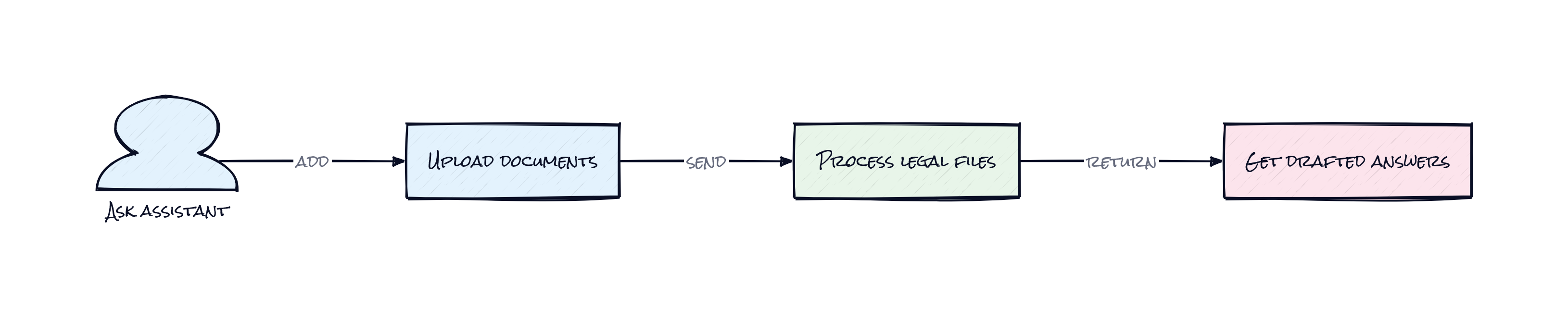
Plenty of AI legal products act like the hard part is model quality. Feed in a file, ask a question, get a polished paragraph back. But legal work breaks in messier places: version drift, unclear provenance, edited drafts that no longer match the uploaded source, and collaboration that happens across folders, chats, spreadsheets, and email threads. A generic assistant can summarize a contract. A real legal workflow has to survive after the summary, when someone asks which clause triggered the risk flag and whether that clause still exists in the latest revision.
Mike exists because that gap is painfully operational. The repo’s shape gives the game away: projects, document versions, tabular reviews, workflows, download tokens, tracked changes, project chat. This is not a thin chatbot with a legal prompt baked in. It is trying to be an AI legal platform where documents stay central, collaboration stays structured, and outputs remain attached to source material. That matters because law is one of the few domains where a slick answer without an audit trail is not useful, it is dangerous.
The Stack: TypeScript All the Way Down
Under the hood, Mike keeps things pretty pragmatic: Next.js on the frontend, Express on the backend, Supabase for auth and Postgres, plus S3-compatible storage for documents and generated files. Model access is abstracted across providers, with streaming support for Claude and Gemini, while document conversion leans on LibreOffice and DOCX parsing libraries to keep legal files machine-readable.
The Sauce: Citations That Survive Contact With Reality
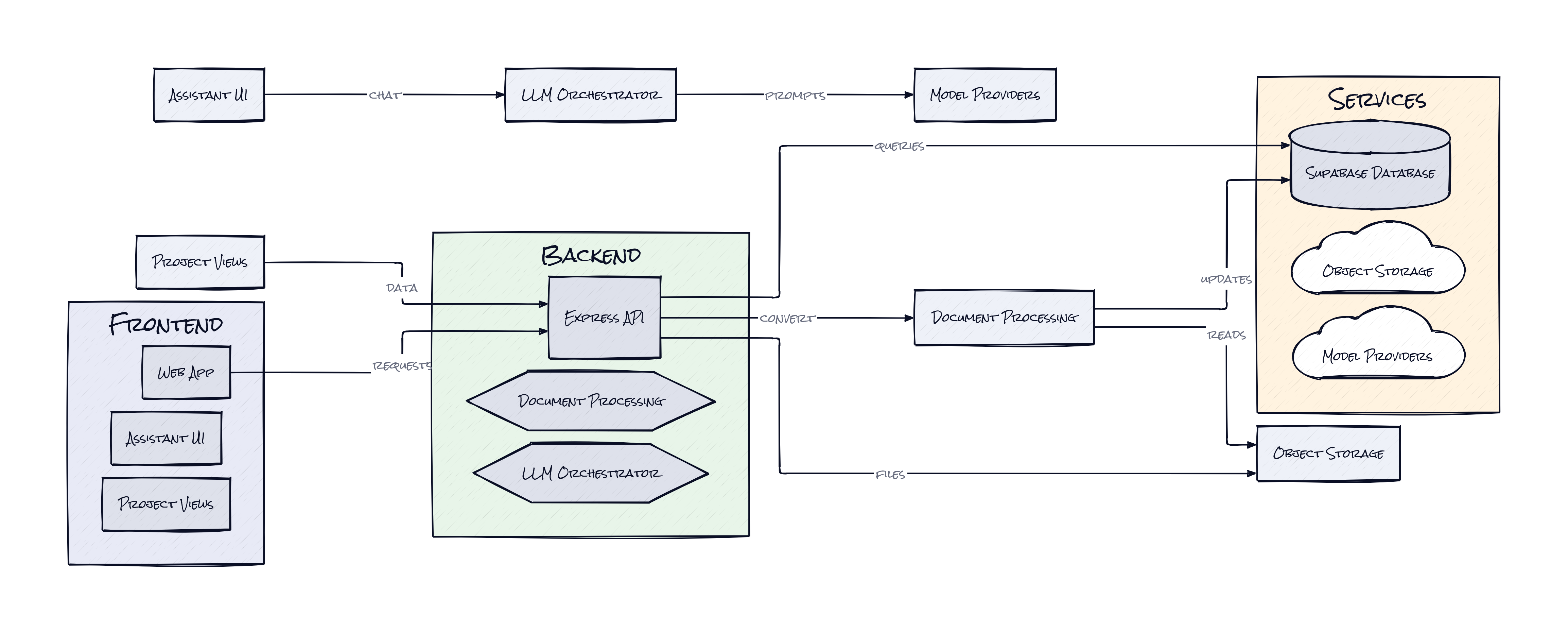
Buried in Mike’s architecture is the part that actually makes this repo interesting: document-aware chat tools tied to versioned documents and tracked edits, all wrapped around a citation system that forces the model to show its work. That sounds obvious until looking at how rarely AI apps do it well.
Rather than treating a document as a blob that gets embedded once and forgotten, Mike keeps a structured relationship between chats, projects, files, and active versions. The assistant is prompted to attach inline reference markers and then emit a machine-readable citation block with document IDs, page references, and exact quotes. That choice is smart because citations stop being a UI flourish and become a backend primitive. Once citations are structured, the product can verify outputs, render source previews, and keep legal review anchored to the right file.
Another sharp call: Mike handles DOCX tracked changes as a first-class input, not a nuisance to flatten away. Legal teams live inside redlines. If an AI platform ignores that layer, it misses the actual negotiation surface. Mike appears to parse body text, apply tracked edits, generate new documents, and preserve downloadable artifacts. Combined with tabular reviews, which seem built for clause-by-clause or doc-by-doc comparison, the system starts to look less like “ChatGPT for lawyers” and more like a workspace for repeatable review operations. That is the architectural bet. Not smarter text generation, but better state management around legal text.
The Move: Turn Legal Review Into a System
Founders building contract-heavy products, boutique firms drowning in repetitive review, and in-house teams dealing with procurement overload could put Mike to work as internal infrastructure, not just a demo assistant. Drop in standard agreements, create project-specific workspaces, and use the workflow layer to standardize recurring tasks like red flag reviews, clause extraction, or side-by-side document analysis. The goal is not replacing counsel. The advantage is compressing the time between intake and a defensible first pass.
Because Mike stores chats, documents, versions, and generated outputs in one loop, teams can also use it as a lightweight operating system for legal knowledge. A startup handling vendor contracts could build reusable workflows around fallback positions. A legal ops team could run tabular reviews across dozens of agreements to spot outlier language. A founder negotiating enterprise deals could keep every revision and AI-generated suggestion attached to the underlying draft, which matters when memory fails two weeks later. Strategically, that creates consistency. The same review logic can be rerun across every new contract instead of living inside one expensive person’s head.
The Aura: Trust Starts Getting Productized
Lawyers are not allergic to automation. They are allergic to unverifiable automation. What changes with software like Mike is the expectation that AI should produce an answer and carry its own receipt, source, revision context, and editable output. Once that becomes normal, black-box legal chat starts to feel amateurish.
More broadly, Mike hints at a future where high-stakes knowledge work is less about asking a model clever questions and more about managing evidence chains around model outputs. That is a deeper behavior shift than faster drafting. It trains teams to expect machine help that is inspectable, shareable, and accountable.
The Play: Open Source Harvey Pressure
This looks like a better mousetrap in a large existing market, not a pure 0-to-1 category. Legal tech TAM is huge, but the sharper wedge is legal ops software plus AI review workflows for SMB firms and in-house teams priced out of premium incumbents. Mike’s early signal is credible: 2,155 stars in days, broad curiosity around open source legal AI, and a product surface that already extends beyond chat into workflows, tables, and version control. PMF is not proven, but attention velocity is real.
The moat is probably not model access. It is execution speed, workflow design, and eventually switching costs once a team’s templates, review logic, and document history live inside the system. If Mike grows a community around legal workflows, the repo could become infrastructure for a vertical SaaS layer with decent LTV and relatively low CAC through open source distribution.
Winners:
Paxton AI: Distribution gets cheaper because open source normalizes AI-first legal workflows, pulling more smaller firms into the category and expanding demand upstream.
Ironclad: Workflow depth becomes more valuable as customers expect contracts, approvals, reviews, and AI assistance to live in one operational loop.
DocuSign: Agreement systems gain new gravity if signing platforms can absorb more pre-signature review, redlining, and evidence-linked collaboration.
Losers:
Spellbook: Copilot-style drafting feels narrower as buyers start wanting full document lifecycle context, version history, and structured review surfaces.
Clio: General practice management looks thinner if legal teams increasingly separate matter management from AI-native document work.
LexisNexis: Research-first incumbency erodes at the edge when users can interrogate their own contract corpus with citations and reusable workflows instead of leaving the workspace.
tl;dr
Mike turns legal AI into a document system, not a chat window. The clever part is the architecture around citations, tracked edits, versioned files, and repeatable review workflows, which makes outputs more trustworthy. Legal ops teams, startup counsel, and founders handling lots of contracts should pay attention.
Stars: 2,155 | Language: TypeScript
