



OpenWrt: Routers Should Not Be Appliances
github.com/openwrt/openwrt | License: Other

Internet problems tend to get blamed on the ISP, then on “Wi-Fi weirdness,” then on that dusty router quietly failing in a corner. Meanwhile the box running the whole home network is usually the least flexible computer you own. Vendor firmware ships like a sealed product, full of arbitrary limits, stale updates, and settings designed for support scripts, not actual control. OpenWrt treats that assumption as broken. Instead of a locked networking appliance, it turns supported routers into small Linux systems you can actually shape, update, and trust.
The Drop: The Tiny Computer Hiding in Plain Sight
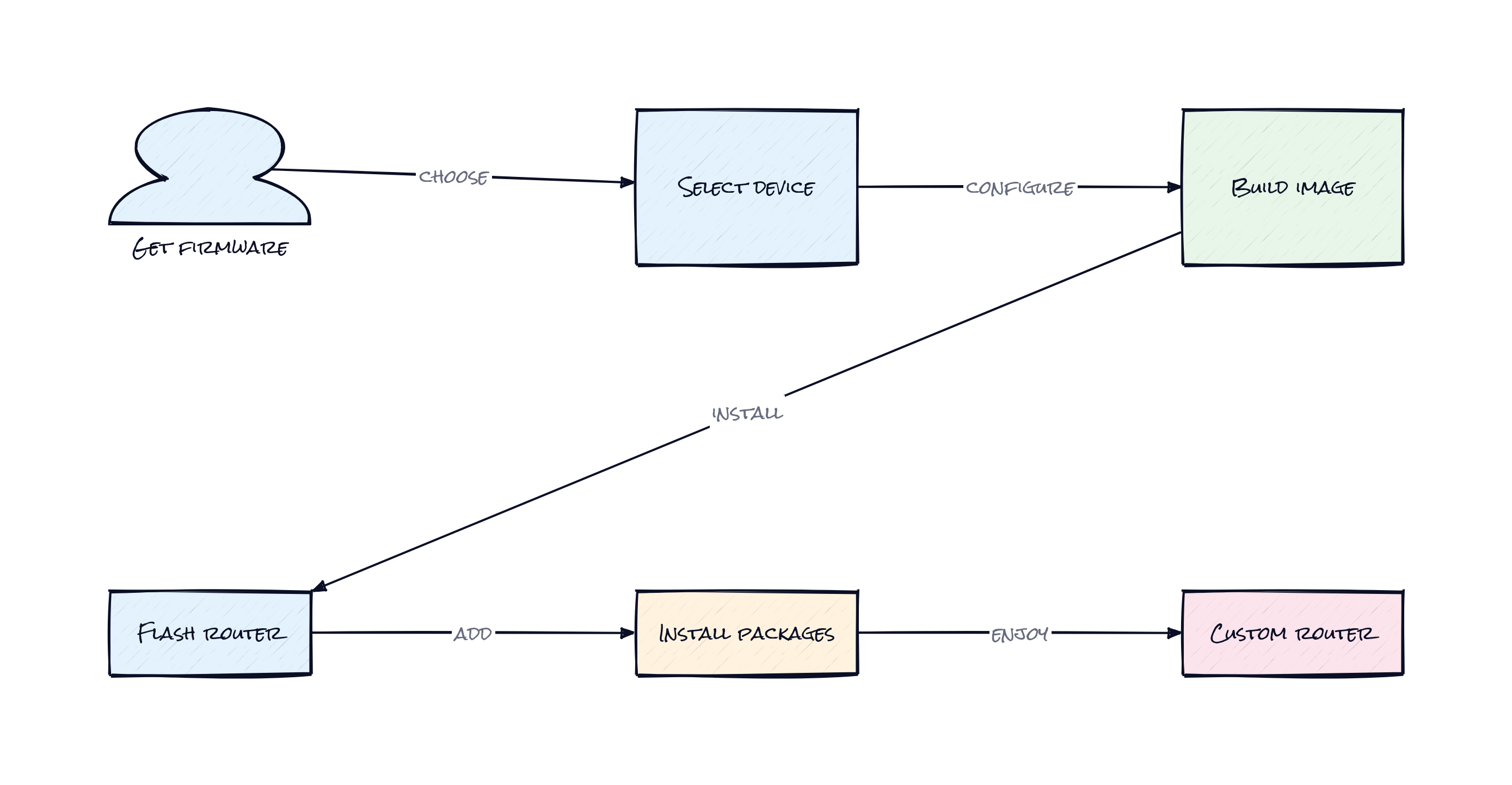
Home routers are bizarrely important for how little agency users get over them. Phones get app stores, laptops get package managers, even TVs now get frequent software updates. The device deciding traffic priority, DNS behavior, firewall rules, guest access, VPN routing, and mesh stability usually gets a clunky web panel and whatever firmware the manufacturer felt like shipping that quarter.
That gap is what drove OpenWrt. Consumer networking hardware is cheap, everywhere, and often perfectly capable, but stock firmware treats capability as something to hide. Need better parental controls, proper VLANs, ad blocking, wireguard, traffic shaping, or failover between ISPs? Good luck if the vendor didn’t expose it. Need security updates after the product team moved on to the next model? Even worse.
OpenWrt exists because the real frustration is not bad hardware, it’s software that assumes users should accept fixed behavior. Routers are computers with radios and ports attached. Locking them down has always been a product decision, not a technical necessity.
The Stack: Firmware as a Build System
Underneath the branding, OpenWrt is a Linux distribution for embedded devices, built mostly in C with a cross-compilation toolchain and a packaging layer centered on opkg, its lightweight package manager. The project also spans LuCI, a modular web interface, plus feed-based package repositories that let maintainers compile images for many chipsets and boards without reinventing the whole firmware each time.
The Sauce: Writable Firmware Changes the Economics

Unlike vendor firmware, which ships as a monolithic image you replace wholesale, OpenWrt is built around a fully writable filesystem and package-managed architecture. That sounds subtle. It is not. This one decision changes the router from a fixed-function product into an evolving software platform.
Because the filesystem is writable, configuration does not live as a fragile afterthought bolted onto a static image. Because packages can be installed and removed, capabilities become composable. A router can start as a plain access point, then add VPN routing, DNS filtering, mesh protocols, USB storage, or custom telemetry later, without reflashing from scratch every time. That is closer to how a server behaves than how consumer networking gear is usually designed.
OpenWrt compounds that flexibility with feeds, curated package sources that separate core system logic from broader software ecosystems. This matters architecturally because embedded hardware is messy. Different chipsets, drivers, radios, and vendor boot flows create a support nightmare. OpenWrt’s build system abstracts that mess into reproducible targets and installable modules, while Firmware Selector gives users a sane path to device-specific images instead of hunting obscure forum posts.
Honestly, the interesting part is not that OpenWrt offers “more settings.” Plenty of products can expose more toggles. The interesting part is that OpenWrt treats networking hardware as programmable infrastructure. Once that frame clicks, the repo stops looking like firmware and starts looking like a portability layer for edge computing on cheap hardware.
The Move: Turn Network Gear Into Strategy
Plenty of people will use OpenWrt to get a better home router. Fair enough. The sharper move is treating cheap networking hardware as controllable infrastructure for homes, offices, retail locations, labs, and pop-up deployments.
A small team can standardize branch-office networking without paying enterprise appliance prices. A startup shipping physical products can prototype secure gateways or custom edge devices on commodity boards before designing bespoke hardware. A founder running a distributed team can create consistent VPN, DNS, and traffic policies across locations. Even student builders can turn old routers into segmentation labs, mesh experiments, or travel gateways that route traffic the way they want, not the way a vendor guessed.
OpenWrt matters strategically because it lowers the cost of network customization while increasing lifespan of existing hardware. That means lower capex, more control, and less dependence on vendor roadmaps. In an era where every company suddenly cares about privacy, resilience, and edge AI, owning the behavior of the network layer starts to look less like tinkering and more like defensive infrastructure planning.
The Aura: Control Changes Expectations
People tolerate a strange amount of opacity from networking gear because the industry trained them to. Routers are supposed to be mysterious, fragile, and vaguely disposable. OpenWrt chips away at that learned helplessness.
Once a network box becomes inspectable, upgradeable, and adaptable, expectations change fast. Hardware no longer feels like a sealed contract. It feels like a host for policies, experiments, and long-term ownership. That shift matters beyond routers. It reinforces the idea that more everyday devices should stay useful after purchase, should accept new capabilities, and should remain legible to the people who depend on them. That is a quietly radical standard.
The Play: Edge Control Without Appliance Margins
From a VC lens, OpenWrt is not a 0-to-1 category creation. The category, open router firmware, already exists. The opportunity is bigger than that label suggests: this repo underwrites a broad TAM spanning consumer networking, prosumer security, SMB infrastructure, and emerging edge-device workflows. The star count, long-lived community, and deep package ecosystem are strong PMF signals, even if GitHub is only one surface for a project with older distribution channels.
The moat is not classic proprietary data. It is ecosystem depth, hardware compatibility knowledge, contributor trust, and the switching costs that come from operational familiarity. Once a user or company builds policies and deployment habits around OpenWrt, behavior gets sticky in a way vendor firmware rarely does.
Winners:
Tailscale: Edge connectivity gets cheaper to deploy on commodity hardware, which compounds distribution as more routers become programmable endpoints for private networking.
Ubiquiti: Prosumer demand for configurable networks keeps expanding, and OpenWrt helps train a larger market to value control, segmentation, and advanced routing.
Cloudflare: Traffic management and secure edge services become easier to extend closer to users when more local gateways can run custom network logic.
Losers:
Firewalla: Differentiation erodes at the enthusiast and SMB edge when cheaper hardware plus OpenWrt can replicate enough control to pressure premium appliance pricing.
eero: Simplicity-first networking loses some aspirational pull when advanced users increasingly expect visibility, package extensibility, and policy control.
Netgear: Firmware lock-in weakens as buyers learn that hardware value can outlast vendor software, making the branded software layer look thinner and less defensible.
tl;dr
OpenWrt turns supported routers into customizable Linux systems instead of sealed appliances. The clever bit is the writable, package-managed firmware model, which makes cheap network hardware extensible long after vendors stop caring. Founders, operators, and power users who want control at the network layer should look.
Stars: 26,550 | Language: C
