

The Push: May 31st, 2026
Smarter AI workflows, sturdier web extraction, and a browser-based agent that finally shows its work

Compound Engineering Plugin: AI Coding Needs a Playbook
github.com/EveryInc/compound-engineering-plugin | License: MIT

A coding assistant can write a passable feature in minutes, then leave behind a mess nobody wants to touch next week. That is the dirty secret of a lot of AI coding demos. Speed looks great on the first pass, then the team pays for vague plans, missing rationale, shaky reviews, and tribal knowledge trapped in chat history. Compound Engineering Plugin goes after that exact failure mode. Instead of treating the model like a fast typist, it treats AI coding like an operational system, with planning, review, and knowledge capture built in from the start.
The Drop: Fast Code, Expensive Confusion
Plenty of teams already have Claude Code, Cursor, Codex, or Copilot generating code. The issue is not raw output anymore. The issue is what happens after. A feature gets shipped, but nobody can explain why a certain tradeoff was made. A bug gets patched, but the root cause never becomes reusable knowledge. Another agent opens the same repo tomorrow and burns tokens rediscovering context the last session already learned.
That is the gap this repo targets. EveryInc is basically arguing that AI coding gets worse when each session starts from scratch and ends with nothing durable besides changed files. The frustration feels familiar even outside engineering: lots of activity, not much compounding. Teams end up with faster execution but weaker judgment, which is a pretty bad trade if the product matters.
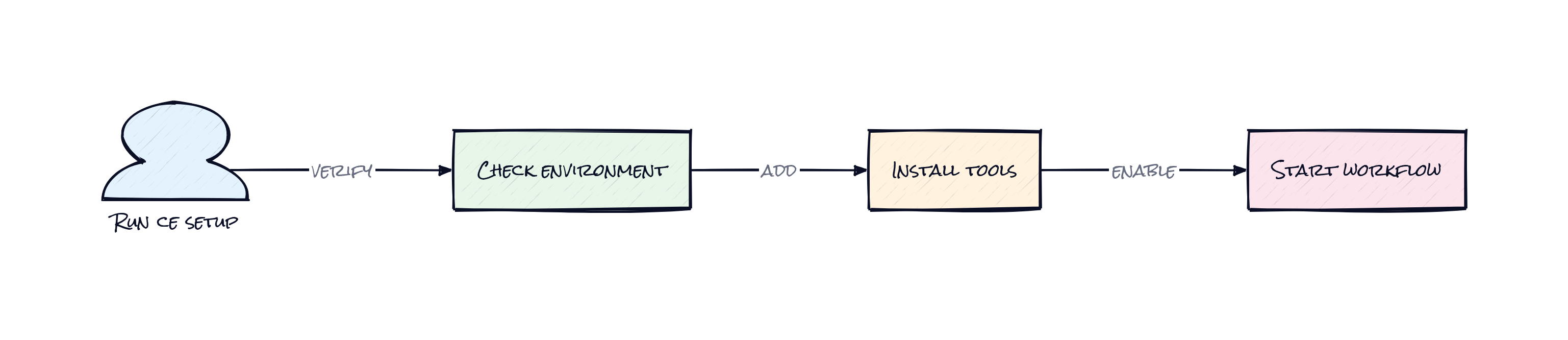
Compound Engineering Plugin packages a repeatable workflow around that pain. Instead of one generic assistant, the repo ships specialized commands for strategy, ideation, brainstorming, planning, execution, debugging, review, and postmortem-style learning. The premise is blunt and honestly pretty persuasive: future work should get easier, not harder, after every AI-assisted change.
The Stack: TypeScript as Translation Layer
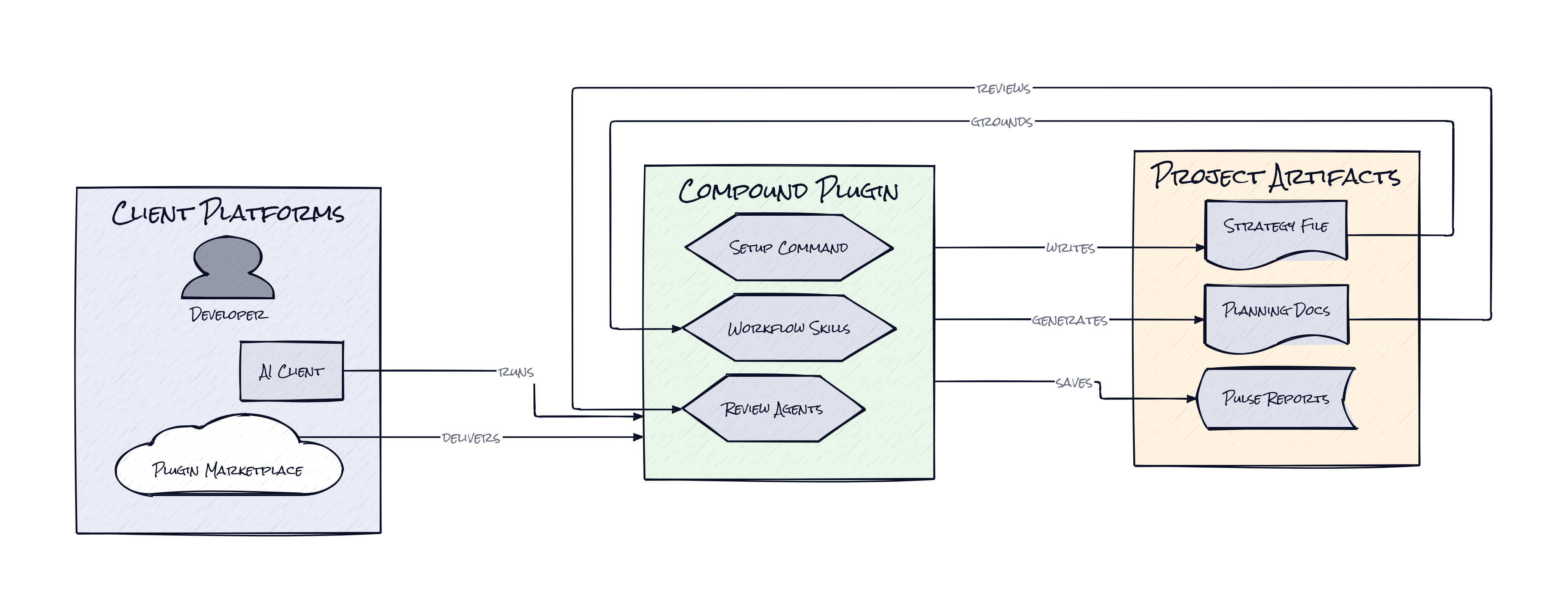
Under the hood, this is a TypeScript and Bun project with a CLI built on citty. The architecture centers on converting Claude-compatible plugins into multiple agent environments, e.g. Codex, Gemini, Kiro, Pi, and OpenCode, then writing target-specific bundles so the same workflow can travel across tools.
The Sauce: Workflow as Portable Infrastructure
What stands out here is cross-tool conversion paired with a very opinionated skill system. That combination turns Compound Engineering Plugin from “a nice prompt pack” into something closer to workflow infrastructure.
Plenty of AI coding products have good prompts. Fewer have a way to express a whole operating model, then map it into different agent runtimes without rewriting the methodology every time a new interface wins distribution. This repo starts from a canonical plugin format, then translates that structure into the conventions each target ecosystem expects. That matters because the valuable asset is not just the text of a prompt. It is the sequence, role boundaries, and artifacts produced along the way.
Inside that system, commands like /ce-strategy create a durable strategy anchor, /ce-brainstorm turns vague requests into scoped requirements, /ce-plan converts that into a detailed implementation path, and /ce-compound stores lessons so later sessions inherit them. The repo also includes review and debugging flows, plus multi-agent delegation for tasks like code review. In practice, that means the model is not just asked to “build feature X.” The model is placed inside a loop where planning feeds execution, execution feeds review, and review feeds memory.
Honestly, the interesting part is not that there are 37 skills and 51 agents. Big numbers are easy to market. The interesting part is the repo’s insistence that AI-assisted engineering should produce artifacts with continuity: strategy docs, brainstorm notes, plans, pulse reports, and compound notes. That is a subtle but important architecture choice. It creates a system where the output is not only code, but reusable judgment.
The Move: Install Once, Standardize Behavior
Founders and product leads could use Compound Engineering Plugin less as a coding toy and more as a process upgrade. A small team running mixed tools, e.g. Cursor for one engineer, Codex for another, Claude Code for a third, can install the same workflow across environments and stop relying on everyone’s personal prompting style. That alone cuts a surprising amount of variance.
Another strong use case is product iteration with memory. A team can use /ce-strategy to lock in target user, metrics, and direction, run /ce-ideate or /ce-brainstorm before building, then archive learnings with /ce-compound after reviews and fixes. Over time, the repo becomes a living operating manual for the product, not just a pile of chats. That makes onboarding easier, handoffs cleaner, and AI output more legible to non-authors.
Consultancies and startup studios should pay attention too. Repeatable delivery is margin. If every project gets the same planning, review, and documentation muscle by default, quality rises without hiring a layer of process people. The strategic edge here is consistency. AI tools change fast, but a durable workflow that can hop between them is much harder to lose.
The Aura: Software That Learns the Team
People start expecting better behavior once the machine stops acting like it has amnesia. That is the deeper appeal here. Compound Engineering Plugin suggests that AI work should leave behind memory, rationale, and standards, not just outputs. That changes trust.
Teams are more willing to delegate meaningful work when the next session can inherit context instead of replaying the same discovery process. Product judgment becomes less trapped inside whoever happened to type the last prompt. Over time, the expectation shifts from “the assistant can write code” to “the system can preserve how this team thinks.” That is a bigger psychological upgrade than raw speed.
The Play: Methodology With Distribution Hooks
This looks less like a 0-to-1 market creation and more like a sharp wedge into the exploding AI coding TAM, where spend will likely attach to workflow reliability, not just model access. The PMF signals are strong for an open source repo, 18,608 stars, broad tool compatibility, and a clear philosophy that travels well across teams. Moat is not data, at least not yet. Moat is execution speed, workflow design, and emerging switching costs once teams encode strategy, plans, and compound notes into the system.
Winners:
PearAI: Distribution gets easier because a young AI IDE can import a respected workflow layer instead of inventing process from scratch, and that compounds through community trust.
Cursor: Enterprise stickiness rises when the editor becomes the home for structured planning and review loops, not just autocomplete, which lifts LTV without proportionally higher CAC.
GitHub: Platform gravity increases as Copilot-adjacent workflows absorb more of the software lifecycle, making GitHub harder to displace as the system of record.
Losers:
Magic Patterns: Differentiation erodes if lightweight AI build tools cannot offer durable planning and review artifacts, because speed alone becomes easier to copy.
Replit: Consumer-friendly coding convenience looks thinner when serious teams expect process scaffolding and cross-tool portability alongside generation.
Atlassian: Adjacent workflow value weakens if strategy, planning, review, and postmortem knowledge start living inside AI-native engineering loops rather than separate project management surfaces.
tl;dr
Compound Engineering Plugin turns AI coding from a one-shot prompt into a structured workflow that carries strategy, planning, review, and learning across tools. The clever bit is the portable plugin architecture plus durable artifacts that compound over time. Teams using multiple coding assistants, or trying to make AI output less chaotic, should look.
Stars: 18,608 | Language: TypeScript
