

The Push: May 30th, 2026
AI teams, document wrangling, and a rule-aware coding sidekick for people wiring real workflows


Harness: AI Teams, Not Prompt Piles
github.com/revfactory/harness | License: Apache-2.0

A single prompt works fine until the task stops being single-player. Product research needs one agent checking sources, another comparing competitors, another tightening the final brief. Website planning wants design, build, QA, and handoff logic, not one giant blob of text trying to juggle everything at once. Harness lands right on that pain: instead of asking an AI to be vaguely “good at everything,” it turns a domain description into a structured team with actual division of labor. That sounds obvious, but honestly, AI tooling has been strangely bad at this.
The Drop: When One Agent Becomes a Bottleneck
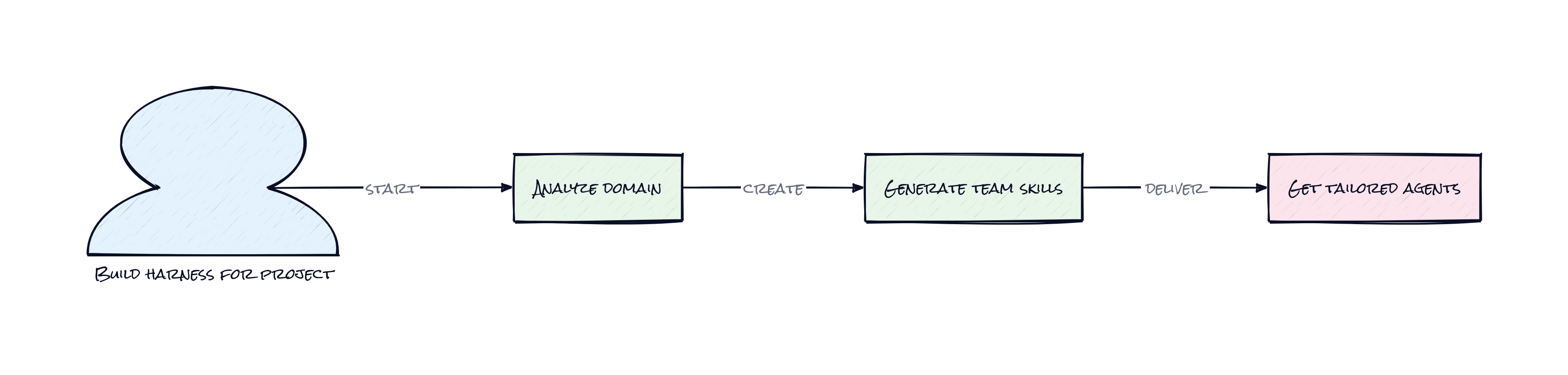
Plenty of AI workflows still assume the hard part is getting a better prompt into a smarter model. That works for toy tasks. It breaks the second a job has parallel workstreams, review loops, or specialist context. A research workflow needs evidence gathering and synthesis. A marketing workflow needs ideation, copy, visual direction, and testing logic. A coding workflow needs architecture review, bug hunting, and QA. Stuffing all of that into one model session creates two problems at once: context overload and role confusion.
Harness exists because agent teams are useful in theory but annoying in practice. Somebody has to decide whether a task should run as a pipeline, a supervisor tree, or a fan-out review process. Somebody has to define each specialist, spell out coordination rules, and create the reusable instructions those specialists rely on. That setup tax is exactly the kind of work people skip, which means “multi-agent” often ends up being a buzzword wrapped around chaos. Harness tries to remove that tax by making team design itself the product.
The Stack: Plugin Logic Over Model Hype
Under the hood, Harness is packaged as a Claude Code Plugin, with its core behavior expressed through markdown-driven skills and reference templates rather than a heavy application layer. The repo is mostly structured content, HTML docs, and orchestration guidance, which is interesting because the value sits in architecture design, not custom infrastructure.
The Sauce: Team Architecture as a Factory
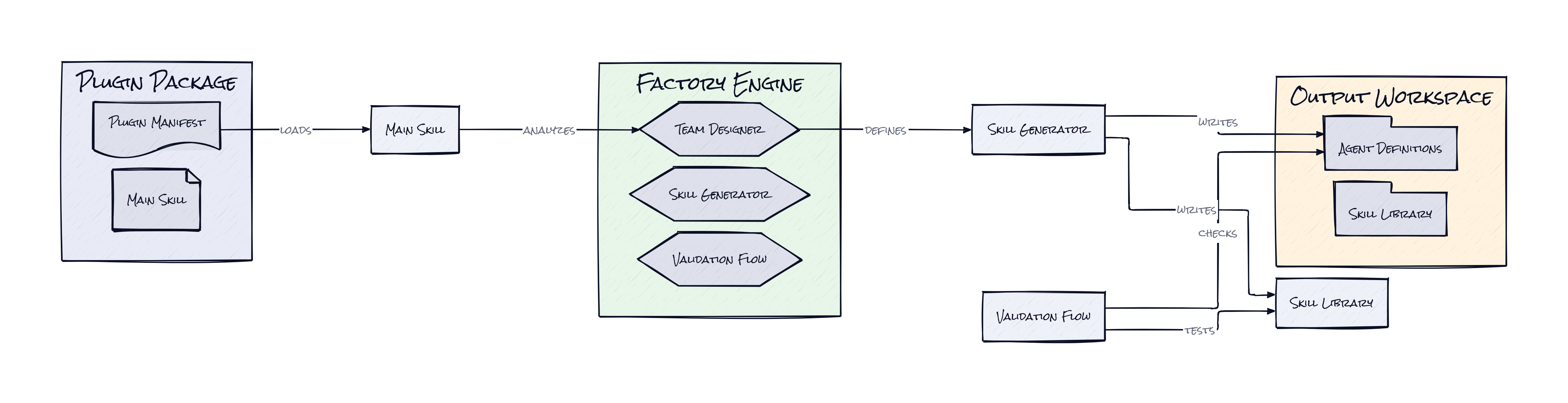
Unlike most agent tools that stop at “spawn a few helpers,” Harness defines a Team-Architecture Factory, a system that takes a domain sentence and maps it into one of six reusable coordination patterns. Those patterns, like Pipeline, Fan-out/Fan-in, and Producer-Reviewer, are not just labels. They encode assumptions about task dependency, review structure, and how information should move between agents.
That design choice matters because the repo treats team shape as a first-class decision. A lot of AI products act as though specialization is enough. It usually is not. Three specialized agents with no explicit orchestration are just three silos. Harness adds a layer that decides whether work should happen sequentially, in parallel, through selective expert routing, or under a supervising controller. That is the architecture-level insight.
Another sharp choice is pairing agent generation with Skill Generation. Harness does not only define roles like analyst or reviewer, it also creates reusable instruction modules those roles can call into. That keeps prompts from ballooning every time an agent acts, and it creates a more stable operating model across runs. The README calls this Progressive Disclosure, which is basically context discipline: agents get the right guidance when needed, instead of dragging the full rulebook into every step. In AI systems, context is budget, latency, and reliability all at once. Harness seems to understand that better than many shinier repos.
The Move: Turn Domain Knowledge Into Workflow IP
Teams sitting on repeatable AI-heavy workflows should pay attention. Harness is not just for people who want “more agents.” It is for anyone who has a process they run often enough that the setup cost has become silly. Research shops can build a repeatable investigation team. Agencies can define campaign planning crews with review steps baked in. Startup operators can create go-to-market, support analysis, or user interview synthesis flows that stop depending on whoever writes the best prompt that day.
Deployment strategy is pretty straightforward: pick one high-friction workflow with multiple roles, describe the domain clearly, let Harness generate the team, then refine the resulting structure into a house style. That last part matters. The strategic advantage is not the first run, it is the second, tenth, and fiftieth. Once a company has reusable agent teams and reusable skills, process quality starts compounding. That creates internal distribution. Suddenly, every new project starts from an operating system instead of a blank chat box.
The Aura: Work Starts Looking More Modular
Managers already break projects into owners, reviewers, and dependencies without thinking about it. Harness brings that instinct into AI tooling, which changes the expectation from “ask the model nicely” to “design the operating structure.” That is a deeper behavioral shift than it sounds. People stop treating AI like a smart intern and start treating it like a configurable org chart. Maybe that is where the real adoption curve lives, not better answers, but better decomposition. Once that clicks, prompt craft matters less and workflow design matters more.
The Play: Selling the Org Chart for Machines
This looks less like a 0-to-1 consumer breakout and more like a sharp wedge inside the fast-growing AI workflow market. TAM is broad because every knowledge-heavy team has repeatable processes, but PMF depends on whether agent orchestration becomes a default layer in products like Claude Code rather than a power-user niche. Harness has decent early signal, 4,162 stars in a short window, clear positioning, multilingual docs, and adjacent ecosystem awareness, all signs of a repo built for adoption rather than hobbyist applause.
Moat is not data, at least not yet. The likely moat is execution speed, opinionated templates, and eventually switching costs from embedded team designs that become part of a company’s operating muscle memory. If those generated workflows start shaping how teams research, ship, and review, LTV gets interesting fast because replacing the system means retraining behavior, not just swapping software.
Winners:
Wordware: Distribution gets stronger because non-technical teams increasingly want to package structured AI workflows, and Harness validates that appetite from the open source side.
Glean: Enterprise workflow depth compounds if search and knowledge access plug into orchestrated agent teams rather than one-off assistant queries.
Atlassian: Process-heavy organizations become easier to capture when AI work starts mirroring tickets, reviewers, and coordinated handoffs.
Losers:
Adept: Generic “AI that does tasks” positioning erodes when buyers start demanding explicit workflow topology and reusable specialist roles.
Jasper: Content generation premium gets squeezed if open agent teams can reproduce campaign planning and review structure with lower CAC.
Upwork: Routine coordination work gets chipped away as companies encode lightweight specialist workflows directly into AI teams instead of outsourcing them.
tl;dr
Harness turns a plain-language domain description into an AI team with roles, coordination patterns, and reusable skills. The clever part is that it treats team architecture, not prompting, as the product. Worth a look for operators, agencies, and anyone building repeatable AI workflows.
Stars: 4,162 | Language: HTML
