

The Push: May 26th, 2026
A self-hosted streaming stack, an AI writing editor, and free domains for shipping weird ideas online


Jellyfin: Plex’s Rent-Free Counterattack
github.com/jellyfin/jellyfin | License: GPL-2.0
A streaming service hikes prices, adds another ad tier, and quietly reminds you that “your library” is really a revocable subscription. Meanwhile, plenty of people already have drives full of movies, concerts, family videos, and obscure anime rips that no mainstream platform will ever care about. Jellyfin lands right in that gap. Not as a cute hobby project, but as a serious media server that lets you organize, stream, and control your own catalog across devices. The appeal is simple: stop renting access to convenience when convenience can run on hardware you already own.
The Drop: When Your Library Lives Somewhere Else
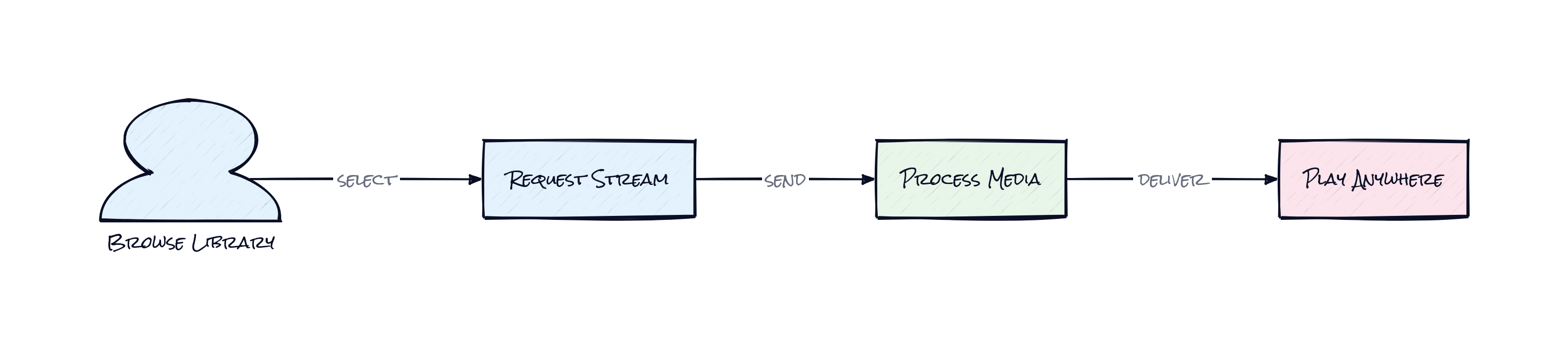
Plex and Emby proved the demand years ago. People want one clean interface for messy personal media, automatic metadata, streaming to TVs and phones, and remote access without babysitting folders. The frustration starts when that convenience gets wrapped in account requirements, premium gates, telemetry anxiety, or shifting product priorities that have little to do with your collection.
Jellyfin exists because self-hosting media should not require accepting a platform tax. That sounds ideological, but the practical pain is sharper than the ideology. A home archive is not just pirated movies on a NAS, it is wedding footage, lecture recordings, concert bootlegs, old DVDs, regional content, downloaded classes, and the weird long-tail stuff every major service ignores. People built digital libraries, then discovered the software layer increasingly wanted to become the landlord.
Open source alternatives often stumble on polish, device support, or setup complexity. Jellyfin fills that gap by treating personal streaming as a real product category, not a side quest for sysadmins. The result feels less like rebellion and more like basic ownership restored.
The Stack: .NET With Real Media Muscles
Under the hood, Jellyfin is mostly C# on .NET, exposed as a backend API and paired with a separately maintained web client plus native and TV apps across the ecosystem. Media handling depends heavily on FFmpeg, which does the hard work on transcoding, format compatibility, and streaming delivery across wildly different devices.
The Sauce: The Server Is the Product, Not the App
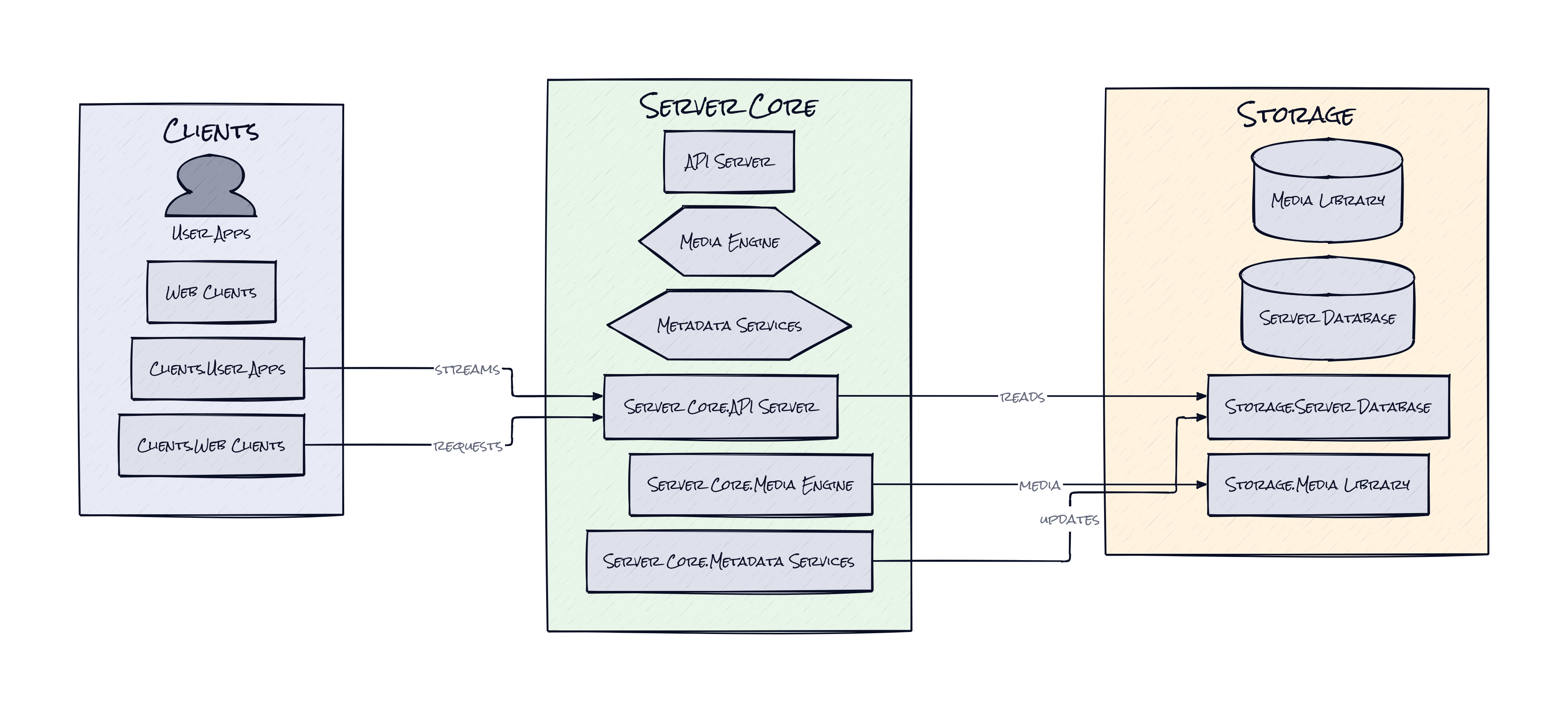
Centralization is the architectural bet here. Jellyfin treats the home server as the source of truth for identity, metadata, playback state, libraries, and device compatibility, then lets thin clients tap into that core from browsers, phones, or smart TVs. That sounds obvious, but lots of consumer media products still smuggle key logic into proprietary cloud services, account systems, or premium features. Jellyfin keeps the control plane local.
Two choices make this especially smart. First, transcoding is built into the platform assumption, not bolted on as an edge case. A pristine local file is useless if one TV only accepts certain codecs, your phone is on weak bandwidth, and a tablet needs subtitles burned in. Jellyfin solves for the ugly reality of heterogeneous devices by turning a messy media archive into a normalized streaming experience. That translation layer is why self-hosted libraries can actually compete with Netflix-level convenience.
Second, the project separates content understanding from content storage. File naming parsers, metadata fetching, image handling, user management, and playback orchestration all sit above raw folders and drives. That abstraction matters because personal media is chaos. Libraries arrive mislabeled, split across disks, duplicated, and half-tagged. Jellyfin creates a durable media graph over that mess, then serves it consistently through APIs and apps.
Honestly, the interesting part is not that Jellyfin streams video. Lots of software can do that. The interesting part is that Jellyfin turns ownership into a software primitive, then wraps modern streaming ergonomics around it.
The Move: Build Your Own Streaming Surface Area
Households with big media collections can use Jellyfin as a private replacement for three products at once: streaming hub, archive manager, and family access layer. Put it on a NAS, mini PC, or always-on desktop, point it at existing folders, then use client apps around the house. Suddenly the random sprawl of files becomes browseable, searchable, resumable, and shareable.
Teams and creators have a more strategic angle. Small studios, schools, film clubs, churches, and training orgs can run a branded internal media library without handing viewing data or access control to a third party. That matters when content is niche, rights-sensitive, or simply not suited for YouTube and Vimeo. A design school could host lecture recordings, critique archives, and reference films. A startup could maintain an internal onboarding video library that works on every device.
Jellyfin also creates optionality. Once your collection sits behind an API-driven server instead of a pile of folders, you can add automation, custom front ends, recommendation layers, or tighter home automation hooks. The strategic advantage is not just cheaper streaming. It is getting a programmable media backbone you actually control.
The Aura: Convenience Stops Belonging to Platforms
Ownership changes behavior. People curate more carefully when a library is meant to last, families treat media less like an endless feed and more like a collection, and niche communities can preserve catalogs that algorithms would bury. That feels quietly important.
Jellyfin also resets expectations around software trust. A media product does not need to monetize attention, upsell unlocks, or sit between you and your own files to feel polished. Once that clicks, the same question starts showing up elsewhere: if this stack can be self-hosted without feeling miserable, what else should be?
The Play: Open Source Ownership Has Real Demand
This is not a pure 0-to-1 category creation. Personal media servers already exist. The investment case is that Jellyfin sharpens a large, proven market with a stronger ownership thesis, lower trust friction, and a community-led distribution model that keeps CAC near zero. TAM is broader than “pirates with NAS boxes”, it stretches into prosumer households, schools, creators, clubs, and privacy-sensitive orgs that want consumer-grade streaming UX without recurring platform dependency.
The PMF signals are strong for an infrastructure-style consumer product: 52,313 stars, durable community contribution, active releases, broad client ecosystem, and behavior that gets stickier as a library grows. The moat is not classic data network effects, it is execution speed, community goodwill, device reach, and switching costs tied to metadata cleanup, user habits, and installed home setups.
Winners:
ZimaBoard: Demand for small home servers compounds as media ownership becomes a mainstream self-hosting on-ramp.
Synology: Higher retention grows when NAS hardware becomes the default home for polished personal streaming stacks.
Nvidia: Incremental GPU demand benefits when local transcoding and home media compute push more buyers toward capable edge hardware.
Losers:
Flickmetrix: Discovery-only media tools lose relevance when users spend more time inside owned libraries instead of rented catalogs.
Plex: Monetization flexibility erodes as the cleanest alternative removes premium gates and account anxiety from the core use case.
Roku: Platform control weakens when media experiences increasingly originate from user-run servers rather than ad-optimized distribution channels.
tl;dr
Jellyfin turns personal media libraries into a polished, self-hosted streaming service. What makes it interesting is the server-first architecture, especially the way transcoding, metadata, and device compatibility are handled as core product logic. Worth a look for anyone with a NAS, a messy archive, or a distrust of rented convenience.
Stars: 52,314 | Language: C#
