

The Push: May 25th, 2026
Design taste, reusable AI workflows, and a terminal that keeps your coding agents from stepping on each other

Taste Skill: AI Design Finally Grows Standards
github.com/Leonxlnx/taste-skill | License: MIT
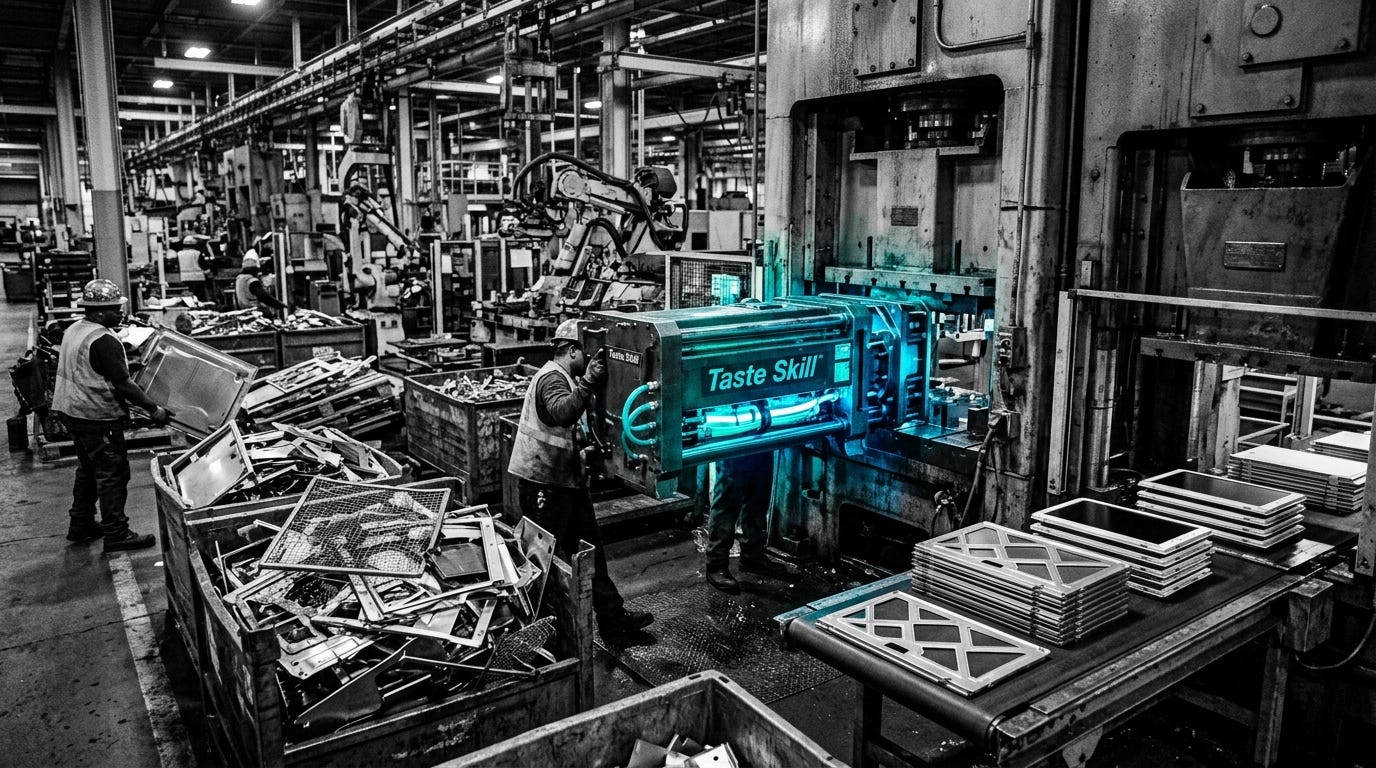
A weird thing keeps happening in AI-built products: the logic gets better while the interface gets flatter. Teams can spin up a landing page, dashboard, or mobile flow in minutes, then end up with something that looks suspiciously like every other AI-generated app. Same spacing, same gradients, same safe typography, same dead-eyed polish. Taste Skill goes after that specific failure mode. Not speed, not raw output, but taste as a reusable layer, one that can be installed into coding agents instead of begged for in every prompt.
The Drop: When Fast Starts Looking Cheap
Plenty of AI coding tools can produce a functioning frontend. That was never the hard part. The frustration shows up one layer higher, where visual judgment should live. A model can wire components, follow a framework, and even imitate a Dribbble reference, but left alone it tends to collapse toward generic patterns. Not broken, just boring. And boring is expensive when every startup is trying to look credible in the same feed, on the same product hunt page, in the same investor deck.
Taste Skill exists because prompting for “make it more premium” is basically a ritual, not a system. The repo packages Agent Skills, portable instruction modules that coding agents can load, into a set of specialized design behaviors. Some focus on implementation, others on image generation, others on redesigning an existing product. That separation matters. Good visual output is rarely one giant prompt. It is a sequence of judgments about hierarchy, spacing, motion, and constraint, and this repo treats those judgments like installable infrastructure instead of creative luck.
The Stack: Promptware With Distribution
Under the hood, Taste Skill is mostly SKILL.md files, structured instruction artifacts consumed by Vercel’s agent-skills CLI and portable across tools like Claude Code, Codex, and Cursor. The repo is Shell-first because distribution is lightweight, but the real engine is a framework-agnostic prompt architecture, plus a small install script and research docs that shape the rules.
The Sauce: Design Taste as a Composable Runtime
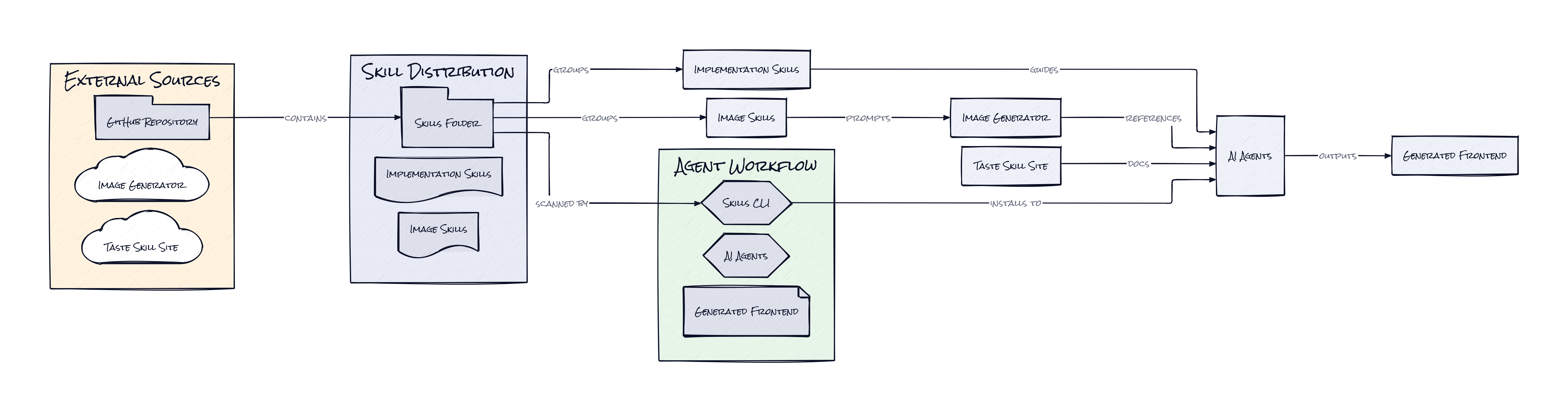
Vercel’s skills format is the architectural unlock here, because Taste Skill treats aesthetic judgment like a modular runtime instead of a giant static prompt. That sounds subtle, but it changes how AI design work gets organized. Instead of one monolithic “make this look good” instruction blob, the repo breaks visual direction into reusable units, each with a clear job and install name. image-to-code-skill handles a pipeline where the model generates references, analyzes them, then implements the interface. redesign-skill audits an existing UI before touching styling. output-skill pushes against the classic model behavior of stopping halfway and leaving placeholder comments. Those are not just styles, they are workflow opinions.
Another smart choice is the split between code-producing skills and image-producing skills. Taste Skill is not pretending one model behavior should handle every design task equally well. imagegen-frontend-web and brandkit are there to create visual references only, which can then be handed off to implementation agents. That mirrors how strong human teams already work: exploration first, production second.
Then there are the adjustable dials, DESIGN_VARIANCE, MOTION_INTENSITY, and VISUAL_DENSITY. Those parameters matter because “taste” is not one aesthetic. The repo encodes room for different outputs while keeping anti-slop rules intact. Honestly, that is the interesting part. Taste Skill is not selling a signature look, it is encoding boundaries that keep models from averaging everything into the same polished mush. Think Notion templates, but for AI design behavior instead of documents.
The Move: Turn Better Taste Into Distribution
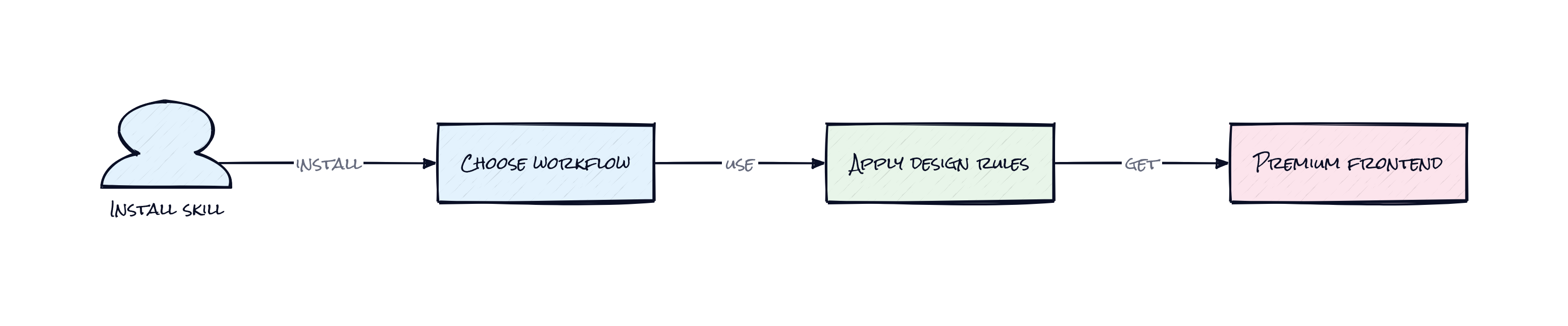
Founders, indie hackers, and product teams can use Taste Skill in a pretty direct way: install one or two skills into an existing coding workflow, then stop rewriting the same aesthetic instructions every time a prototype gets generated. Start with the default taste-skill for broad frontend work, add minimalist-skill or soft-skill once the visual direction is clearer, and layer output-skill when the model keeps shipping half-finished pages. That stack alone turns a generic coding assistant into something closer to a design-aware collaborator.
Agencies and internal product teams get an even bigger upside. Taste Skill can become a house style system for AI-generated work without locking everyone into one framework or one model vendor. A team could standardize on a few shared skills, tune the design dials, and get more consistent outputs across freelancers, PMs, and engineers. The strategic edge is not just prettier screens. It is lower revision cycles, faster brand consistency, and fewer moments where “AI-generated” becomes visually obvious in the worst possible way.
The Aura: When Good Enough Stops Feeling Good Enough
Cheap software used to announce itself through bugs. Increasingly, it announces itself through sameness. People can feel when a product was assembled by a model that knows patterns but lacks judgment, even if they cannot name the spacing issue or the weak hierarchy. Taste Skill speaks to that instinct.
As AI handles more of the production layer, taste becomes less of a luxury and more of a filter. The human shift here is subtle but important: teams stop asking models for output and start asking for discernment. That raises expectations. If software can be generated quickly, then generic design starts feeling less acceptable, not more.
The Play: Aesthetic Middleware Has Real Teeth
This looks less like a 0-to-1 category creation and more like the early infrastructure layer for AI-native creative ops. The TAM is broad because every app with a user interface is downstream of design quality, and every AI coding workflow currently leaks value through mediocre presentation. Taste Skill also shows early PMF signals: nearly 20,000 stars in a short window, clear community packaging, multiple use-case variants, and a behavior that already feels sticky because once a team bakes aesthetic rules into its generation flow, reverting to raw prompting feels painful. The moat is probably execution speed plus distribution into agent ecosystems, not data or network effects, at least yet.
Winners:
Lovable: Higher-quality frontend defaults make AI app generation feel more premium, which compounds through better demos, better retention, and lower design-related churn.
Framer: Stronger AI-generated visual references can feed more polished web builds into an already design-sensitive publishing workflow.
Adobe: More teams using AI for concepting increases demand for brand systems, image generation, and creative review layers that Adobe already monetizes well.
Losers:
Diagram: Narrow AI design assistants lose differentiation when portable taste layers can ride on top of general-purpose coding agents.
Builder.io: Template-heavy visual site generation gets pressured when open skill packs produce custom-feeling interfaces without a heavyweight platform.
Wix: Entry-level site creation looks weaker when users can get sharper branded output from agent workflows with low switching costs.
tl;dr
Taste Skill turns design taste into an installable layer for coding agents, with specialized skills for frontend generation, redesigns, and image-first workflows. The clever part is the modular architecture, which treats visual judgment like reusable infrastructure instead of prompt superstition. Founders, agencies, and AI product teams should look.
Stars: 19,393 | Language: Shell
