

The Push: June 25th, 2026
AI coworkers for cloud ops, design systems with opinions, and trip planning that finally escapes spreadsheet chaos


Agent Toolkit for AWS: AWS Wants Agent Default Status
github.com/aws/agent-toolkit-for-aws | License: Apache-2.0

Every AI coding demo looks smooth until the assistant has to touch real cloud infrastructure. Then the scavenger hunt starts: outdated docs, half-right Terraform snippets, weird IAM errors, and an agent that confidently picks the wrong AWS service anyway. Agent Toolkit for AWS goes straight at that mess. This repo is AWS saying the model should not just chat about cloud architecture, it should operate inside a governed environment with the right tools, permissions, and task-specific guidance already attached. That is way more interesting than another prompt library.
The Drop: AWS Finally Bundles the Missing Context
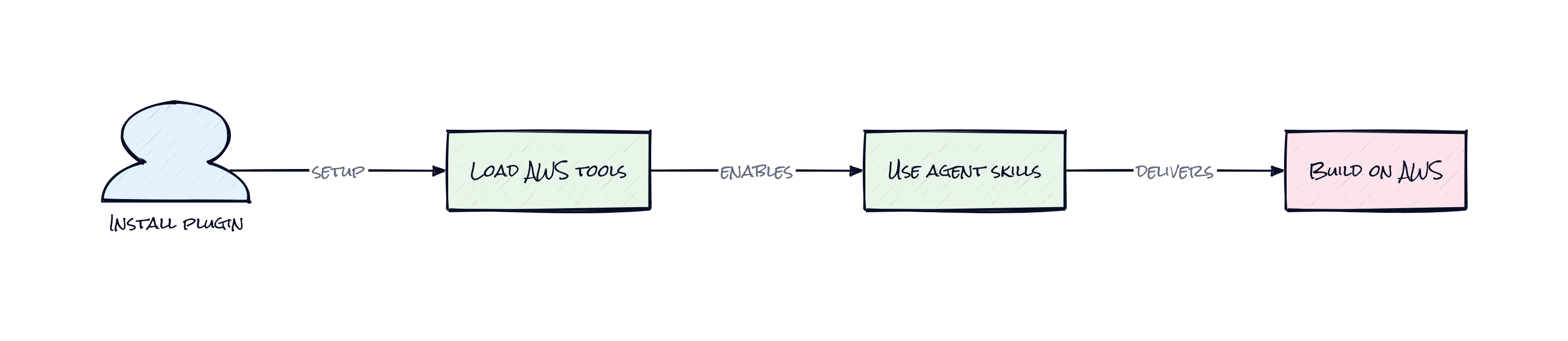
Plenty of teams already use Claude Code, Cursor, or Codex to write application logic. Trouble starts when those agents cross from code generation into cloud decision-making. AWS is sprawling, documentation changes constantly, and service selection is rarely obvious. An agent can know what a queue is and still choose the wrong queue, wire the wrong permissions, or miss the observability setup that makes the whole system debuggable later.
Plugins are the repo’s answer to that, packaged installs that combine AWS connectivity with curated task guidance for each host agent. Skills add the second layer, on-demand instruction bundles and references for narrow workflows like serverless deployment, Bedrock setup, data analytics, or incident response. That matters because generic model knowledge is broad, but AWS work is painfully specific.
A bigger frustration sits underneath all this: cloud vendors have expected developers to mentally compile docs, policies, architecture patterns, and command syntax into a single workflow. Agents inherit the same burden, just faster and with more confidence. AWS seems to have realized that if agents are going to become real operators, the platform has to ship the context, not just the APIs.
The Stack: Python in Front, AWS Everywhere Underneath
Under the hood, AWS MCP Server is the backbone, exposing AWS capabilities through Model Context Protocol over a managed endpoint. The repo itself is primarily Python, with marketplace packaging for Claude Code, Codex, and Cursor, plus supporting TypeScript assets and policy hooks.
The notable dependency is not a flashy framework, it is the combination of MCP, AWS auth, and agent-specific packaging. Honestly, that distribution layer is half the product.
The Sauce: Packaging Judgment, Not Just Access
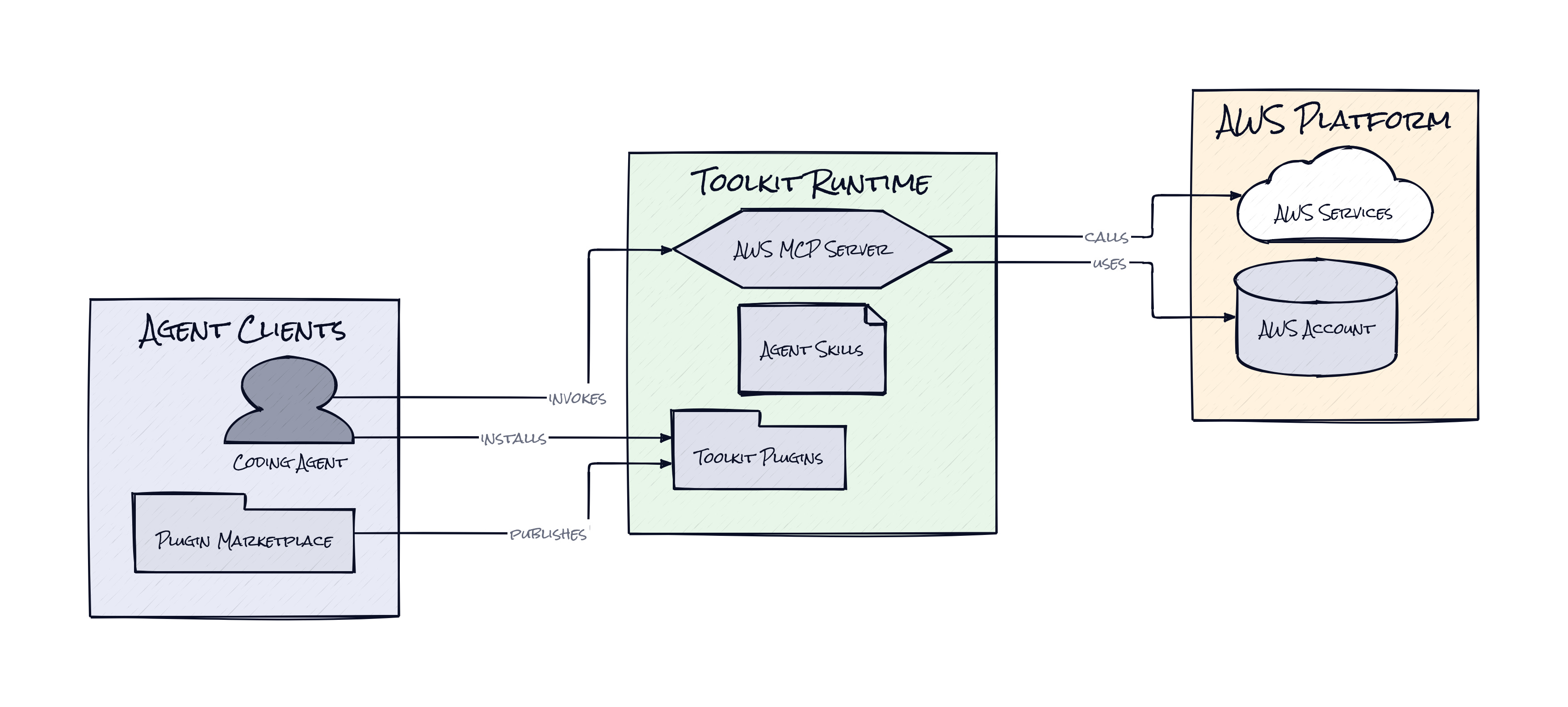
Instead of dumping raw cloud tools into an agent and hoping for the best, this repo wraps AWS access in a three-part architecture: the managed AWS MCP Server, task-scoped skills, and recommended rules files that shape how the agent should behave inside a project.
That layering is the important design choice. The server provides broad AWS API coverage through one authenticated endpoint, plus sandboxed script execution and live documentation retrieval. Broad access alone would be dangerous and noisy, though. Skills narrow the search space by giving the agent curated instructions and reference material for specific jobs, then loading only what is relevant to the current task. In practice, that means the model does not have to carry the whole AWS encyclopedia in context every time it deploys a Lambda, troubleshoots Bedrock, or investigates a security issue.
Rules files add a lightweight governance layer on top. They tell the agent which tools to prefer, when to search docs first, and how to approach AWS tasks consistently. That feels a lot like Notion templates meeting enterprise policy, except for machine behavior.
The enterprise angle is where AWS gets serious. IAM condition keys can distinguish agent actions from human actions, while CloudWatch metrics and CloudTrail logs create an audit trail for agent behavior. That is clever because the hard problem is not giving an AI hands. It is giving those hands boundaries, telemetry, and enough structured judgment to operate without turning every cloud action into a compliance panic.
The Move: Turn Cloud Work Into a Repeatable System
A startup shipping fast could use Agent Toolkit for AWS to turn AI coding from autocomplete into an actual cloud execution layer. Install aws-core first, then let an agent handle service selection, deployment wiring, observability setup, and documentation lookup inside a single workflow. That cuts the hidden tax of switching between chat tabs, console docs, and trial-and-error infra changes.
Security-conscious teams should look harder at the devsecops package. The repo includes workflows for incident investigation, release readiness, vulnerability scanning, and penetration testing. That means the same assistant drafting features can also participate in pre-ship review and post-incident analysis, under auditable permissions. That behavior compounds.
Larger orgs get a different advantage: standardization. Instead of every engineer inventing a private prompting ritual for AWS tasks, the company can distribute one governed operating model across Claude Code, Cursor, or Codex. Skills become reusable organizational memory. Rules become policy with teeth. The result is not just faster execution, it is lower variance. In cloud work, lower variance is often worth more than raw speed because cleanup costs are brutal.
The Aura: Cloud Fluency Becomes Delegatable
Fewer people will need to memorize the strange corners of AWS just to get reliable outcomes. That does not make expertise irrelevant, it changes where expertise lives. More of it moves into shared operational scaffolding, where teams can encode judgment once and let agents reuse it many times.
That shift raises expectations fast. People will start assuming cloud work should be explainable, auditable, and partially automated by default. The interesting human change is confidence. Not confidence in model genius, which is fragile, but confidence that bounded machine labor can handle boring, high-context infrastructure chores without becoming a black box.
The Play: AWS Tries to Own the Agent Ops Layer
From a VC lens, this is less a pure 0-to-1 category creation and more a land grab for the control plane of agentic cloud work. TAM is enormous because every company building with AI coding tools eventually runs into deployment, security, observability, and cloud configuration. If agent-driven software creation sticks, the surface area here expands from developer tooling into governance, compliance, and cloud workflow orchestration. Early PMF signals are decent, official vendor backing matters, and 1,078 stars this quickly suggests real curiosity, though not yet breakout inevitability. The moat is not code alone, it is privileged distribution, deep AWS service coverage, and switching costs created by policy, audit history, and team habits.
Winners:
Stack Auth: Faster AWS-integrated product shipping compounds because agents can stand up auth-adjacent cloud infrastructure with less human bottleneck.
Wiz: More agent activity in production clouds increases demand for cloud security posture and agent-visible audit trails that security teams can actually trust.
Amazon: Tighter coupling between AI coding workflows and AWS services can lift cloud LTV while reducing the friction that normally slows new workload adoption.
Losers:
Railway: More competent AWS-native agents erode the simplicity premium because small teams can tolerate raw AWS complexity when software handles the translation layer.
HashiCorp: More infra decisions happening through guided agent workflows weaken standalone IaC mindshare unless Terraform becomes the default substrate inside these agent systems.
Atlassian: More operational work completed directly inside coding agents chips away at ticket-heavy coordination loops, especially for repetitive cloud setup and incident triage.
tl;dr
Agent Toolkit for AWS turns AI coding agents into governed AWS operators by bundling cloud access, task-specific skills, and policy-aware rules. The clever bit is the architecture: one managed control layer, plus selective context and auditability. Teams building on AWS, especially those serious about security and repeatability, should pay attention.
Stars: 1,078 | Language: Python
