

The Push: June 24th, 2026
Cross-platform polish, explainable hiring scores, and a scrappy way to put Android Auto on old hardware


Flutter: Write Once, Sweat Less
github.com/flutter/flutter | License: BSD-3-Clause

Shipping an app across iPhone, Android, web, and desktop usually means one product roadmap and four separate arguments. Design wants consistency. Engineering wants native performance. Leadership wants speed. Everyone gets a compromise. Flutter has always been a pretty blunt answer to that mess: stop treating each platform like a totally different universe. That pitch is not new. What keeps Flutter relevant is that the repo still reflects an unusually ambitious bet, a full UI system, rendering engine, tooling layer, and package ecosystem, all tuned around the idea that product teams care about shipping polished interfaces fast.
The Drop: One Product, Too Many Surfaces
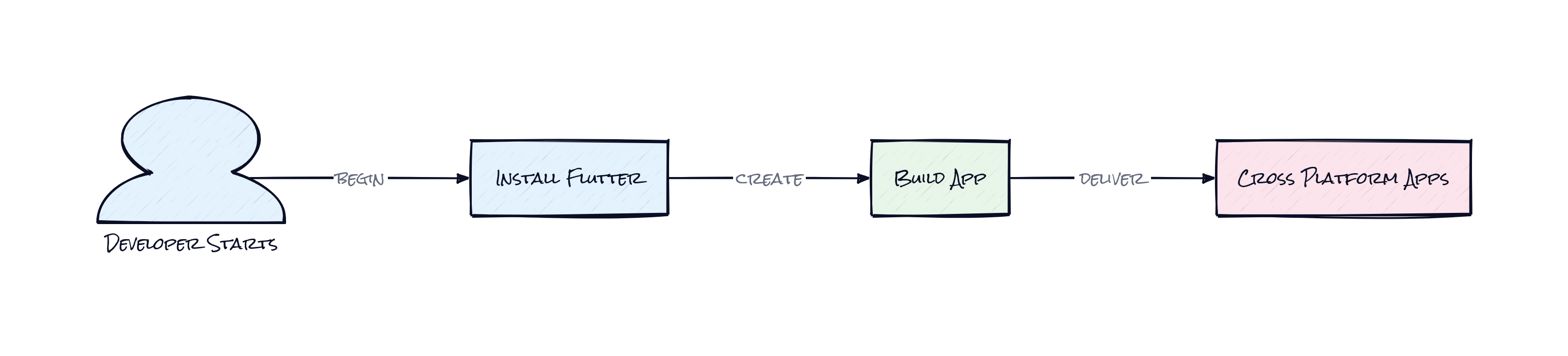
Plenty of teams discover the cross-platform problem the hard way. A prototype looks great on iOS, then Android spacing breaks, web performance feels off, and desktop support becomes a “later” problem that quietly never happens. Native stacks give deep platform access, sure, but they also create organizational drag. Every feature becomes a coordination project across multiple codebases, release cycles, and UI systems.
Flutter showed up because that pain was not just about duplicated engineering effort. The deeper frustration was visual inconsistency. Traditional cross-platform tools often translated shared code into platform widgets, which sounds reasonable until one button renders slightly differently everywhere and animations lose that tight feel people notice even if they cannot name it.
Google’s bet with Flutter was harsher and cleaner: own the rendering path, ship a rich widget system, and let teams define the interface directly instead of negotiating with each operating system’s UI layer. That matters because product quality increasingly lives in motion, layout behavior, and interaction polish, not just feature lists. Honestly, the gap Flutter attacked was less “write code once” and more “stop rebuilding taste four times.”
The Stack: Dart With Its Own Rendering Muscle
Underneath the pitch, Flutter is powered by Dart, compiled for mobile, web, and desktop targets, plus a rendering pipeline backed by graphics engines like Skia and Impeller. The framework bundles a large widget layer, hot reload tooling, and bridges to native platform APIs when teams need device-specific capabilities.
The Sauce: Owning the Pixels, Not Just the API
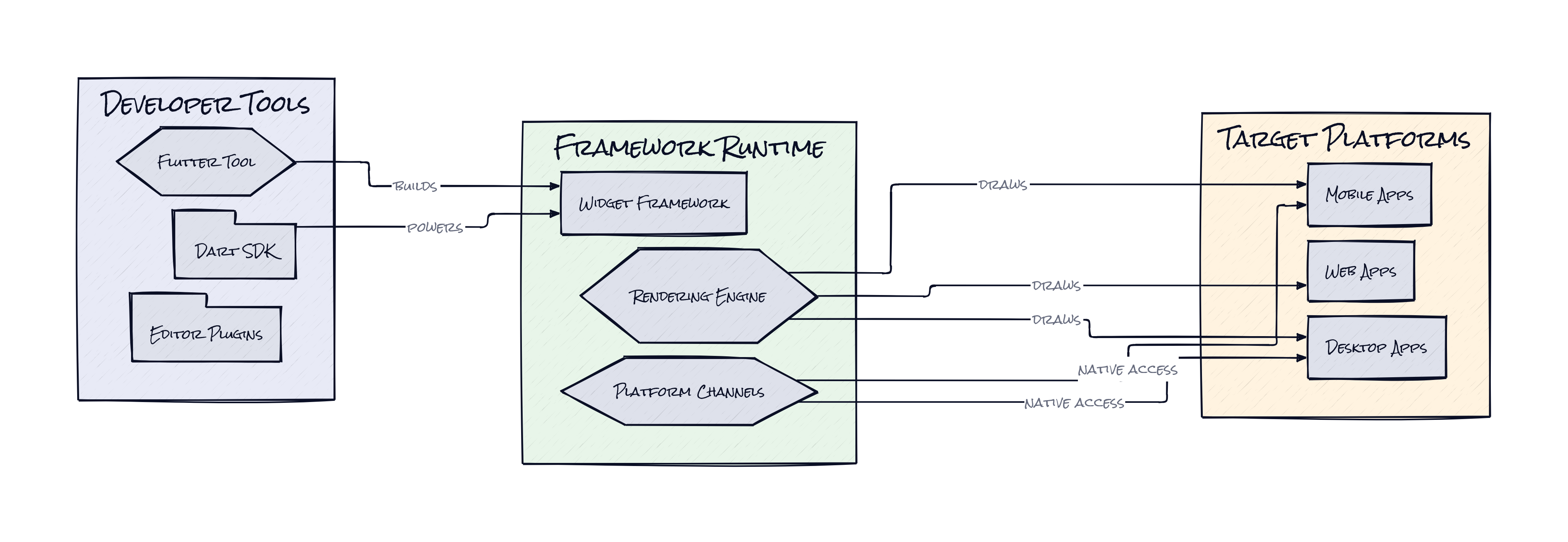
Unlike frameworks that mostly wrap native controls, Flutter treats the interface as a fully managed rendering problem. That architectural choice is the whole story. By drawing its own components, Flutter can make a button, animation, text layout, or scrolling behavior behave consistently across platforms while still offering Material and Cupertino design systems that match platform expectations when needed.
This is clever because consistency in product development is rarely about sharing business logic. The real tax hides in UI edge cases. Text measurement differs. Animation timing differs. Input behavior differs. Native wrappers inherit all of that entropy. Flutter cuts through it by making the visual layer its own domain, then exposing a composable tree of widgets that can be rearranged, themed, and animated without handing control back to the operating system at every turn.
That also explains why Hot Reload became such a defining feature. Fast feedback only matters when the framework has enough control to redraw meaningful UI changes instantly while preserving state. Flutter’s layered architecture makes that loop feel almost design-tool-like, which is way more important than it sounds. Rapid iteration changes what teams are willing to test.
The other underrated piece is Platform Channels, Flutter’s bridge for calling native code when the shared layer is not enough. That keeps the framework opinionated without becoming a cage. Product teams get a broad default path, plus escape hatches for payments, sensors, enterprise SDKs, or weird hardware integrations. That balance, full-stack control with selective native access, is why Flutter stuck.
The Move: Ship Broader Without Hiring Four Teams
Startups can use Flutter to test whether a product deserves to exist on more than one surface before staffing separate mobile, web, and desktop teams. That changes the sequencing. Instead of picking one platform and leaving growth channels on the table, a team can launch a polished mobile app, then extend the same interaction model to web onboarding, internal desktop tools, or companion apps without re-arguing the whole design system.
Larger companies get a different advantage: operational compression. Shared UI logic means fewer handoff failures between product, design, and engineering. A design system can live once, evolve once, and ship everywhere with fewer drift issues. That is strategically useful in categories where branding and responsiveness matter, e.g. fintech, commerce, health, and consumer subscription apps.
Flutter also works well for corporate skunkworks projects, conference demos, region-specific pilots, and acquisition integrations. Those are the places where time-to-polish matters more than perfect native orthodoxy. The point is not that every app should be built this way. The point is that Flutter gives teams a credible option when speed, surface area, and visual control need to coexist, which is rarer than product decks admit.
The Aura: Product Quality Becomes More Portable
Teams increasingly expect interface quality to travel. A polished interaction on mobile should not turn into a second-class experience on desktop just because the org chart split ownership three ways. Flutter feeds that expectation by making design intent more durable across surfaces.
That has a human consequence. Designers push farther because implementation drift drops. Founders test more channels because launch cost falls. Smaller teams start acting like bigger ones, at least from the outside. Maybe that is Flutter’s lasting thesis: the premium feel of software stops being reserved for companies rich enough to maintain parallel app universes.
The Play: Cross-Platform, but Deeper Than Efficiency
From a VC lens, Flutter is not a fresh 0-to-1 category. Cross-platform app tooling is an existing market. The investable angle is that Flutter proves durable demand for opinionated UI infrastructure with strong developer love, massive TAM across every company shipping apps, and unusual staying power for an open source framework at 177,215 stars. PMF signals are obvious: years of community momentum, heavy enterprise adoption, thousands of packages, and a contribution surface that goes far beyond hobby usage.
The moat is mixed. There is no hard data moat, but there are real switching costs in team workflows, package ecosystems, design systems, and hiring patterns. Execution speed and ecosystem depth matter more than pure code novelty here, and the behavior change, defaulting to one UI stack across surfaces, is sticky once an org operationalizes it.
Winners:
RevenueCat: More Flutter adoption compounds demand for subscription infrastructure that works cleanly across app surfaces, lowering integration friction for small teams shipping everywhere.
Canva: Broader cross-platform UI standardization makes it easier to keep rich editing experiences consistent across devices, reinforcing product reach without multiplying front-end complexity.
Google: Deeper Flutter usage strengthens platform influence through tooling, packages, and developer mindshare, even when the apps target ecosystems beyond Android.
Losers:
Bitrise: More unified app stacks can erode pipeline complexity as teams reduce the number of platform-specific build and release paths they need to orchestrate.
Appcelerator: Older cross-platform approaches look harder to defend when Flutter offers stronger rendering control, fresher ecosystem energy, and better modern product polish.
Apple: Less dependence on native UI frameworks weakens some platform lock-in at the developer workflow level, even if device distribution remains intact.
tl;dr
Flutter turns cross-platform app development into a full-stack UI bet, not just a code-sharing trick. The clever part is owning the rendering layer, which makes consistency, speed, and iteration actually believable across devices. Product teams, design-heavy startups, and companies juggling too many app surfaces should look.
Stars: 177,214 | Language: Dart
