



Bili Ticker Buy: Ticket Drops Need Automation
github.com/mikumifa/biliTickerBuy | License: MIT
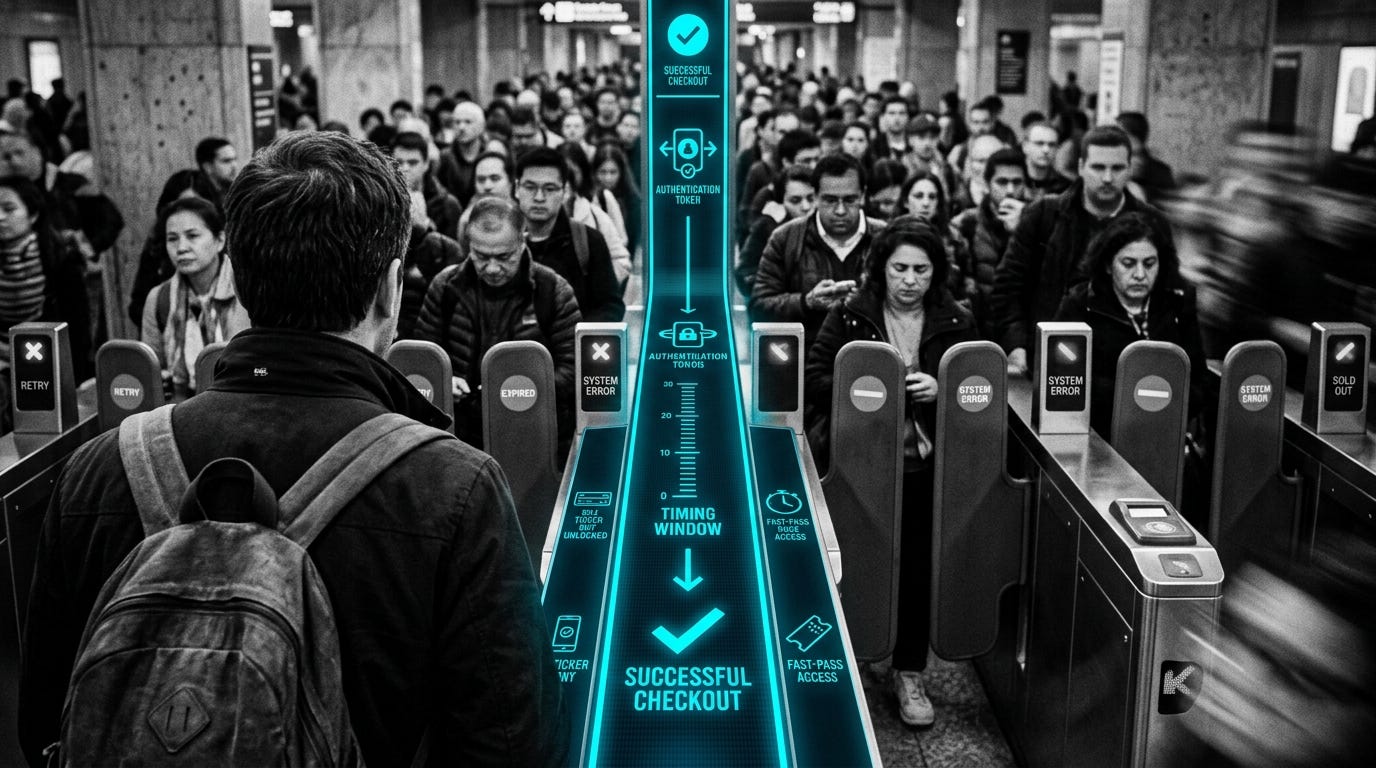
Concert tickets on Chinese platforms can disappear in seconds, and the user experience somehow still expects calm human reflexes. Login expires, sale windows open at weird times, anti-bot checks change, and every refresh feels like a tiny gamble. Bili Ticker Buy lands in that messy gap. Not as some sleek startup product, but as a pragmatic open source tool for Bilibili’s ticket marketplace. Honestly, that is exactly why the repo is interesting. It is not selling aspiration. It is encoding the annoying operational reality of high-pressure online purchasing.
The Drop: Buying Flow as a Stress Test

Flash-sale commerce breaks the usual promise of consumer software. The interface looks simple, but the actual process is a race against latency, session validity, and platform quirks. Bilibili’s membership commerce flow, especially for popular events, seems to create that exact kind of pain: the page loads, stock signals are noisy, order creation can fail for multiple reasons, and users end up repeating the same sequence with almost no feedback about what went wrong.
Bili Ticker Buy exists because manual repetition is a terrible strategy when the system itself is unstable. Refresh too slowly, and inventory is gone. Refresh too aggressively, and the platform may rate-limit or challenge the session. Miss one token refresh or QR login step, and the whole attempt collapses at the worst possible second.
Plenty of “ticket bots” are just brute-force loops with a thin UI. This repo feels more grounded than that. The project is trying to survive a messy transactional workflow, not just click faster. That distinction matters, because the actual enemy here is not speed alone. It is workflow fragility under time pressure.
The Stack: Python Built for Friction
Under the hood, Bili Ticker Buy is a Python application with both CLI and lightweight UI flows, using Tyro for command handling and Gradio related routing in the interface layer. Supporting pieces like qrcode, loguru, container deployment, and a managed runtime setup make the project feel less like a script and more like a compact operations tool.
The Sauce: Stateful Retries, Not Blind Spam
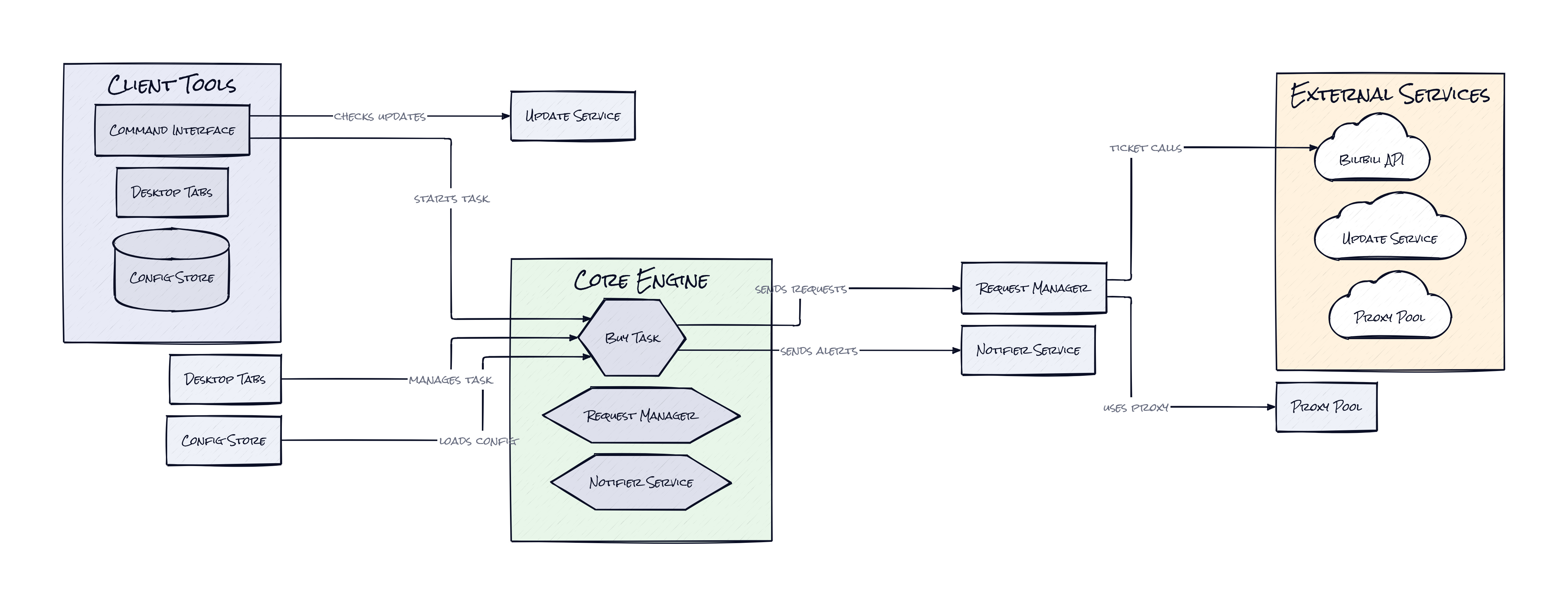
Buried in the architecture is a smarter idea than “send requests until something works.” Bili Ticker Buy organizes purchase attempts as a buy stream, which is basically a stateful event loop that keeps track of countdown timing, token preparation, order attempts, retry reasons, and live status updates. That sounds subtle, but it changes the character of the tool.
Instead of treating every failure as identical, the system classifies outcomes and responds differently. A token can be rebuilt, a request can be re-prepared, a proxy can back off, a project payload can be refreshed, and notifications can fire when the process hits specific conditions. The repo also maintains hot and warm refresh behavior, a layered refresh pattern that keeps event data current without hammering the platform the same way every cycle. That is a very ops-minded choice.
Another strong decision is the managed runner setup around execution, logs, and task state. Rather than forcing the user to babysit one terminal session, the project keeps purchase runs observable. That matters because failed automation is often opaque automation.
The architectural bet here is that success comes from preserving context between attempts. Session state, browser state, proxy state, and retry logic all get treated as first-class inputs. That is why the repo punches above its weight. The core insight is not automation alone. It is that checkout under scarcity is a state machine, and the tool behaves like one.
The Move: Turn Scarcity Into Process
Fans, collectors, and event resellers already know the basic playbook: identify high-demand drops, prep multiple accounts carefully, monitor timing, and remove every manual step possible. Bili Ticker Buy gives structure to that process. A user can configure ticket targets, keep authentication ready, run monitored purchase tasks, and get notified when the flow succeeds or stalls. In practice, that means fewer wasted launches and less last-second scrambling.
Founders and product teams should read this repo a little differently. The useful lesson is not “go buy concert tickets with Python.” The useful lesson is that any scarce digital good, event seats, limited merch, appointment slots, reservation inventory, can benefit from the same orchestration layer. Bili Ticker Buy shows how to wrap a flaky transaction funnel in persistence, observability, and adaptive retries.
Strategically, that is an edge because it converts demand spikes into a repeatable operating system. Messy interfaces become workable once the retry logic is explicit. Anyone building around drops, queueing, or competitive checkout should pay attention.
The Aura: Software That Refuses to Panic
People change behavior fast when the stakes are tiny but the timing is exact. Ticket buying used to be an attention problem. Projects like Bili Ticker Buy turn it into a systems problem. Instead of hovering over a page and hoping, users start expecting software to hold context, watch timing, and absorb failure on their behalf.
That expectation spreads. Once a tool can manage authentication, retries, and live feedback during a high-stress flow, manual clicking starts to feel almost primitive. The deeper shift is psychological: users want software that stays composed when platforms get chaotic. Calm becomes a product feature.
The Play: Niche Pain, Broad Pattern
From a VC angle, this is not a clean 0-to-1 category on its own. Ticket-purchase automation is a narrow wedge, maybe gray in parts, and hard to monetize directly at scale. But the repo demonstrates a broader product thesis with real TAM: orchestration software for scarce, failure-prone consumer transactions. That pattern reaches ticketing, sneaker drops, reservations, healthcare booking, even government appointments. PMF signals are decent for an open source utility, with 3,694 stars, active issues, related spinout repos, and visible user demand around setup and reliability. The moat is not data or network effects yet. It is execution speed around edge cases, plus switching costs once users trust a workflow under pressure.
Winners:
Palet: Faster growth in drop-management tooling compounds because users already accept automation for scarce consumer inventory.
Whatnot: Better conversion around live commerce scarcity compounds if checkout orchestration becomes a competitive layer, not just a front-end problem.
eBay: More value accrues to marketplaces that can operationalize limited-inventory flows and buyer trust at massive scale.
Losers:
Dopple: More fragile consumer automation products erode when niche tools prove reliability matters more than polished wrappers.
Eventbrite: More pressure builds on transaction reliability and queue handling because users will route around weak purchase flows.
Ticketmaster: More brand damage compounds when open source tooling highlights how much demand-side pain still sits inside ticket checkout.
tl;dr
Bili Ticker Buy turns Bilibili ticket purchasing into a monitored, stateful automation workflow instead of a panic-refresh ritual. What is clever is the retry architecture, which treats checkout like a live system with tokens, timing, and failure states. Worth a look for anyone studying scarce inventory, competitive checkout, or consumer automation.
Stars: 3,694 | Language: Python
