


Turso: SQLite Stops Acting Small
github.com/tursodatabase/turso | License: MIT

A lot of product ideas die in the same boring place: the app works locally, then the data layer gets complicated fast. SQLite is great until concurrency, browser support, AI hooks, and real-time sync start piling on. Then teams jump to Postgres, add a hosted layer, and suddenly a simple product has a database strategy meeting. Turso is interesting because it attacks that exact moment. Not by replacing SQLite’s muscle memory, but by stretching it into something that feels much closer to modern app infrastructure.
The Drop: The Embedded Database That Outgrew Its Box
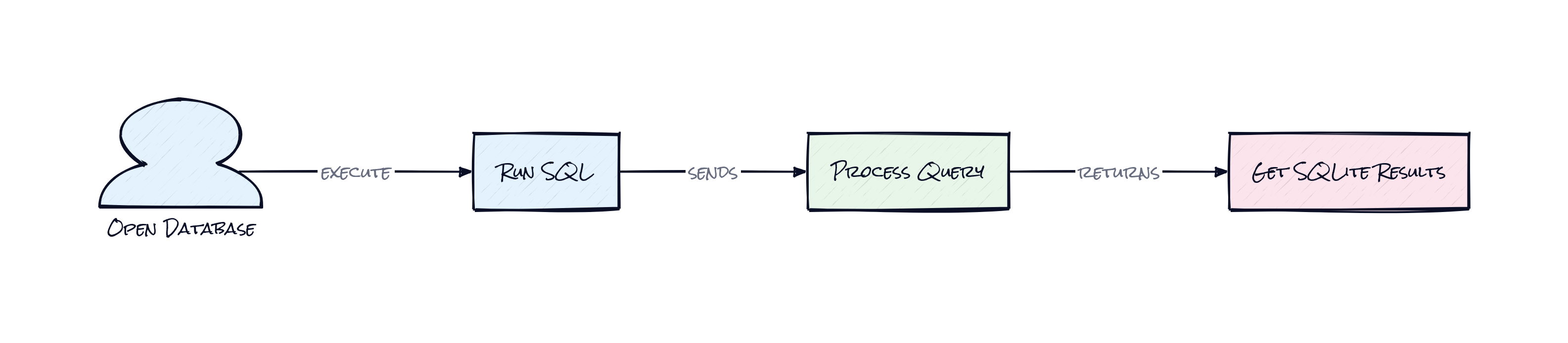
Plenty of apps want the simplicity of a file-based database, especially prototypes, edge apps, local-first products, desktop software, and AI tools that need state close to the model. The pain starts when that tiny database becomes a bottleneck in places SQLite was never really optimized to dominate: multiple writers, cross-language app stacks, browser execution, vector workloads, and live change streams.
That gap matters more than it used to. AI products increasingly want local memory and structured state. Edge deployments want low-latency reads without a network round trip. Consumer apps want offline behavior that does not feel like a downgrade. Yet moving from SQLite to a server database is usually not a graceful evolution, it is a rewrite disguised as “scaling.”
Turso exists because teams want to keep the ergonomics they already trust while getting features associated with heavier systems. The frustration is not that SQLite is bad. Honestly, SQLite is too good, which makes every migration away from it feel annoying, expensive, and slightly absurd. A project that says “keep the compatibility, add the missing systems behavior” is solving a very real architectural headache.
The Stack: Rust Inside, SQLite Outside
Under the hood, Turso is written in Rust and exposes broad SQLite compatibility, including the SQL dialect, file format, and C API expectations that make SQLite portable in the first place. Bindings span JavaScript, Python, Go, Java, .NET, Rust, and WebAssembly, with extras like Tantivy-backed search, async I/O, and browser execution.
The Sauce: Compatibility as the Expansion Slot
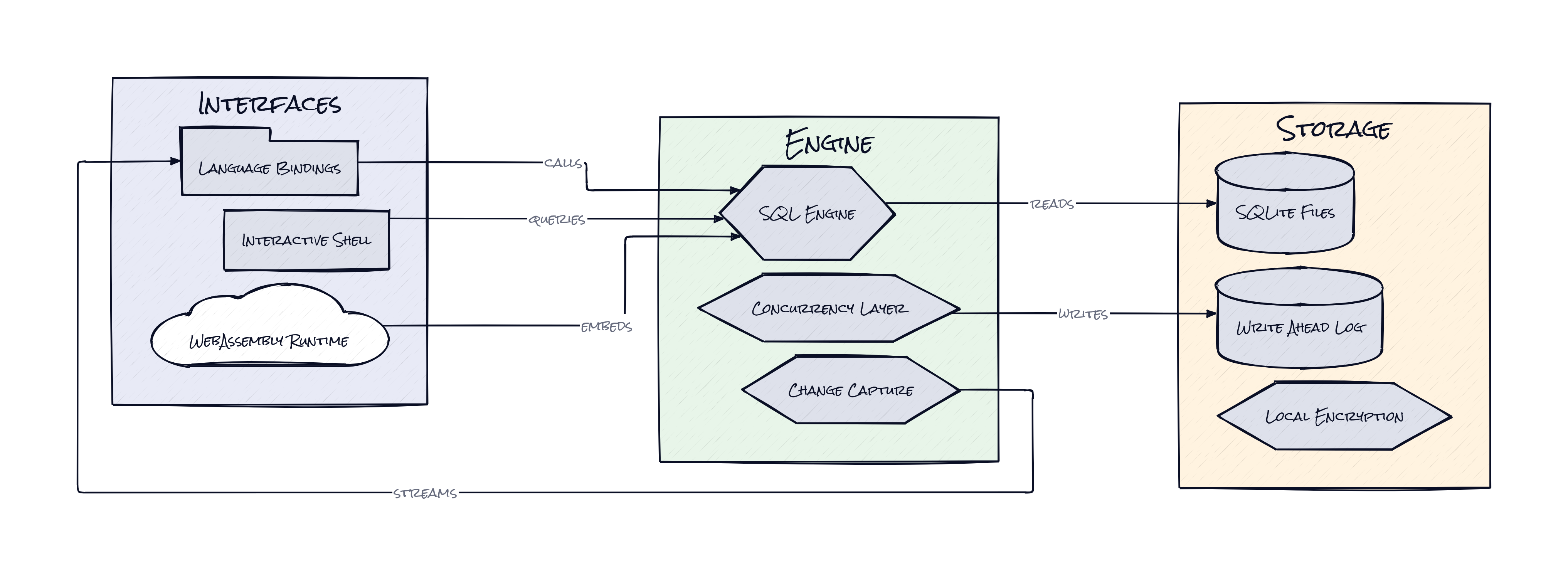
BEGIN CONCURRENT is the headline architectural choice worth paying attention to. Turso keeps the SQLite mental model, then layers in MVCC, or multi-version concurrency control, so multiple writers can make progress without the usual lock contention becoming the whole story. That sounds subtle, but it changes the kind of app you can reasonably build on an embedded database.
Instead of asking developers to adopt a new query model, a new storage abstraction, or a new operational religion, Turso treats compatibility as the product surface and concurrency as the upgrade. That is smart. SQLite’s moat has always been distribution and trust. Turso borrows both, then extends the engine where modern apps actually hurt.
The rest of the architecture reinforces that bet. CDC, or change data capture, turns database updates into a live event stream, which matters for syncing UI, feeding analytics, or wiring AI workflows that react to structured changes. WebAssembly support puts the same engine in the browser, which is more important than it sounds. Browser storage usually fractures app logic into “local mode” and “real mode.” Turso pushes toward one database model across both.
There is also a built-in MCP server mode, which lets AI assistants interact with the database through natural language tooling. That feature is not just AI garnish. It turns the database into an operational surface for agents, closer to “Notion for structured app state” than a dumb storage layer. The interesting part is not any single feature. It is the decision to make SQLite the compatibility shell for a database that wants to live across local apps, cloud back ends, browsers, and AI systems.
The Move: Turn Local State Into a Product Advantage
Founders and product teams should read Turso as a way to delay, or avoid, the expensive database fork in the road. A desktop tool can keep data local, add richer concurrency, and still expose live updates for collaboration features later. An AI app can store memory, retrieval metadata, and user actions in the same place, then let an assistant inspect and modify that state through MCP. A browser-first product can run meaningful structured storage client-side without inventing a separate persistence stack.
That creates strategic room. Shipping with SQLite compatibility means faster onboarding for engineers and fewer migration risks when the prototype turns into the real thing. Adding CDC means the same data layer can feed analytics, notifications, sync engines, or agent workflows without another integration spree. Browser and multi-language support mean one core database story can travel across web, mobile wrappers, desktop shells, and back-end services.
The practical play is pretty straightforward: use Turso anywhere local-first behavior, offline resilience, edge performance, or agent-accessible state matters. That includes note apps, internal tools, AI copilots, dev utilities, and prosumer software. The win is not just lower infra cost. The win is keeping product complexity from exploding before the business earns it.
The Aura: Software Starts Expecting to Stay Close
People are getting less patient with apps that need the cloud for every tiny interaction. Fast, stateful, personal software feels better, and increasingly feels normal. Turso fits that expectation by making structured data feel close again, whether close means on-device, in-browser, or beside an AI assistant that can actually inspect the underlying records.
That changes behavior. Teams can design for persistence by default, not as a premium feature. Users can expect tools to remember, react, and work offline without ceremony. The broader thesis seems simple: software does not need to choose between local intimacy and modern capability nearly as often as the last decade suggested.
The Play: A Better Mousetrap With Category Upside
This looks like a better mousetrap in the massive SQLite and edge-data market, but there is a credible 0-to-1 angle around “agent-accessible embedded databases.” TAM is huge because SQLite already sits inside phones, browsers, apps, and devices everywhere. PMF signals are strong for an infra repo, with 20,000+ stars, active multi-language bindings, and visible community touchpoints. The moat is not pure code defensibility, because databases get copied, but execution speed, compatibility trust, and distribution into AI and local-first workflows could compound into real switching costs.
Winners:
Pipedream: More local and edge-native state handling gets easier, which compounds by making workflow products less dependent on heavyweight external databases.
Supabase: Demand expands for products that bridge developer-friendly databases into full app platforms, especially as teams want SQLite-like simplicity with modern sync and auth layers nearby.
Cloudflare: Edge apps with richer local data semantics become more viable, which strengthens the case for running stateful workloads near users instead of in centralized regions.
Losers:
Neon: Early products betting on every serious app graduating quickly to remote Postgres face erosion if embedded databases cover more of the “good enough, then great” path.
PlanetScale: Mid-stage database platforms built around scaling operational SQL may see more greenfield apps postpone that jump for longer than expected.
MongoDB: Established database vendors lose some default-choice energy when modern app builders can stay inside the SQLite ecosystem far deeper into product maturity.
tl;dr
Turso turns SQLite into something much more ambitious, an embedded database with concurrency upgrades, live change streams, browser support, and AI-facing control surfaces. The clever part is the compatibility-first architecture. Teams building local-first apps, edge products, or AI tools with persistent state should pay attention.
Stars: 20,159 | Language: Rust
