


TeslaMate: Your Car Should Show Its Work
github.com/teslamate-org/teslamate | License: AGPL-3.0
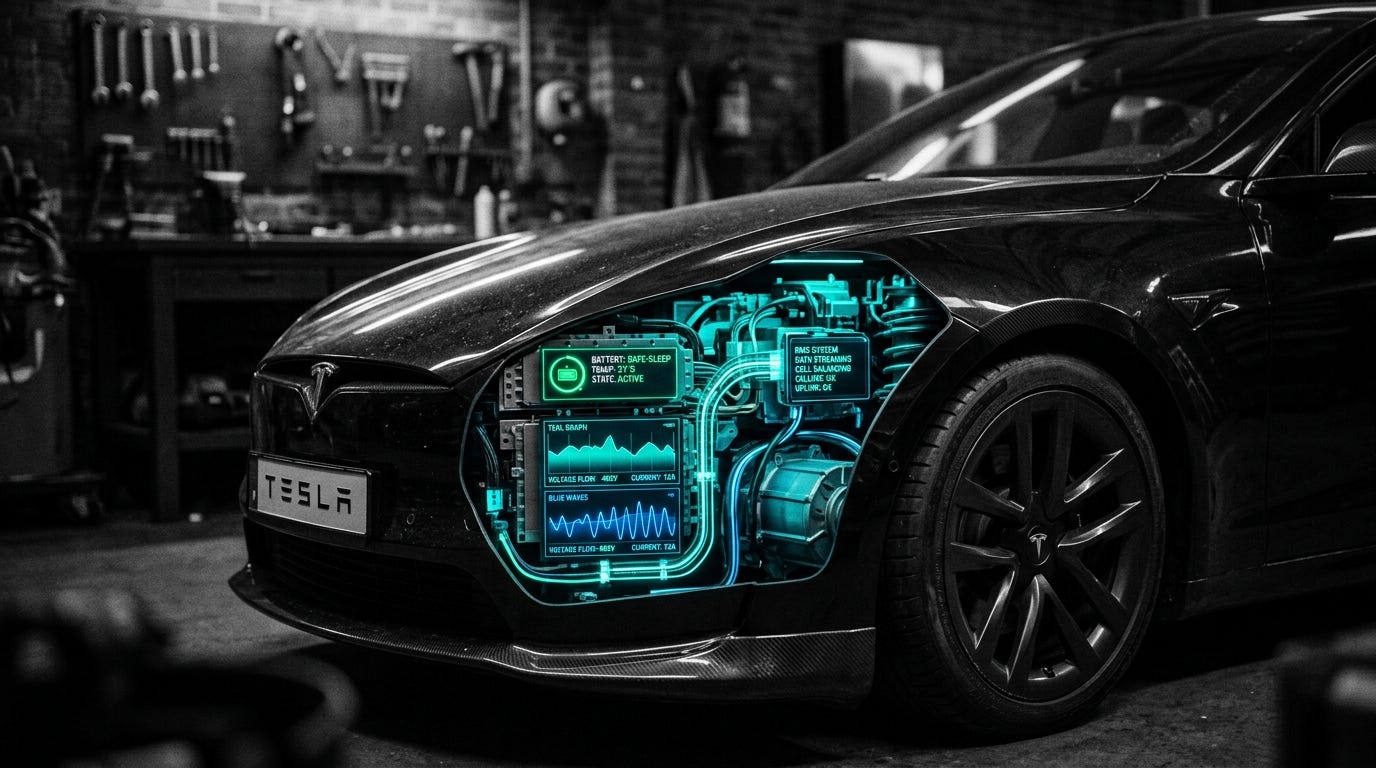
A Tesla already feels like a rolling computer, until a basic ownership question shows up and the official app goes weirdly shallow. Battery health over time, charging costs by location, how much vampire drain actually happened last month, whether a software update changed efficiency, none of that is easy to inspect in one place. TeslaMate lands right on that irritation. It turns a premium hardware product into something you can actually measure, not just admire, and that difference matters more than the touchscreen ever did.
The Drop: Premium Hardware, Missing Owner Intelligence
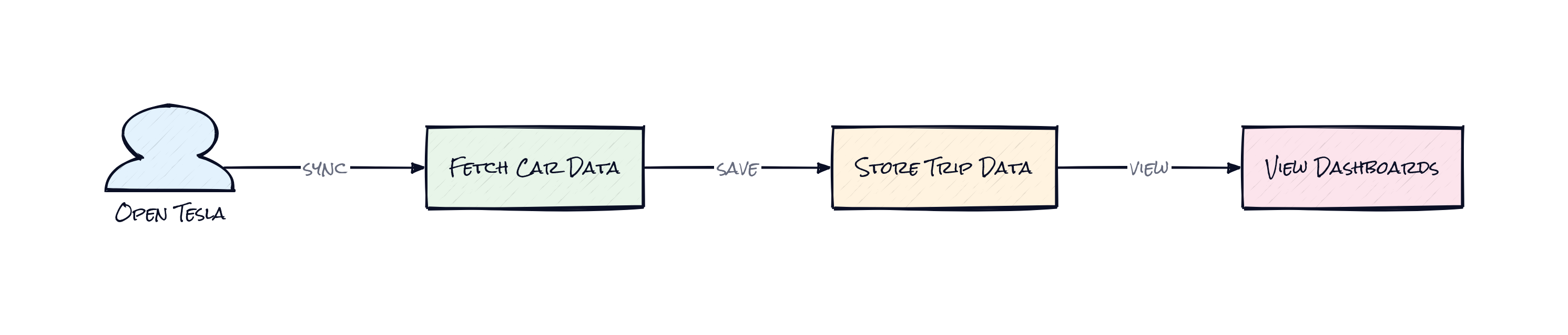
Tesla sells a car with sensors everywhere, constant connectivity, and a software-first brand. Yet the ownership experience still leaves serious data people half-blind. Trip histories exist, but not in a way that helps answer practical questions. Charging happened, but what did home charging cost across seasons? Range changed, but was that weather, driving style, or battery degradation? The car slept, but how often did background polling wake it up?
TeslaMate exists because owners wanted a persistent record that Tesla itself does not really expose. Not a screenshot feed, not a few glossy charts in the app, but a complete timeline of drives, charges, states, locations, and updates. That gap gets sharper once the car becomes part of a larger home stack. Home Assistant users want automations. Spreadsheet people want exports. Road trip obsessives want maps. Lease holders want tax logs. Fleet-like households want multiple vehicles tracked under one account.
Honestly, the frustration is not just missing data. It is missing ownership. Tesla keeps the operating system, the interface, and the defaults. TeslaMate gives the owner the telemetry layer back.
The Stack: Elixir for a Sleeping Car
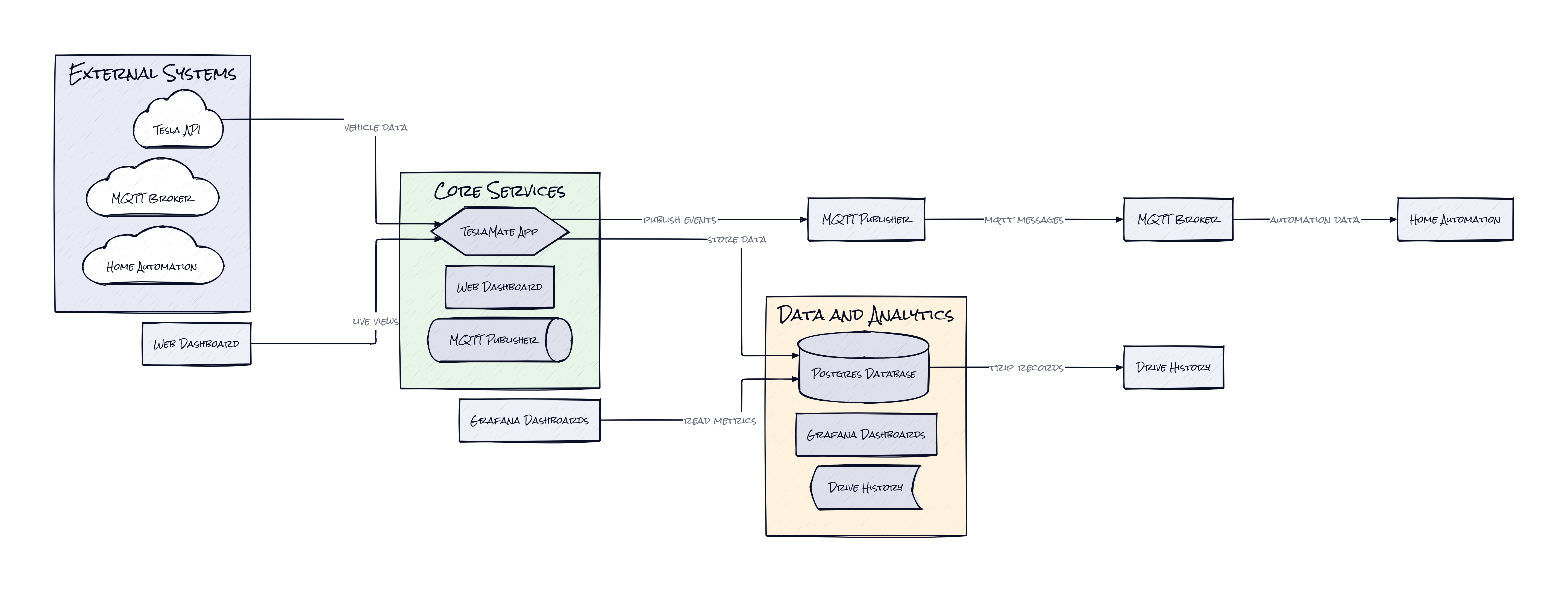
Under the hood, TeslaMate runs on Elixir, with Postgres as the long-term system of record, Grafana for analytics, and MQTT to publish live vehicle events into a local automation stack. The interface uses Phoenix LiveView, which fits nicely here because the product is basically a stream of changing state, not a page-by-page app.
The Sauce: Poll Less, Learn More
Sleep behavior is the architectural hinge here. TeslaMate’s standout design choice is that it treats the vehicle like a constrained, semi-available device whose battery should not be sacrificed just to satisfy dashboard curiosity. That sounds obvious, but a lot of connected-car software gets this wrong.
Instead of acting like a hungry tracker that constantly pokes the Tesla API, TeslaMate builds around vehicle state tracking, a model that records whether the car is driving, charging, parked, online, or asleep, then adjusts collection behavior accordingly. The project’s promise of “no additional vampire drain” is not marketing fluff, it is the product discipline. Data logging is only useful if the act of observing does not distort the thing being observed.
That design gets stronger because TeslaMate does not stop at storage. It combines high-frequency telemetry capture with Grafana dashboards for historical analysis and MQTT publishing for event distribution. That means the same underlying stream can power long-term battery health charts, real-time garage automations, and custom workflows in tools like Home Assistant or Node-RED. One ingestion layer, several output surfaces.
There is also a subtle product insight in the built-in geo-fencing and address lookup. Raw latitude and longitude are technically complete, but cognitively useless. Naming places turns car telemetry into life telemetry. Charging at “Home,” arriving at “Office,” recurring stops at a favorite charger, those labels create context, and context is what makes longitudinal data sticky.
The Move: Turn Ownership Into a Data Advantage
Running TeslaMate is not just a hobbyist flex. It gives a Tesla owner a private analytics layer that compounds over time. Set it up on a small home server or Raspberry Pi, connect the Tesla account once, and the value starts building from day one because every drive, charge, sleep cycle, and update becomes part of a durable record.
From there, the strategic use cases get interesting. Battery degradation tracking helps with resale timing and warranty conversations. Charge-cost history turns vague EV savings claims into actual household numbers. State and location history creates evidence for business mileage, tax reporting, or lease compliance. MQTT output turns the car into a trigger source for home automations, e.g. pre-cooling a room when arrival is detected or shifting charging based on energy tariffs.
Teams should pay attention too. Small fleets, executive transport, and EV-heavy households can treat TeslaMate like lightweight observability for physical assets. The point is not “pretty charts.” The point is owning the operational memory of a product that usually keeps that memory behind a vendor-controlled surface.
The Aura: Ownership Stops Being Passive
Car ownership gets more analytical when the machine stops acting like a sealed service and starts acting like a readable system. People become less tolerant of black-box products once they have tasted full telemetry, searchable history, and automation hooks in something as everyday as transportation.
TeslaMate reinforces a broader expectation: expensive connected products should not just emit notifications, they should expose evidence. Not because everyone wants to become a mechanic-data-nerd hybrid, but because trust increasingly comes from inspectability. When a device affects daily cost, movement, and energy use, hidden summaries no longer feel enough.
The Play: Vertical Data Rights, Not Just a Dashboard
TeslaMate looks less like a pure 0-to-1 company and more like a sharp wedge into a large existing market: connected vehicle data, fleet intelligence, and home energy orchestration. The open-source repo itself is not the venture-scale business, but the behavior behind it is valuable. Owners want first-party-grade telemetry with third-party control. That points to real TAM across EV analytics, insurance-adjacent tooling, home energy software, and SMB fleet ops.
PMF signals are solid for a niche infrastructure product, 8,195 stars, healthy contributor activity, long shelf life since 2019, and clear integrations that pull the repo into adjacent ecosystems. The moat is not raw code alone. It is trust, accumulated schema around vehicle events, and the switching costs that come once years of driving and charging history live in your stack. That kind of retention is sneaky.
Winners:
Emporia: More EV owners expecting granular charging and energy telemetry compounds demand for home energy products that can plug into richer vehicle data.
Samsara: Broader comfort with self-serve vehicle observability expands the market for premium fleet analytics, especially as mixed consumer-commercial EV usage grows.
Schneider Electric: Higher expectations around energy-aware automation strengthen the case for established building and home energy systems that can ingest external telemetry.
Losers:
Recurrent: Proprietary EV health insights get less differentiated when owners can assemble longitudinal battery and charging records themselves.
Turo: Thin operational visibility around host-owned EV fleets gets harder to defend when power users can instrument vehicles outside the platform.
Tesla: Interface control weakens slightly when owners normalize exporting value from the car into independent dashboards and automations.
tl;dr
TeslaMate turns a Tesla into a self-hosted telemetry product, with durable logging, sleep-aware data collection, and strong analytics outputs through Grafana and MQTT. The clever part is the architecture’s respect for vehicle state, which preserves battery while keeping rich history. Tesla owners, home automation users, and small EV fleets should look.
Stars: 8,195 | Language: Elixir
