



Pytest: Testing Finally Feels Like Product
github.com/pytest-dev/pytest | License: MIT

A broken signup flow lands in production, not because the team missed the bug, but because writing the test felt more annoying than shipping without one. That tradeoff shows up everywhere. Testing tools often ask for ceremony before they give value, which is a bad bargain when deadlines are real. Pytest became the default answer because it cuts that friction fast. The appeal is not just that it catches failures, it’s that Pytest makes quality control feel lighter at the exact moment software teams usually make it feel heavy.
The Drop: Where Test Friction Quietly Kills Good Teams
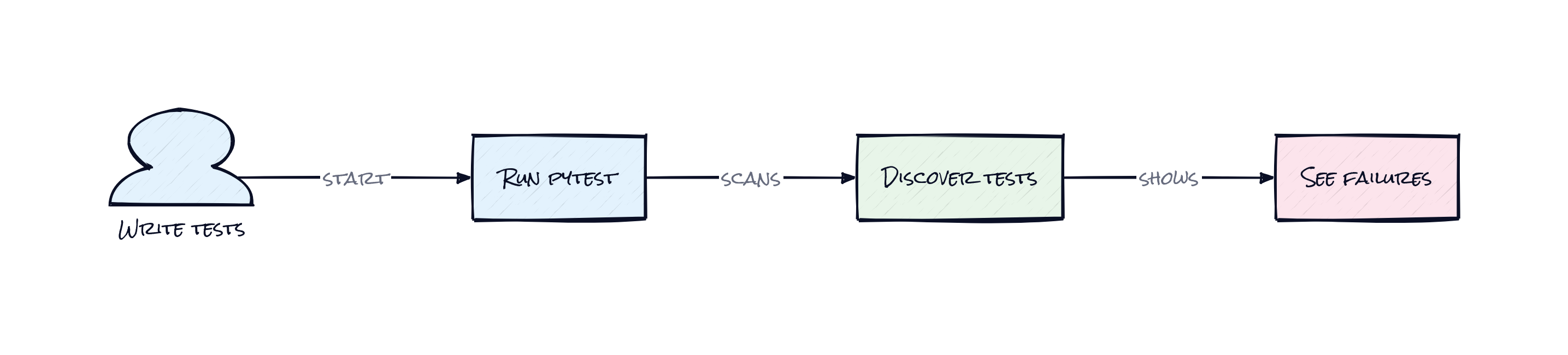
Plenty of products ship with bugs that were completely predictable. Not because teams are careless, but because traditional testing frameworks often punish momentum. You write setup code, inherit weird classes, memorize special assertion methods, and then scroll through failure logs that read like a legal document. That experience trains people to test less, especially on side projects, internal tools, and fast-moving startups where speed matters right now.
Pytest attacks that emotional bottleneck. The repo exists because writing a small check should feel almost as easy as writing the feature itself. Plain assertions, automatic test discovery, and readable failure output turn testing from an obligation into something closer to a feedback loop. That matters more than it sounds. Once a tool lowers the activation energy, teams stop treating quality as a separate phase and start treating it as part of normal product iteration.
Honestly, the pain Pytest solves is not “testing is hard.” Testing has always been hard. The pain is that good testing tools used to feel worse than the bugs they were meant to prevent.
The Stack: Python’s Quietly Powerful Backbone
Under the hood, Pytest is built in Python and centered on Pluggy, the hook system that powers its plugin architecture. Core modules handle collection, execution, fixtures, and reporting, while a large extension ecosystem adds capabilities like coverage, parallelization, and browser automation without bloating the base framework.
The Sauce: The Hook System That Turned a Tool Into a Platform
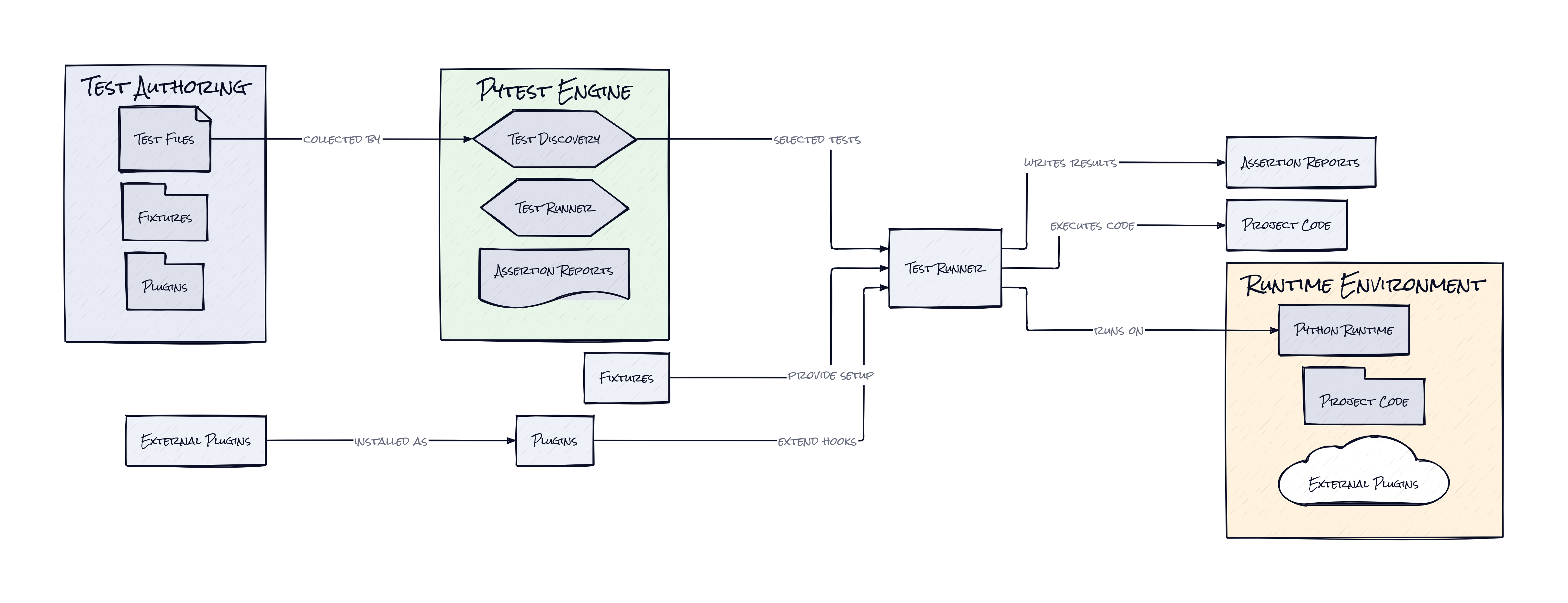
What makes Pytest durable is fixtures, its dependency injection system for test resources, combined with hookspecs, the formal event interface plugins use to extend behavior. That pairing sounds niche, but it’s the reason Pytest scales from one-file hobby scripts to enterprise CI pipelines without turning into a mess.
Fixtures let teams declare reusable setup logic, e.g. a database connection, logged-in user, temp directory, or API client, as composable building blocks with explicit scope. Pytest then resolves those dependencies per test, per module, or per session. That means teams stop copy-pasting setup code and start treating test state as infrastructure. It’s cleaner, but more importantly, it makes test suites maintainable as products grow.
Hooks are the bigger architectural bet. Pytest exposes key lifecycle events, collection, execution, reporting, config loading, plugin registration, through a plugin manager powered by Pluggy. External packages can intercept or augment those moments without forking the framework. Think Notion integrations, but for the testing lifecycle. That decision created a real platform dynamic: browser testing, flaky test retries, coverage analysis, async support, and parallel runs can all plug into the same runtime model.
The interesting part is that Pytest never tried to bundle every workflow into core. Instead, the maintainers built a small center with a very extensible edge. That’s why the repo feels mature rather than bloated. The architecture rewards ecosystem growth without collapsing under its own options menu.
The Move: Turn Reliability Into a Speed Advantage
Founders and product teams should read Pytest less as a coding utility and more as an operating tool for reducing regression risk. The immediate move is simple: use Pytest to lock down the product flows that cost the most when they break, e.g. signup, checkout, billing, permissions, and core API responses. Those are not “engineering details.” Those are revenue paths.
From there, the strategic value compounds when tests become reusable assets. Pytest’s fixture model makes it easier to codify realistic product states, logged-in admin, expired subscription, empty workspace, rate-limited account, and then run dozens of scenarios against them. That turns bug prevention into something systematic instead of heroic.
Teams also get distribution benefits from the plugin ecosystem. Add coverage reporting to spot blind spots, parallel execution to keep feedback loops short, or browser automation to validate real user journeys. Pytest is especially useful for startups trying to ship quickly without building a culture where every launch is followed by a cleanup sprint. The upside is not just fewer bugs. It’s faster confidence, which is often the real bottleneck behind product velocity.
The Aura: Software Starts Earning Trust Differently
Users rarely notice a test suite, but they absolutely notice when a product stops surprising them in bad ways. That changes behavior. Teams become more willing to refactor, launch experiments, and touch old systems because the blast radius feels knowable. Reliability stops being a tax and starts becoming a permission structure.
Pytest points at a broader expectation in software: tools should not ask humans to perform ritual just to get discipline. They should make the disciplined path the easy one. That’s a subtle shift, but a powerful one, especially in a world where more code is being generated and shipped faster than ever.
The Play: Boring Infrastructure, Massive Behavioral Lock-In
Pytest is not a flashy 0-to-1 category creation. It’s a better mousetrap in a giant, durable market: software quality, CI workflows, and developer productivity. That still maps to a huge TAM because testing sits on the critical path of every serious software org, and Pytest shows unusually strong PMF signals through nearly 14,000 GitHub stars, deep community contribution, and an extension ecosystem with real breadth. The moat is not proprietary data, it’s workflow entrenchment, plugin network effects, and high switching costs once teams standardize fixtures, CI behavior, and reporting around a testing runtime.
Winners:
Pydantic Logfire: Faster adoption compounds as more Python teams want observability tied directly to test and runtime quality signals.
LaunchDarkly: Stronger experimentation hygiene becomes stickier when feature flag rollouts are paired with richer automated validation in CI.
GitHub: Deeper repository engagement grows as Pytest-centered workflows keep Actions, code review, and project collaboration inside one platform.
Losers:
Reflect: Value erodes at the low end as teams cover more critical paths with code-native testing instead of premium no-code automation.
BrowserStack: Margin pressure rises when open tooling and plugins absorb more of the routine validation work customers once outsourced.
Atlassian: Bug-triage gravity weakens when failures are caught earlier in CI, reducing the volume of preventable issues that end up in Jira.
tl;dr
Pytest turns software testing into a low-friction feedback system instead of a ceremony-heavy chore. The clever part is its architecture, especially fixtures plus a hook-driven plugin layer, which lets one lightweight tool scale into a full testing platform. Product teams, founders, and anyone shipping Python software should pay attention.
Stars: 13,979 | Language: Python
