

The Push: June 13th, 2026
Customer support you own, coding-agent receipts, and a saner control layer for juggling AI models

Chatwoot: Support Software Should Be Owned
github.com/chatwoot/chatwoot | License: Other

A support team answers a WhatsApp complaint, a website chat question, and an email refund request in three different tabs, then wonders why response times keep slipping. That mess is still surprisingly normal. Chatwoot goes after a very specific irritation: customer conversations are business-critical, but the tooling is often rented, fragmented, and weirdly opaque. The pitch is simple and pretty sharp: run your own support stack, connect the channels people already use, and stop treating customer communication like a black box controlled by someone else.
The Drop: Customer Support’s Fragmentation Tax
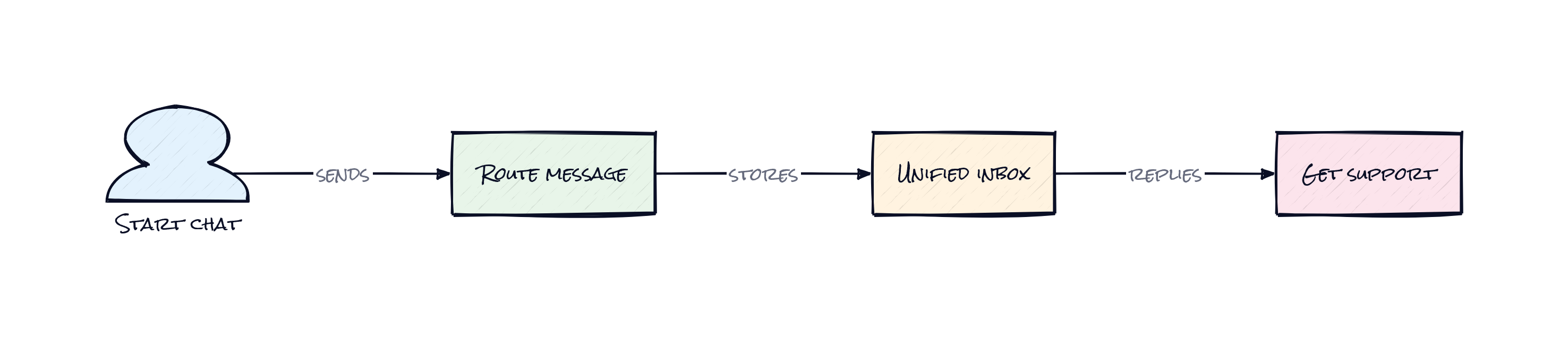
Plenty of companies say they are “omnichannel,” but the day-to-day reality usually means agents hopping between inboxes, copy-pasting context, and losing the thread when a customer switches channels. A person starts on live chat, follows up on email, then sends a frustrated Instagram message. The company sees three tickets instead of one relationship.
That gap matters more than it sounds. Support is where retention, brand trust, and product feedback all show up at once. Yet a lot of teams still run support on software that splits customer identity from customer conversation, or locks useful workflow behind expensive plans. Intercom, Zendesk, and Salesforce built huge businesses on that pain, which tells the story by itself.
Chatwoot exists because many teams want the mature parts of that stack, shared inboxes, automation, reporting, knowledge base, bot assist, without giving up control of customer data or paying perpetual rent for basic operations. The frustration is not just cost. It is being unable to shape the tool around your own workflows, channels, compliance needs, and internal systems. Honestly, support software becomes infrastructure faster than buyers expect.
The Stack: Rails With Real-Time Muscle
Under the hood, Chatwoot is built mostly in Ruby on Rails, with Vue powering the dashboard and widget interfaces. Action Cable handles real-time updates, while deployment options like Docker and Kubernetes make self-hosting less painful. That combination feels practical, not flashy, which is exactly right for software meant to sit in the middle of revenue and customer trust.
The Sauce: The Inbox Is the Product, Not the Channel
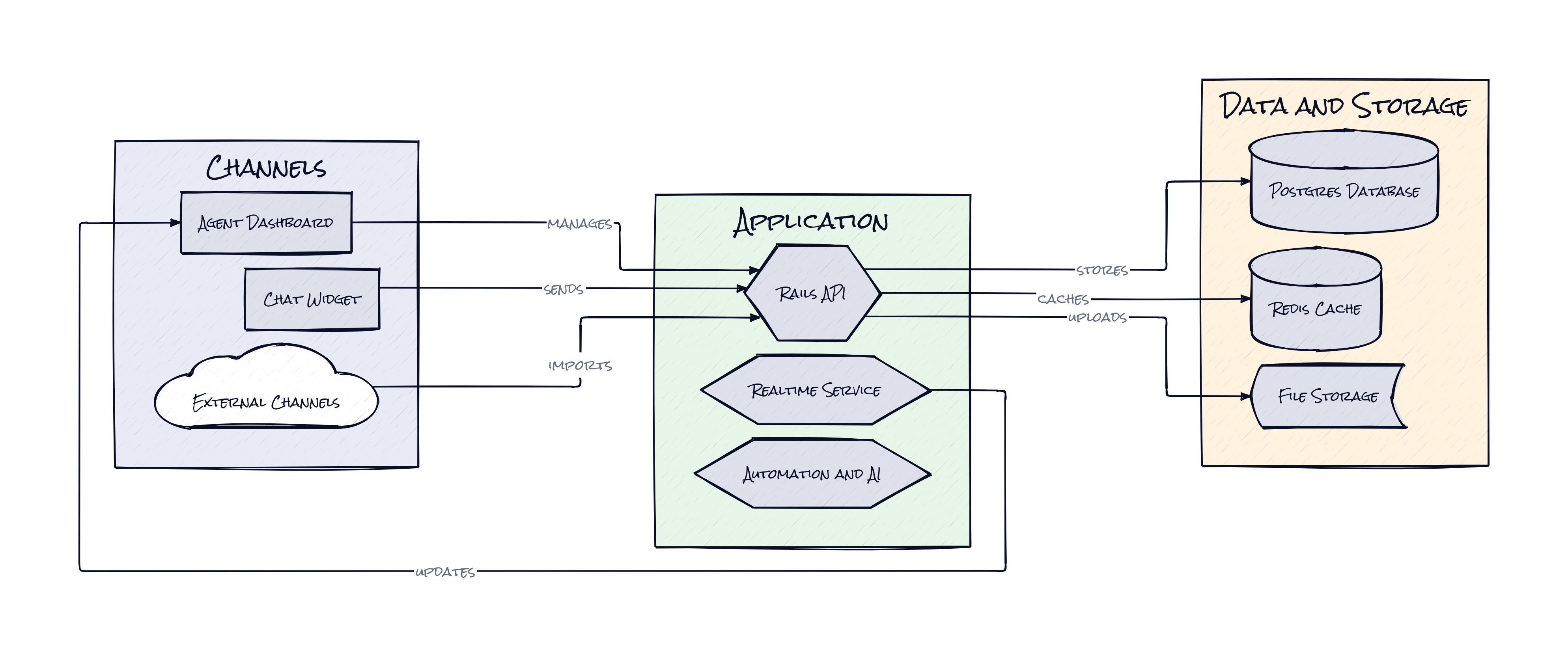
What makes Chatwoot interesting is its decision to treat the conversation as the core object, then hang channels, automation, collaboration, and AI around that center. That sounds obvious, but a lot of support tooling still behaves like a bundle of separate adapters with a reporting layer on top. Chatwoot’s architecture seems designed around a single threaded record of customer interaction, whether the message originated from web chat, email, WhatsApp, Instagram, or somewhere else.
That choice unlocks more than convenience. A unified conversation model means routing logic, agent assignment, labels, notes, translations, macros, and analytics can all operate at the same layer. You are not rebuilding workflow for every new channel. You are plugging new inputs into the same operating surface. That is why features like Dashboard Apps, which let teams embed internal tools directly inside the support interface, matter more than they first appear. It turns the inbox into a lightweight work console, not just a reply box.
There is also a subtle product bet here around Captain, the built-in AI support agent. Instead of positioning AI as a separate magic layer, Chatwoot places it inside the same conversation system agents already use. That keeps automation grounded in the actual support workflow, where handoff, context, and auditability matter. That is the clever part. The software does not just centralize messages, it creates a stable control plane where humans, automations, and integrations can all act on the same customer thread.
The Move: Turn Support Into an Owned Workflow
Founders, ops leads, and product teams can put Chatwoot to work in a few concrete ways. First, replace scattered support entry points with one branded intake layer across site chat, email, and messaging platforms. That alone cleans up response-time metrics and gives a truer view of customer friction. Second, pipe internal systems into Dashboard Apps so agents can see order history, account status, or bug reports without tab-hopping.
Growing teams get a more strategic upside: support stops being a cost center and starts acting like structured product intelligence. Labels, reports, and conversation history can reveal onboarding confusion, pricing objections, churn signals, and feature demand in near real time. Self-hosting also matters if data residency, compliance, or procurement slows down SaaS adoption.
Mid-market companies especially should notice the optionality here. Chatwoot can start as a cheaper Intercom alternative, then become a custom support layer shaped around your business. That stickiness compounds. Once workflows, automations, macros, and channel history live in one owned system, the software becomes harder to rip out and much more valuable than its ticketing label suggests.
The Aura: Expectations Quietly Reset
Customers no longer separate “support” from “the product.” A delayed answer on WhatsApp feels like product failure, not service failure. Chatwoot feeds that expectation by making continuity the default, where context follows the person instead of dying inside a channel boundary.
For teams, the deeper shift is psychological. Support agents are no longer treated like human API patch cables between disconnected systems. With the right setup, they become operators inside a shared context layer, with history, tooling, and automation in one place. That changes behavior. Faster replies matter, but the real unlock is organizational memory around customer pain becoming easier to capture, share, and act on.
The Play: Open-Source Zendesk Pressure
This looks less like a pure 0-to-1 category creation and more like a strong wedge into a massive existing TAM, customer support software already spans SMB, mid-market, and enterprise budgets globally. The interesting investment angle is distribution plus ownership: Chatwoot rides the open-source adoption loop, then monetizes hosted, enterprise, AI, and admin complexity. With 30,000-plus GitHub stars, active deployment paths, broad channel support, and visible community contribution, there are real PMF signals here. The moat is not raw code, because inbox software is reproducible. The moat is execution speed, workflow depth, and the switching costs that build once customer history, automations, and team habits settle in.
Winners:
Plain: More demand for modern support tooling validates the category, and cleaner shared-inbox expectations can compound into higher LTV for teams graduating from legacy tools.
Gorgias: Stronger market education around support as a revenue function expands TAM, especially for commerce brands that want deeper workflow control.
Shopify: Better open support infrastructure increases the quality of merchant operations, which helps retention for businesses running customer conversations alongside storefront data.
Losers:
Front: Pricing power erodes at the low and mid-market end when open-source alternatives get good enough, and differentiation gets harder without deeper platform lock-in.
Intercom: Expansion revenue faces pressure when buyers realize they can assemble much of the core inbox and automation experience without accepting data opacity or seat-tax creep.
Zendesk: Legacy complexity looks less defensible when a self-hosted, customizable option covers the main jobs to be done with cleaner economics for technical teams.
tl;dr
Chatwoot turns customer support into owned infrastructure instead of rented SaaS sprawl. The clever bit is its conversation-centric architecture, which lets channels, automation, AI, and internal tools work off the same thread. Founders, support leaders, and ops-heavy teams should look closely.
Stars: 30,730 | Language: Ruby
