

The Push: July 5th, 2026
Photo archives, AI-powered Unity control, and planning files that keep coding agents honest


Immich: Google Photos, Minus the Surrender
github.com/immich-app/immich | License: AGPL-3.0

A phone dies, a cloud subscription lapses, or a shared album quietly disappears behind a pricing change. Suddenly the family photo archive is not a memory bank, it is a hostage situation. That is the emotional hole Immich goes after. Plenty of self-hosted tools can store files, sure. Very few recreate the full feeling of a modern photo product, automatic backup, fast scrolling, facial search, maps, shared albums, and mobile polish, without asking for permanent rent or data custody.
The Drop: Your Camera Roll Needed an Exit
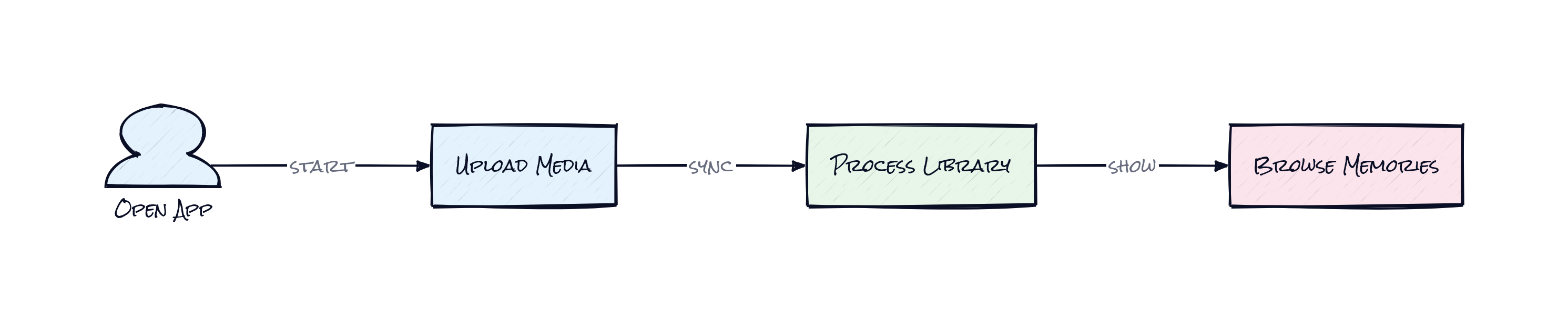
Apple and Google trained people to expect a magic trick: every photo appears everywhere, grouped by faces, places, dates, and little nostalgic resurfacing moments. Then comes the catch. Storage fills up, export is messy, sharing sits inside someone else’s account system, and the entire archive depends on a vendor relationship that can change whenever finance decides margins need help.
That gap is bigger than “people want local storage.” The real frustration is that self-hosting usually means giving up product quality. The DIY options often feel like admin panels pretending to be consumer apps. They can hold files, but they do not feel alive. Search is weak, mobile backup is flaky, timelines stutter, and video handling turns into a support hobby.
Immich exists because that tradeoff had gotten ridiculous. Personal media is one of the few datasets people care about emotionally, not just functionally. Losing ownership hurts, but losing convenience hurts too. The repo’s rise says the same thing loudly: users do not just want a backup target, they want a credible replacement for the cloud experience itself.
The Stack: TypeScript All the Way Down
Under the hood, NestJS powers the server side, SvelteKit handles the web app, and Flutter drives the mobile clients, which explains why the experience feels more like a product than a hobby project. A separate machine learning service, plus staples like PostgreSQL, background queues, and media processing, gives Immich enough horsepower for search, recognition, and video workflows.
The Sauce: Consumer UX Sitting on a Real Media Pipeline
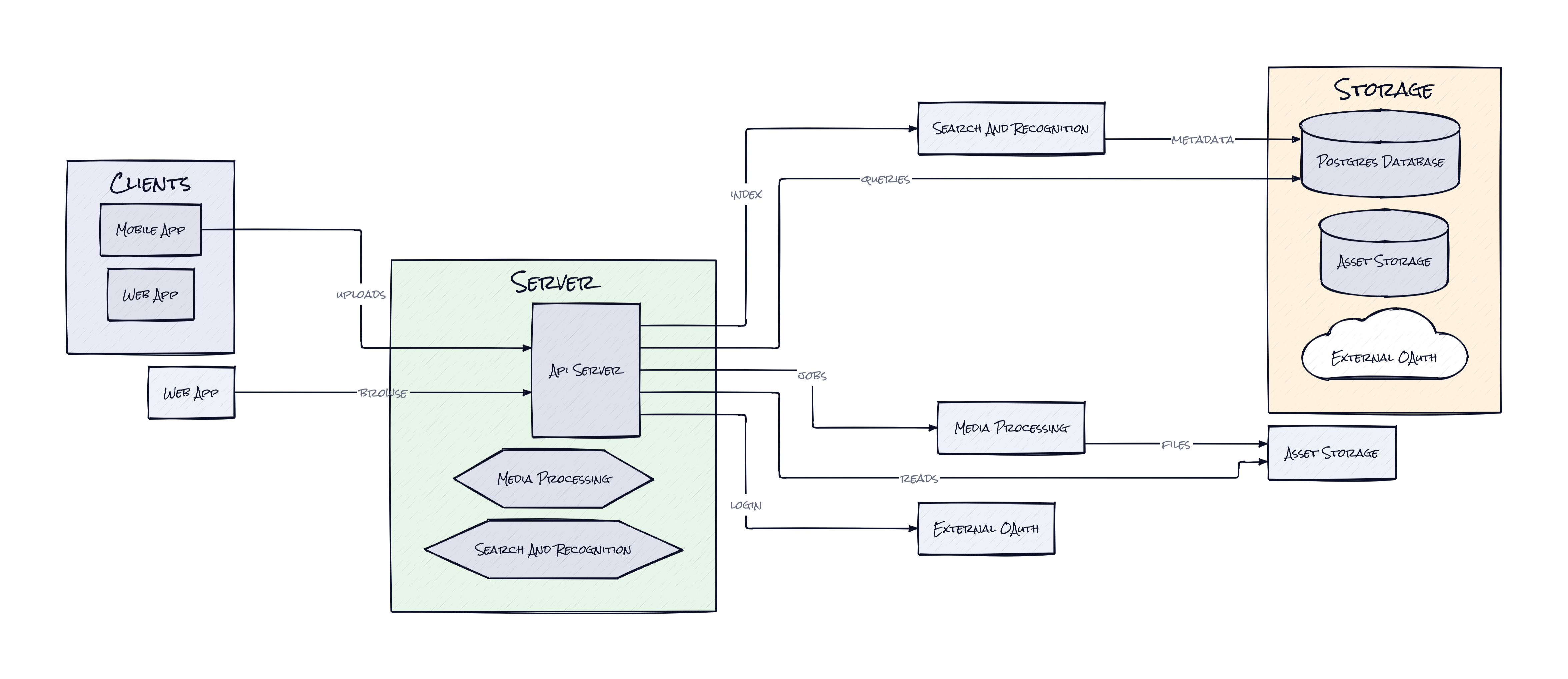
Unlike a lot of self-hosted photo tools, Immich is built as a coordinated system, not a gallery slapped on top of object storage. That matters. Photos and videos are not just dumped into a folder and served back later. The architecture treats each upload as an asset, a structured media object with metadata, deduplication logic, derived thumbnails, transcoding jobs, search signals, geodata, and social context like albums or sharing relationships.
That design unlocks the interesting part: a background job pipeline that turns raw media into a queryable personal archive. Face clustering, object and text search, memories, map views, duplicate prevention, and streaming-friendly video playback all depend on asynchronous processing rather than blocking the upload path. In plain English, the app stays fast because enrichment happens in stages. New files land quickly, then specialized services fill in intelligence over time.
Another sharp choice is the split between the core app and the machine learning subsystem. That keeps the main experience responsive while giving power users room to run heavier inference separately, tune hardware acceleration, and avoid turning the entire stack into one giant fragile process. Add the service worker caching on the web side, plus thumbnail-focused fetch handling, and Immich starts feeling less like “self-hosted Dropbox folder with pictures” and more like a serious personal media platform.
Honestly, the clever bit is not that Immich copies Google Photos features. It is that the repo understands the product shape of a photo library. The archive is not just storage, it is indexing, retrieval, memory resurfacing, and trust.
The Move: Own the Archive, Keep the Experience
Founders, families, and small teams can use Immich as a strategic home base for visual history. That sounds sentimental until a company needs years of event photos, product shoots, field footage, or social assets without scattering them across employee iCloud accounts and expired Google Drive links. Centralizing that material in a searchable, shareable library creates continuity, not just backup hygiene.
Because the mobile app handles automatic uploads, Immich works best when installed before the next trip, launch event, or hiring sprint, not after a storage panic. Set up shared albums for a team retreat, run facial and metadata search for internal archives, and use public links when lightweight external sharing is enough. The combination of personal backup and collaborative browsing is where the repo gets interesting.
There is also a quieter advantage. Once media lives in a system you control, downstream workflows open up. Marketing teams can build a permanent visual repository. Families can stop treating one person’s phone account as infrastructure. Creators can separate ownership from distribution. That reduces platform dependence in a category where switching costs are usually emotional, not technical.
The Aura: Memory Stops Being a Subscription
Photos are weirdly intimate infrastructure. People expect them to be permanent, searchable, and instantly available, but also private, portable, and not subject to random pricing pressure. Immich taps into that contradiction. The behavior change here is simple: personal archives start feeling like something to own again, not merely access through a service agreement.
That has a broader implication. As cloud products keep bundling convenience with dependency, more users will want software that preserves the convenience while restoring control. Not because everyone wants to be a sysadmin, but because certain categories, family history, identity, creative output, feel too important to leave entirely rented.
The Play: A Consumer Cloud Unbundling Bet
From a VC lens, Immich is not pure 0-to-1 category creation. It is a brutally good wedge into a huge existing TAM, consumer cloud storage, photo management, and prosumer home server software, by rebuilding a beloved product surface with ownership as the feature. The PMF signals are hard to ignore: 105,934 stars, massive community energy, strong fork activity, and a product people install for deeply recurring behavior. The moat is not data network effects in the classic sense. It is execution speed, trust, and workflow embedding around a personal archive that gets stickier every month because migration pain compounds while CAC stays community-driven.
Winners:
Ente: Privacy-first photo storage gets validated harder, and every new self-hosting convert expands demand for premium privacy tooling that can compound through adjacent backup services.
Synology: Home server demand strengthens when polished software finally gives mainstream users a reason to care about owning storage, not just buying NAS hardware.
Cloudflare: Edge delivery, tunnels, and security layers become more valuable as self-hosted consumer apps need safer public access without enterprise complexity.
Losers:
Photonix: Feature-gap pressure gets worse because matching polished mobile backup, search, and sharing requires product depth that is hard for a smaller photo project to catch up on.
SmugMug: Subscription photo platforms face softer retention when “host your own and keep modern UX” becomes credible for prosumers with high LTV but rising price sensitivity.
Google: Consumer photo lock-in erodes at the margin because the convenience premium looks less defensible once a free alternative reproduces the emotional core of the product.
tl;dr
Immich turns self-hosted photo storage into something that actually feels like a modern app. The clever part is the media pipeline, uploads become structured assets that get enriched for search, sharing, memories, and playback over time. Anyone sitting on a valuable photo archive, personal or team-based, should look.
Stars: 105,936 | Language: TypeScript
