



Snipe It: IT Inventory Should Not Be Guesswork
github.com/grokability/snipe-it | License: AGPL-3.0
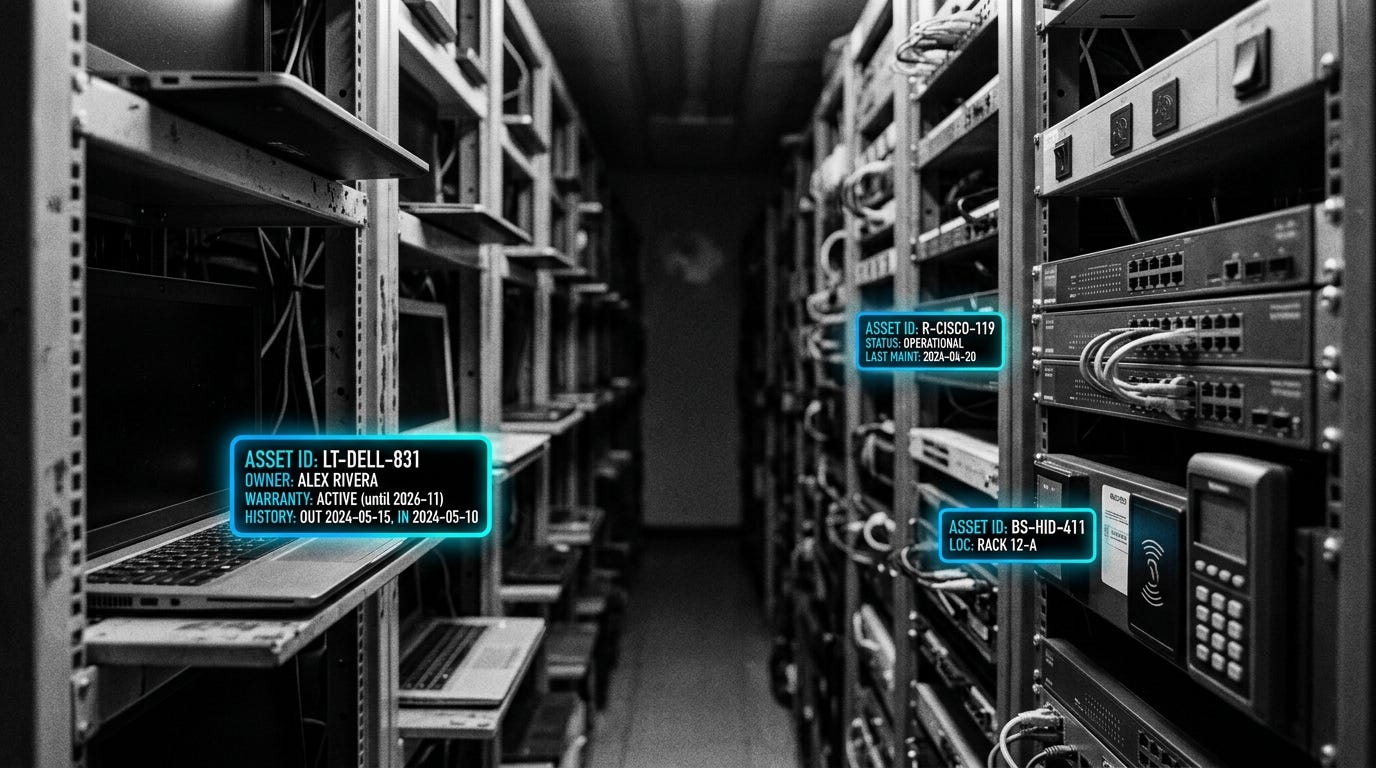
A laptop disappears, finance asks when it was bought, security wants to know who last had it, and someone in IT is stuck triangulating three spreadsheets, an MDM dashboard, and a Slack thread from six months ago. That mess is more common than anyone admits. Snipe It takes a category that usually lives in ugly internal tools and treats it like a real operational system. Honestly, that is the appeal. Not flashy. Just the software equivalent of finally knowing where the expensive stuff is, who touched it, and what it costs.
The Drop: The Spreadsheet Graveyard Finally Gets Replaced
Plenty of companies buy devices faster than they build the discipline to track them. Early on, that seems fine. Ten employees become fifty, fifty become two hundred, and suddenly every MacBook, monitor, badge, dock, software seat, and loaner phone has a half-broken paper trail. Someone leaves. A contractor gets reassigned. Finance wants depreciation schedules. Compliance asks for an audit trail. Procurement needs to know whether another software license is actually necessary.
Chaos enters through small omissions. A serial number never gets entered. A checkout happens over email. A manager says a laptop was returned, but nobody marked it back in. Traditional IT asset tools solve this with heavyweight enterprise software, which usually means long setup cycles, rigid workflows, and pricing that assumes a procurement committee. Spreadsheets solve it with false confidence.
Snipe It exists because neither option is satisfying. Teams needed a system that could track physical gear, software licenses, accessories, and ownership history in one place, without turning asset management into its own full-time department. The frustration here is not just losing hardware. It is losing certainty.
The Stack: Laravel With Ops Pragmatism
Under the hood, Snipe It runs on Laravel, with PHP as the core language and support for common relational databases like MySQL, Postgres, and SQLite. The repo also ships with Docker options, a JSON REST API, and identity hooks like LDAP and SAML, which tells you this was built for real IT environments, not just hobby self-hosting.
The Sauce: Auditability as the Product Surface
Instead of treating inventory as a static catalog, Snipe It models asset management as a chain of accountable state changes. That sounds dry, but it is the whole point. An asset is not just "a laptop in the system." It has assignment status, purchase context, depreciation rules, accessories, maintenance history, license relationships, and human ownership. Every one of those relationships creates future questions.
Snipe It answers those questions with a design centered on Action Logs, a persistent history of who checked out, checked in, updated, accepted, deleted, or reassigned something. That log is not a side feature for admins. It is the architectural spine that makes the rest of the system trustworthy. When the data model includes users, assets, licenses, components, locations, and companies, the hard part is not storing records. The hard part is preserving causality across them.
Another smart choice is the split between web app workflows and a JSON REST API. That gives IT teams a clean operational center, but also leaves room for synchronization with tools they already use, e.g. Jamf, Kandji, Mosyle, UniFi, Jira Service Desk, and custom scripts. The ecosystem around the repo makes this even more convincing. There are third-party mobile apps, sync tools, wrappers, and extensions because Snipe It behaves like a system of record, not a dead-end dashboard.
That distinction matters. Plenty of internal tools can display a table of hardware. Far fewer can become the authoritative source that other systems trust. Snipe It seems to understand that asset management only works when the software can survive handoffs, audits, and automation without losing the thread.
The Move: Turn Device Ownership Into Operational Memory
Procurement teams can use Snipe It to connect purchasing decisions to actual utilization. IT can tie every checkout and return to a named person. Finance can stop hunting for purchase dates and depreciation schedules in inboxes. Security can answer basic incident-response questions faster, which turns out to be a huge deal when an employee exits suddenly or a device goes missing.
Adoption gets interesting when Snipe It becomes the place where adjacent systems reconcile. Sync device inventories from MDM platforms. Map license seats to actual people instead of departmental guesses. Use the API to feed reports into onboarding, offboarding, help desk, or compliance workflows. A startup with fifty employees gets cleaner operations. A larger company gets fewer blind spots and fewer expensive duplicate purchases.
Strategically, this is about creating a reliable internal ledger for equipment and access. Once that ledger exists, every policy conversation gets easier. Who still has loaner hardware, which offices are over-provisioned, where software spend is wasted, whether departed employees returned their gear, all of that becomes answerable. That is the edge. Not asset tracking as bureaucracy, asset tracking as decision infrastructure.
The Aura: Ownership Becomes Legible
People behave differently when responsibility is visible. A checked-out laptop with a clear chain of custody feels less like communal fog and more like an assigned resource. Managers stop relying on memory. Finance stops accepting approximations. IT stops being the department that is somehow expected to know everything by instinct.
Snipe It pushes workplace infrastructure toward legibility. Not surveillance, not control theater, just shared factual memory. That changes expectations. Once a company gets used to asking, "Who has this, what is its status, and what happened last?" it becomes hard to tolerate the old answer, which was basically a shrug.
The Play: Boring Software, Very Real TAM
Asset management is not a 0-to-1 category, but Snipe It shows why incumbents remain vulnerable when a market is bloated, under-loved, and operationally painful. TAM is broad, every company with devices and software seats qualifies, and the PMF signal here is durable rather than trendy: 14,000 plus stars, years of maintenance, active community support, and a visible ecosystem of integrations. The moat is not deep data network effects. It is distribution through trust, workflow embedding, and high switching costs once asset history becomes the source of truth.
Winners:
Fleet: Lower-friction device lifecycle products can compound faster when open asset systems normalize better operational hygiene across SMB IT.
Rippling: Deeper employee, device, and app lifecycle automation gets more valuable when customers already expect systems of record to talk to each other.
Atlassian: Service management workflows become stickier when asset context and ticketing increasingly converge around auditable internal operations.
Losers:
Setyl: Pure SaaS asset tracking faces margin and positioning pressure when a credible open source option already covers the core system-of-record use case.
Deel IT: Premium IT lifecycle offerings lose some differentiation if customers can own the inventory layer and plug vendors around it.
ServiceNow: Enterprise sprawl looks less defensible in mid-market accounts that want auditability and integrations without buying a whole corporate operating system.
tl;dr
Snipe It turns IT asset management into a real system of record for hardware, licenses, ownership, and audit history. The smart part is its event-style accountability model plus API-driven extensibility. Ops teams, IT leaders, security-minded companies, and anyone tired of spreadsheet inventory theater should pay attention.
Stars: 14,341 | Language: PHP
