

The Push: July 27th, 2026
Self-hosted VPNs, browser-powered social scraping, and a repo-shaped OS for coding agents


Amnezia Client: VPNs Should Be Yours
github.com/amnezia-vpn/amnezia-client | License: GPL-3.0
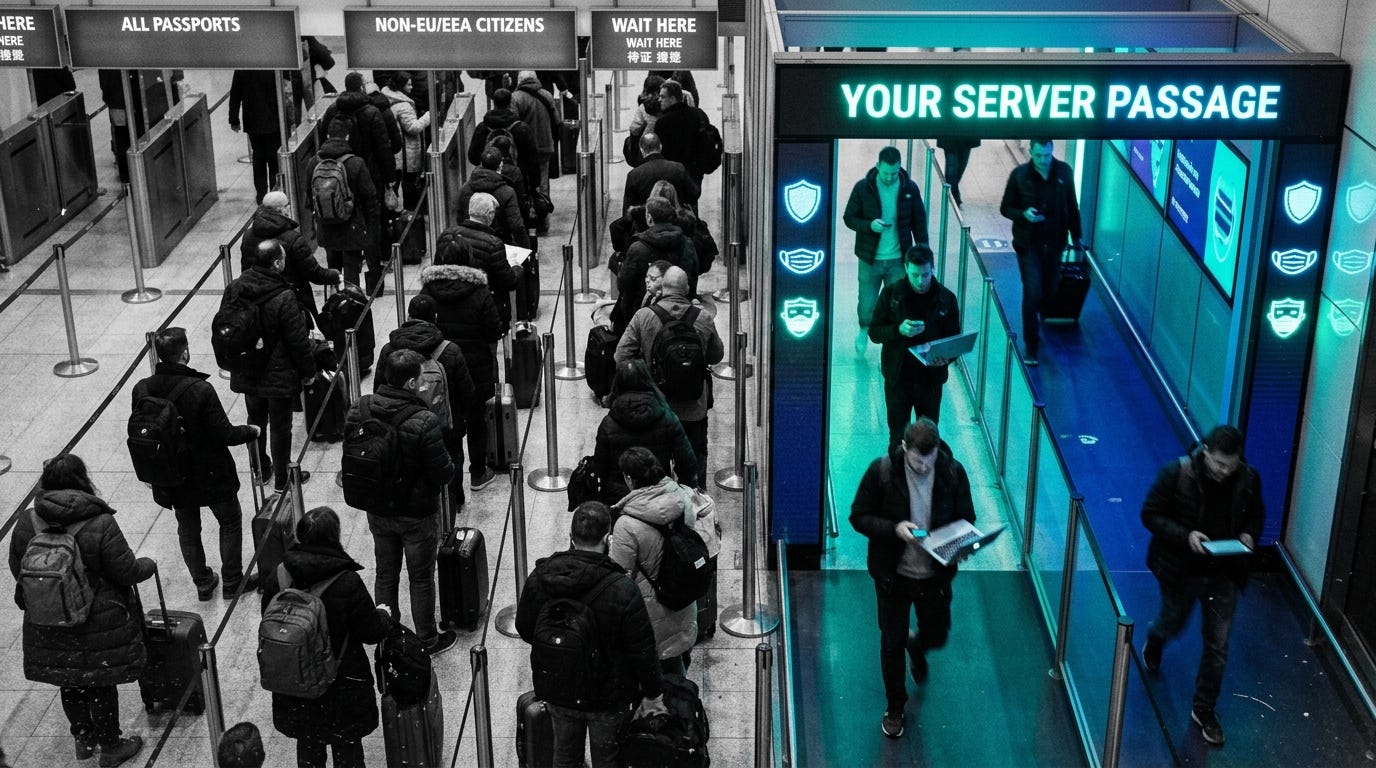
Getting online from a hotel, airport, or country with aggressive filtering still feels bizarrely fragile in 2026. Consumer VPN apps promise one-tap privacy, then hand your traffic to somebody else’s servers, somebody else’s logs, somebody else’s incentives. Amnezia Client goes in the opposite direction. It turns a rented VPS into your own escape hatch, then wraps the ugly parts, server setup, protocol selection, mobile configs, in a product that feels closer to a mainstream app than a weekend sysadmin project. That framing matters more than the VPN label.
The Drop: Censorship Is a UX Problem
Plenty of people already know how to buy a cheap cloud server. Far fewer want to spend Saturday night stitching together WireGuard configs, rotating keys, debugging blocked ports, and figuring out why one network works while another gets flagged instantly. The pain is not just privacy, it is operational reliability under pressure.
Amnezia Client exists because off-the-shelf VPN products keep collapsing into the same trap. Shared infrastructure becomes easy to detect, easy to throttle, and easy to block. Meanwhile, self-hosting has historically been too annoying for normal humans, even technical ones. That leaves a nasty gap: users who want ownership and resilience, but not a Linux certification exam.
Amnezia’s pitch is sharp. Type in a server IP and SSH credentials, and the client handles deployment, protocol setup, and connection flows across desktop and mobile. Even better, the project treats censorship resistance as a moving target, not a checkbox. Support for AmneziaWG, a modified WireGuard-style approach designed to make traffic patterns less obvious, plus options like XRay and protocol masking, turns the repo from “VPN client” into something closer to personal network infrastructure with a polished front end.
The Stack: Cross-Platform Without Feeling Patched Together
Under the hood, Amnezia Client is mostly C++ with Qt, which explains the unusually broad platform reach across Windows, macOS, Linux, Android, and iOS. Core networking pulls in OpenVPN, WireGuard, OpenSSL, LibSsh, and Xray-core, while deployment logic uses SSH plus containerized services on the remote server.
The Sauce: Productizing Personal Infrastructure
Instead of treating protocols as the product, Amnezia Client treats self-hosted orchestration as the product. That is the interesting architectural call. Plenty of apps can import a config file. Far fewer can provision the server, install the right components remotely, expose multiple connection modes, and keep that complexity hidden behind a single interface.
Across the codebase, the structure points to a layered control plane. One layer manages app state, settings, and cross-platform UI. Another handles connection logic and protocol abstraction. A separate set of controllers manages remote installation, export and import, split tunneling, subscriptions, and gateway behavior. That separation matters because censorship-resistant networking is not one protocol, it is a portfolio. Different regions, ISPs, and moments require different traffic signatures.
The clever bit is the bundling of classical VPN modes with traffic masking, where protocols are wrapped or altered so traffic looks less recognizable to filtering systems. OpenVPN over Cloak, Shadowsocks, XRay, and AmneziaWG are not random extras. They form a menu of transport disguises behind one product surface. In practice, that means the app can act less like a tunnel button and more like a routing decision engine.
Honestly, the strongest move is not cryptography. It is reducing the setup burden enough that owning your own endpoint becomes plausible behavior for regular users. That changes the economics of blocking. Instead of one provider with a giant known IP pool, every user can become their own tiny, harder-to-classify node.
The Move: Turn a VPS Into a Strategic Asset
Buying a small server from Hetzner, DigitalOcean, or any regional host is the obvious first move, but the real advantage comes from treating that server as portable access infrastructure, not just a privacy tool. Amnezia Client lets a founder, journalist, researcher, or distributed team stand up a private connection path that is not shared with thousands of strangers and therefore less likely to get burned.
Teams can also use split tunneling to send only sensitive traffic through the private route, e.g. internal dashboards, region-locked tools, or blocked messaging apps, while leaving the rest of the device on the normal network. That lowers friction and performance drag, which matters because tools that slow everything down eventually get abandoned.
Another practical use case is geographic redundancy. Running multiple servers in different jurisdictions gives users fallback options when one endpoint gets throttled. Because Amnezia Client wraps deployment and connection management in the same surface, switching becomes less of a technical ritual. The result is not just safer browsing, it is continuity. For anyone operating across borders or brittle networks, continuity is the edge.
The Aura: Ownership Starts Feeling Normal
People tolerate a lot of dependency until access disappears at the exact wrong moment. A blocked app, a dead login flow, a throttled video call, suddenly the abstract idea of “internet freedom” becomes a very concrete workflow failure. Amnezia Client makes a subtle promise: access does not have to be rented as a permanent service from a brand.
That psychological shift is bigger than VPN software. Once personal infrastructure becomes usable, expectations rise. Users start asking why messaging, storage, AI, and identity are still so centralized. Convenience stops being a good enough excuse for surrendering control. Amnezia Client seems to tap into that instinct, and packages it in a way that feels practical, not ideological.
The Play: Escape Infrastructure Has Real Demand
From a VC lens, this is not pure 0-to-1 category creation. VPNs, privacy tools, and self-hosted networking already exist. The opportunity is a better mousetrap with expanding TAM because censorship resistance, cross-border work, and distrust of centralized providers are all growing behaviors. The PMF signal is credible: 13,679 stars, active docs, multilingual support channels, and broad platform coverage suggest this is solving a real, repeat pain point, not just attracting hobbyist applause.
The moat is mixed. Open source limits classic lock-in, and protocol innovation alone is copyable. But distribution among privacy-conscious users, trust, operational polish across five operating systems, and accumulated know-how around anti-blocking behavior create meaningful execution moat. Stickiness looks decent because once someone has a working personal access path, switching away means risking downtime, setup pain, and relearning.
Winners:
Tailscale: Expanded user education around private networking makes self-managed connectivity feel normal, which compounds demand for owned access tools across adjacent use cases.
Cloudflare: Rising demand for resilient routing and network services benefits the company whenever more individuals and teams treat connectivity as something worth actively architecting.
DigitalOcean: More users turning cheap VPS instances into personal infrastructure increases server demand with very low CAC and naturally recurring usage.
Losers:
Nym: Differentiation gets squeezed when practical self-hosted privacy becomes easier to deploy than novel network models that still require heavier user trust and learning.
ExpressVPN: Brand-based VPN bundles lose edge when savvy users realize dedicated self-hosted endpoints are harder to block and often cheaper over time.
Cisco: Appliance-centric remote access assumptions erode as lightweight, user-controlled connectivity software keeps eating use cases once reserved for formal enterprise stacks.
tl;dr
Amnezia Client turns a cheap server into a polished, self-hosted VPN across desktop and mobile. What stands out is the orchestration layer, not the tunneling itself: deployment, protocol switching, and traffic masking live in one product surface. Worth a look for anyone who needs reliable access, privacy, or regional resilience without trusting a commercial VPN middleman.
Stars: 13,679 | Language: C++
