

The Push: July 25th, 2026
AI that knows your schema, chat that survives outages, and a job hunt agent with receipts

Chat2DB: Your Database Client Should Talk
github.com/OtterMind/Chat2DB | License: Other
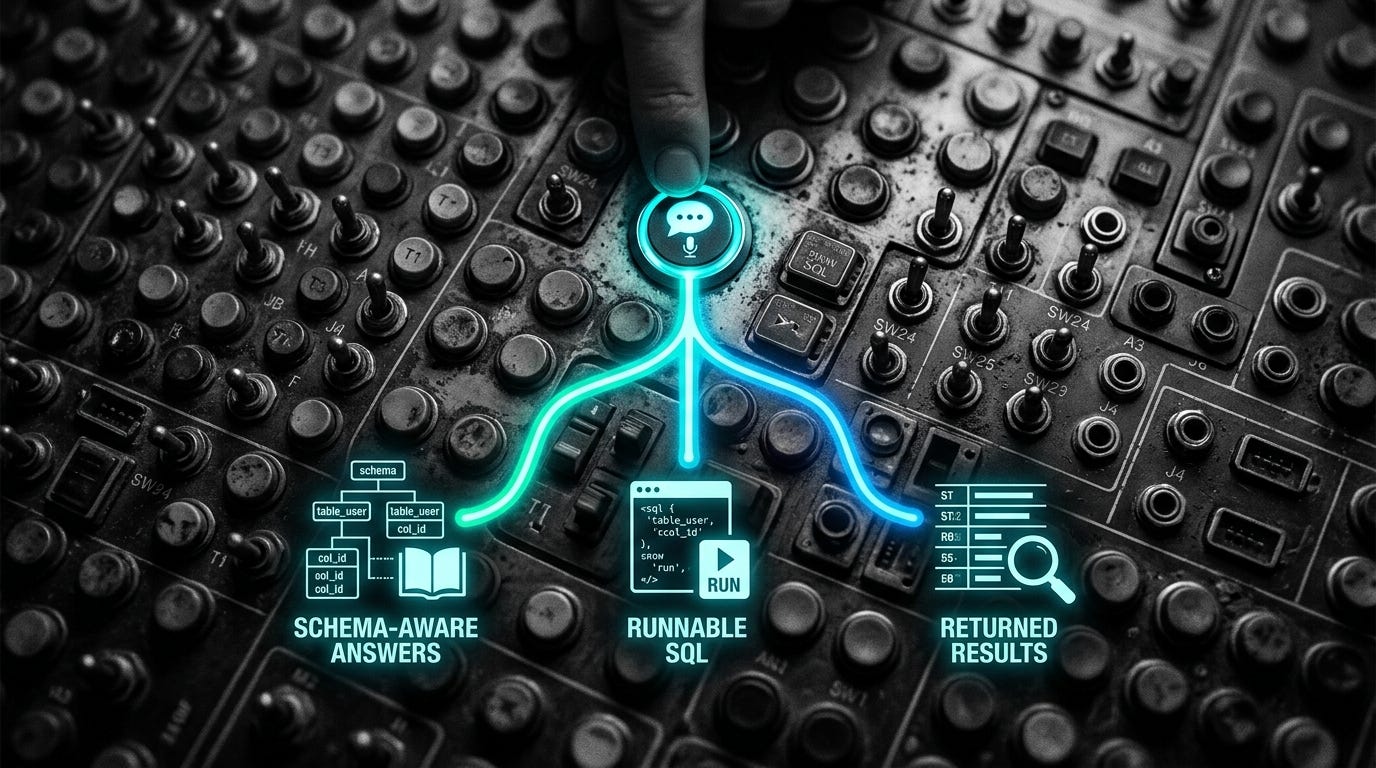
A weird thing happens the moment AI touches SQL: the promise sounds simple, but the workflow gets worse. One tab has the schema, another has docs, a third has ChatGPT guessing column names it has never seen. Then somebody copies a query back into a database client and hopes nothing expensive runs. Chat2DB goes after that exact mess. Instead of treating AI like a sidecar chatbot, it turns the database workspace itself into the product, with AI assistant features sitting right next to execution history, metadata browsing, and visual editing. That placement matters.
The Drop: SQL Was Never the Hard Part
Across product teams, analysts, founders, and junior engineers, the real pain is rarely writing `SELECT` statements from scratch. The pain is context. Which table is canonical, which column is deprecated, which warehouse uses weird naming, which query is safe to edit, which dashboard metric was patched six months ago because finance and growth define revenue differently. Generic AI tools are bad at this because they see text, not the living shape of a database.
Chat2DB exists because traditional SQL clients and AI chat apps solve opposite halves of the same problem. Tools like DBeaver, DataGrip, and Navicat are strong at connection management, query execution, and object browsing, but they stop at the edge of natural language help. Chatbots can explain SQL and draft queries, but they have no grounded awareness of your actual schema unless somebody hand-feeds them context every time. That gets old fast.
What makes the gap especially annoying is how routine the use case is. Teams constantly need to inspect tables, optimize slow queries, patch small records, generate charts, and export data without spinning up a whole BI workflow. Chat2DB tries to collapse that loop into one place, which honestly feels overdue.
The Stack: Java in the Back, TypeScript Up Front
Under the hood, Chat2DB is a Java application on the server side, paired with a TypeScript frontend built with React-era tooling and Monaco for the editor experience. JDBC-style database connectivity does the heavy lifting across 30-plus engines, while desktop, web, and Docker deployment modes make the same core workspace available in different shells. Practical stack, not flashy stack.
The Sauce: Grounded AI, Not Detached AI
What stands out is the decision to make Chat2DB a local-first SQL workspace with bring your own model AI, rather than a cloud chatbot that happens to connect to databases. That changes the architecture in a meaningful way. The system keeps the database client as the source of truth, including connection metadata, schema browsing, execution history, and saved queries, then layers natural language actions directly onto that substrate. AI is not the app. AI is a capability inside the app.
Because the workspace already knows your connected data sources and object tree, the model can operate with grounded context instead of blind prompting. That matters for text-to-SQL, query explanation, and optimization suggestions. A detached assistant has to infer table relationships from pasted snippets. Chat2DB can anchor the conversation in the actual environment where the query will run. Much better odds of useful output.
Another smart choice is the plugin approach to database coverage. Supporting MySQL, PostgreSQL, Oracle, ClickHouse, Snowflake, BigQuery, Redis, MongoDB, and more in one client is not just a checklist flex. It means the interface can become a common control plane across fragmented data stacks, the same way Figma normalized design workflows across teams that used wildly different asset pipelines. The interesting part is not that Chat2DB talks to many databases. It is that the AI layer inherits that reach automatically.
Security choices reinforce the positioning. Stored credentials and model API keys are encrypted per installation, and the project is explicit that community mode is single-user and local. That makes Chat2DB feel less like “send your warehouse to a startup” and more like “upgrade the client you already trust.”
The Move: Turn Database Access Into Faster Decisions
Instead of treating Chat2DB as a nicer SQL editor, the better play is to use it as a translation layer between people who understand the business question and people who usually gate access to data. Product managers can inspect schemas and get query drafts without waiting on analytics for every small pull. Founders can sanity-check growth or revenue cuts directly against source tables before walking into board prep. Junior engineers can ask why a query is slow and get optimization hints in the same surface where they run the fix.
Teams with messy multi-database setups probably get the biggest upside. Chat2DB can become the shared front end for operational databases, warehouses, and even non-relational stores, which lowers the switching cost between environments. That compounds when AI features are attached to each connection, because the context does not reset every time somebody jumps from PostgreSQL to ClickHouse to Redis.
Operationally, the sharpest move seems to be rolling Chat2DB out for internal analytics and support workflows first. Let support leads inspect customer records safely, let growth teams generate one-off pulls, let engineers debug live data faster. Small workflow wins add up, especially when the alternative is a chain of Slack messages, pasted screenshots, and brittle saved queries.
The Aura: Data Literacy Stops Being a Guild
Plenty of smart people already know what question to ask a database, but not enough of them know the dialect, schema quirks, or optimization tricks to ask it cleanly. Chat2DB lowers the social cost of that gap. Fewer “can somebody write this query for me?” interruptions. More direct contact between curiosity and evidence.
That changes expectations inside companies. Once a database client can explain structure, suggest valid SQL, and visualize results in the same place, access to data starts feeling less like a permissioned craft and more like a normal product skill. That is a cultural unlock, not just a tooling upgrade.
The Play: A Better Mousetrap With Platform Potential
This looks like a better mousetrap in an existing, sizable market, not pure 0-to-1 category creation. Database clients, BI-lite tools, and AI query assistants already exist, but Chat2DB bundles them in a way that fits actual daily behavior. TAM is broad, spanning developers, analysts, DBAs, data-adjacent operators, and every startup with a warehouse plus at least one operational database. With 26,547 stars, active multilingual docs, and clear cross-platform packaging, there are real PMF signals here, especially for self-hosted and cost-sensitive teams. The moat today is mostly execution speed and workflow stickiness, but a stronger moat could form around schema-aware context, saved query history, and team habits that raise switching costs over time.
Winners:
Outerbase: Faster adoption gets easier because AI-native database interfaces train users to expect natural language plus direct schema access, which compounds for newer entrants with polished collaboration layers.
Hex: Deeper pull from semi-technical teams increases as more users get comfortable moving from raw data inspection into lightweight analysis workflows.
Datadog: Broader enterprise demand for integrated data visibility benefits when more employees directly interrogate production and warehouse systems, creating downstream observability spend.
Losers:
Seek AI: Narrow text-to-SQL differentiation erodes when open source clients bundle grounded query generation directly into the workspace where execution already happens.
DBeaver: Mature install base gets pressured as AI assistance shifts from nice-to-have to table stakes, and retrofitting that experience cleanly is harder than shipping from a native premise.
JetBrains: Premium SQL tooling faces margin pressure if users decide that schema exploration, execution, and AI help belong in one lower-cost cross-database product.
tl;dr
Chat2DB turns a database client into an AI-aware workspace, not just a prettier SQL editor. The smart bit is keeping schema context, query execution, and model assistance in the same surface, which makes AI materially more useful. Product teams, analysts, founders, and data-heavy startups should pay attention.
Stars: 26,547 | Language: Java
