

The Push: July 19th, 2026
Desktop media that feels native, giant models on scrappy hardware, and web research agents with receipts


Jellium Desktop: Jellyfin Needed a Real App
github.com/andrewrabert/jellium-desktop | License: GPL-2.0
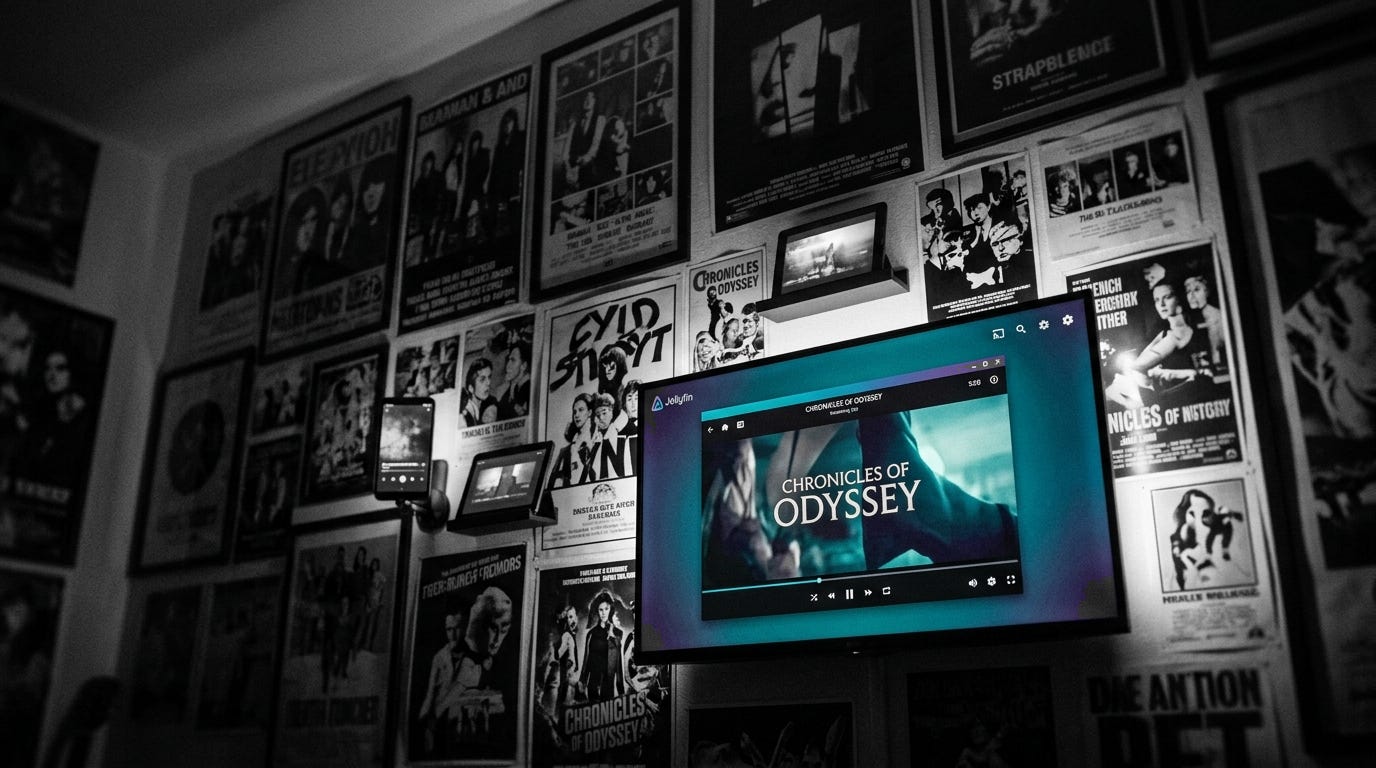
Opening a self-hosted media library in the browser always feels slightly unfinished. Video starts, sure, but keyboard shortcuts get weird, fullscreen can be flaky, system menus feel bolted on, and hardware acceleration turns into a scavenger hunt across tabs, codecs, and OS settings. That gap is exactly where Jellium Desktop lands. Instead of asking Jellyfin users to pretend a web app is a desktop app, this project packages the whole experience into something that behaves like native software, while still preserving the familiar Jellyfin interface people already know.
The Drop: When the Browser Stops Feeling Good Enough
Plex built a generation of users who expect streaming to feel polished, even when the back end is a box under the TV stand. Jellyfin nails the ownership story, but desktop playback has often lived in an awkward middle zone: either use the browser and accept all the browser baggage, or jump to clients that lag behind the web experience and miss core features.
Jellium Desktop exists because that compromise gets old fast. Media playback is one of those categories where tiny UX failures stack up. A dropped frame here, a broken hotkey there, a context menu that behaves differently on each platform, and suddenly your supposedly premium home media setup feels homemade in the bad way. Browser engines are great at rendering interfaces, but they are not automatically great media players. Dedicated players are great at video, but often weak at app chrome, account flows, and service integration.
That leaves a clear hole: keep the Jellyfin web UI people already understand, but pair it with a playback engine that actually respects desktop expectations. Honestly, that is less a nice-to-have than the difference between hobby software and something people use every night.
The Stack: Chromium Outside, MPV Inside
Under the hood, Jellium Desktop is built in Rust, with CEF handling the embedded Chromium layer and mpv powering video playback. Around that core sits custom rendering, input, and platform integration logic, plus GPU plumbing through wgpu and native packaging across Linux, macOS, and Windows. Lean choice, heavy lifting.
The Sauce: A Browser Shell With a Separate Media Brain
Here is the interesting architectural bet: Jellium Desktop does not merely wrap the Jellyfin website in a generic webview and call it a day. The app splits responsibilities between a Chromium-based interface layer and an mpv-powered playback layer, then coordinates them through a custom bridge and compositor model. That separation matters.
CEF gives the project compatibility with the real Jellyfin web app, which means fewer compromises on navigation, plugins, metadata views, authentication flows, and everything else that already lives in the browser world. mpv, meanwhile, handles the thing browsers are still strangely inconsistent at for serious media users, reliable playback with better codec support, tighter controls, and stronger hardware acceleration paths. Two engines, two jobs.
What makes the design clever is the amount of glue required to make that feel like one coherent product. The codebase includes a custom Scene model for layer stacking on Wayland and compositor logic for surface ordering, plus GPU painting infrastructure that suggests Jellium Desktop is actively managing how web content, overlays, menus, and video surfaces appear together on screen. That is not cosmetic. Once a browser UI and a native player coexist in one window, z-order, input routing, focus handling, color state, and overlay transitions become the whole product.
Another smart touch is the platform-specific menu and window behavior. Native-feeling context menus and display handling sound small, but they are exactly where unofficial desktop clients usually feel off. Jellium Desktop spends engineering effort on those seams, and that is why the project reads less like an Electron wrapper and more like a purpose-built media shell.
The Move: Turn Self-Hosted Media Into a Household Product
Plenty of self-hosted software is technically impressive and socially fragile. One person in the house loves it, everybody else tolerates it. Jellium Desktop changes that equation by improving the last mile, the screen people actually interact with. Put this on a laptop connected to a TV, a family desktop, or a personal workstation, and Jellyfin stops feeling like a backend project and starts feeling like a consumer app.
Founders and PMs should read this as a distribution lesson. Ownership only wins when convenience stays intact. If a self-hosted product wants mainstream pull, the client experience cannot feel like a tax. Jellium Desktop gives homelab users, media tinkerers, and privacy-minded households a way to reduce friction without giving up control.
Strategically, the best use is not just "watch movies." It is creating a reliable front end for a personal media stack that can survive subscription churn, content fragmentation, and vendor lock-in. Pair Jellyfin with local libraries, niche archives, concert recordings, or private family video collections, and Jellium Desktop becomes the polished access layer. That is the advantage: the freedom of self-hosting, minus the constant reminder that you are self-hosting.
The Aura: Ownership Has to Feel Effortless
People do not stick with independent software because of ideology alone. They stick with tools that fade into the background and work on the tenth use as smoothly as the first. Jellium Desktop pushes self-hosted media toward that standard. The expectation quietly changes from "good enough for open source" to "why shouldn't personal infrastructure feel premium?"
That shift matters beyond movies. Once local-first or self-hosted software starts matching consumer-grade polish, convenience stops belonging exclusively to subscription platforms. That is the psychological unlock. Control no longer has to announce itself as sacrifice.
The Play: A Better Client, but a Real Wedge
From a VC lens, Jellium Desktop is not a pure 0-to-1 category creation. The category already exists, media clients for self-hosted libraries, but this repo shows a sharper wedge into a growing anti-rent, anti-lock-in TAM around personal infrastructure. The signal is less direct monetization today and more PMF energy: 1,238 stars quickly for an unofficial client, cross-platform packaging, and deep technical ambition around playback and compositing all point to a community that cares about this pain.
The moat is not data or network effects yet. It is execution speed at the hardest layer, making self-hosted media feel native across operating systems, codecs, and input models. If that behavior becomes habitual, LTV rises because once a household standardizes on a polished client, switching costs become muscle memory and setup debt.
Winners:
Zapstream: Better desktop polish lowers adoption friction for newer self-hosted media tools, and that compounds by making indie distribution look less risky to non-technical households.
Plex: Increased attention on premium playback UX validates the category and gives late-stage incumbents room to upsell convenience to users who test self-hosted alternatives but still want turnkey setup.
NVIDIA: More serious local media playback drives demand for capable client hardware and better decode paths, which quietly benefits the established compute layer underneath enthusiast home setups.
Losers:
Twelve Labs: Narrower consumer attention for cloud-only video tooling erodes if more personal media stays local, and adaptation is hard when the stack assumes remote processing value.
Roku: Weaker control over living-room software flows hurts when polished desktop and HTPC clients make general-purpose devices more attractive than closed endpoints.
Netflix: Reduced default dependence on subscription catalogs grows whenever personal libraries become easier to access, especially for edge cases like anime, concerts, and long-tail content.
tl;dr
Jellium Desktop turns Jellyfin into a desktop app that actually behaves like one, by pairing a Chromium interface with mpv playback instead of forcing the browser to do everything. The clever part is the bridge between UI, video, and native window behavior. Anyone betting on self-hosted media UX should look.
Stars: 1,238 | Language: Rust
