

The Push: April 29th, 2026
Memory-first coding, agent guardrails, and a daily stock briefing pipeline you’d actually check


Jcode: Coding Agents Need Operating Discipline
github.com/1jehuang/jcode | License: MIT
A lot of AI coding tools feel great for ten minutes, then start dragging around their own weight. Open a few sessions, switch projects, come back tomorrow, and the whole thing acts like it has amnesia while chewing through RAM. That gap, between flashy demo and actually usable daily system, is where Jcode gets interesting. This repo is not trying to be another friendly chat box with file access. It is building a coding agent harness that treats speed, memory, and multi-session work as first-class product constraints.
The Drop: Built for the Messy Middle
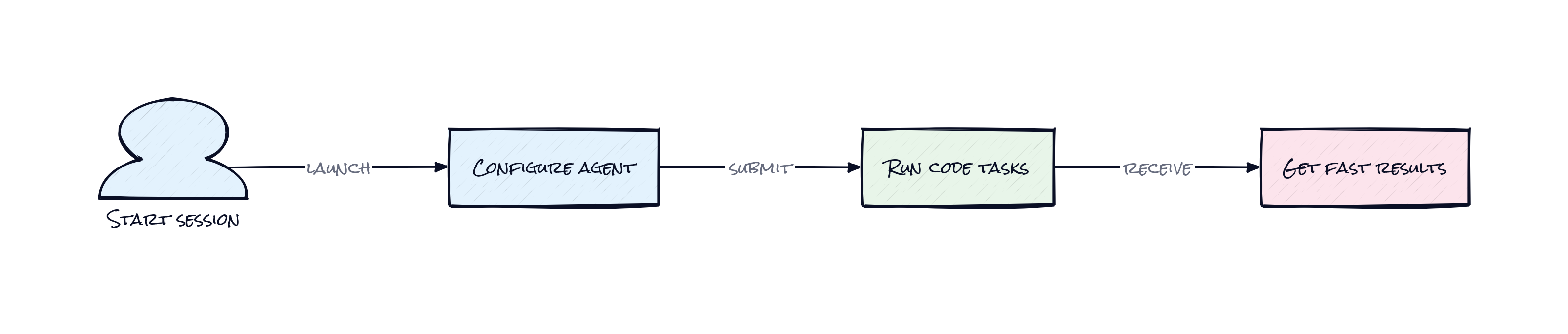
Cursor and Claude-style coding flows are fine when the task is small, the context is fresh, and one session can hold the whole problem. Real work is uglier. A product team is juggling three branches, a half-finished migration, bug triage, docs cleanup, and a side thread where the model is supposed to remember why a weird workaround exists. That is where today’s agent tooling starts to crack.
Jcode is driven by a pretty specific frustration: coding agents are too disposable. They boot slowly, forget prior decisions, and get expensive in both tokens and system resources when you try to run several threads in parallel. The repo’s README leans hard into this with startup and memory benchmarks, and honestly that emphasis makes sense. If an agent takes seconds to become interactive, or each extra session eats another giant chunk of memory, the product quietly teaches people not to use it for ongoing work.
That ceiling matters more than the usual benchmark theater. Jcode is trying to make agent workflows feel like something you can keep open all day, across many sessions, without turning your machine into a space heater or your prompts into repeated autobiography.
The Stack: Rust All the Way Down
Under the hood, Jcode is built mainly in Rust, which explains the obsession with startup time, memory discipline, and cross-platform native performance. The project is split into modular crates for provider integrations, embeddings, runtime orchestration, desktop surfaces, and a TUI workspace, plus support for model backends like Gemini and OpenRouter and protocol hooks like MCP.
The Sauce: Memory That Runs in the Background
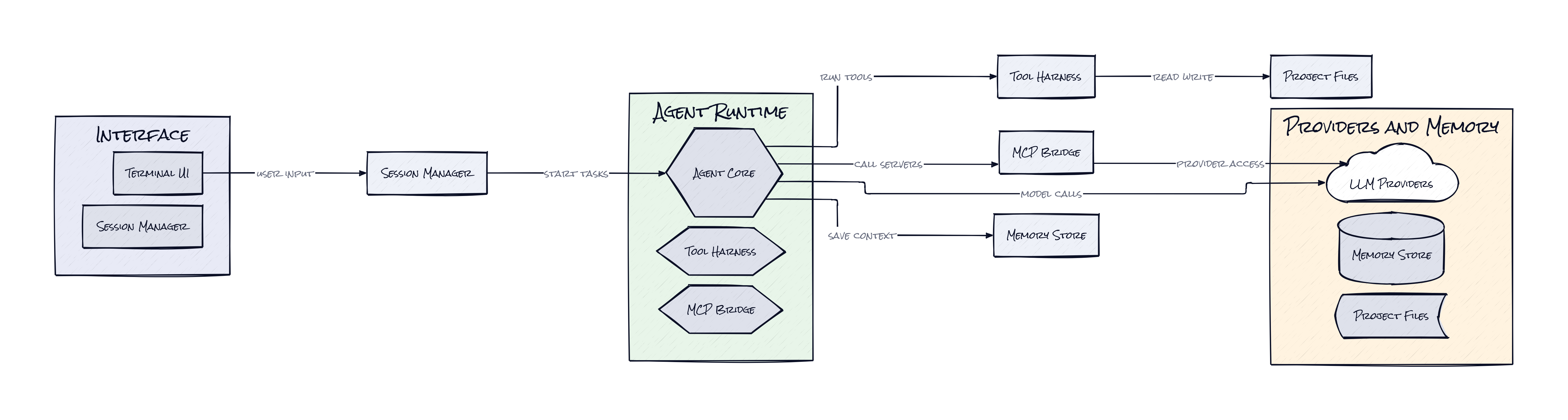
Jcode’s strongest architectural choice is its ambient mode, a background process that keeps the agent’s memory system healthy without forcing constant manual prompting. Instead of treating memory as a glorified notes field, Jcode turns each turn of conversation into a semantic vector, stores those entries in a memory graph, and retrieves relevant fragments through similarity search when new context appears.
That sounds familiar if you have seen retrieval systems before, but the interesting part is the layering. Jcode does not rely on a single “search old chats” pass. It combines passive recall with a memory sideagent, a secondary process that checks whether retrieved memories are actually relevant before injecting them back into the live conversation. That matters because naive memory systems often become token spam, pulling in loosely related junk just because embeddings say two topics are adjacent.
There is also periodic extraction and consolidation. When semantic drift shows up, enough turns have passed, or a session ends, Jcode pulls out durable facts and restructures them. Over time, the stored context becomes less like a raw transcript archive and more like a living knowledge base for the agent. That is way more useful than simple chat history because it preserves decisions, preferences, and recurring facts while pruning noise and stale contradictions.
Honestly, the key insight is not “agents should remember.” Plenty of tools say that. Jcode is betting that memory only becomes valuable when it is automatic, selective, and cheap enough to run across many concurrent sessions.
The Move: Treat Agents Like Persistent Workstreams
Founders, PMs, and technical operators probably will not use Jcode as a toy coding demo. The strategic use is setting up parallel workstreams that stay alive long enough to accumulate context. One session can own a product prototype, another can track a bug cluster, another can maintain docs or tests, and each thread builds its own memory instead of restarting from zero every morning.
That changes how AI coding fits into a team. Rather than one giant prompt where every constraint gets restated again and again, Jcode lets recurring tasks become persistent operational lanes. A technical founder could keep one agent tuned to infrastructure cleanup, another focused on customer-reported issues, and a third handling experiments. Because the system is designed for low overhead and fast boot, keeping those threads open stops feeling indulgent.
Teams that already feel the pain of context loss should pay attention. The upside is not just speed, it is continuity. When the agent remembers why a decision happened, what tradeoffs were already made, and which prior sessions matter, the handoff cost drops. That means less prompt babysitting, fewer repeated explanations, and a better shot at turning AI from novelty into repeatable workflow.
The Aura: Expectation Creep for Software Memory
People are getting less tolerant of software that forgets the obvious. After a few good AI experiences, re-explaining preferences, project history, and prior decisions starts to feel broken, not normal. Jcode leans directly into that expectation by making persistence feel native rather than bolted on.
That shift is bigger than coding. Once tools can maintain long-running context across separate sessions, the default interaction model changes from one-off request and response to ongoing collaboration. Temporary software starts feeling worse. Systems with memory begin to feel more like colleagues, not because they are human-like, but because they stop making users repeat themselves.
The Play: Infrastructure for Agent Seat Expansion
This looks less like a pure 0-to-1 category and more like a better mousetrap in a market that is still early enough for architecture decisions to matter. The TAM sits inside the exploding spend on AI developer tooling, but the sharper wedge is “persistent agent operations” rather than generic code assistance. Jcode’s early signal is not raw scale yet, 1,188 stars is promising but not overwhelming, it is the specificity of the product thesis: multi-session, memory-backed, resource-efficient workflows for people pushing agents hard. The moat, if one forms, comes from execution speed and workflow stickiness. Once a team organizes recurring work around persistent agent threads, switching costs rise because the memory corpus and habits compound.
Winners:
Augment Code: More demand shifts toward persistent agent context, which compounds for a startup built around deeper codebase understanding rather than autocomplete novelty.
Cognition: Longer-running autonomous software tasks become easier to justify when the underlying harness is fast and memory-aware, strengthening LTV on high-intensity engineering accounts.
Tencent: Lower-cost, multi-session agent infrastructure expands the market for model consumption across developer products, which benefits a platform owner with broad AI distribution.
Losers:
CodeRabbit: Narrow review-only workflows look thinner as users expect agents to maintain broad project memory across sessions, and adapting beyond that niche risks product sprawl.
Devin: Premium autonomous coding feels harder to defend if open, efficient harnesses close the usability gap and reduce CAC for alternatives.
Samsung: Device makers that pitch on-spec AI experiences face pressure when lightweight native agent tools raise expectations for responsiveness that bloated software cannot match.
tl;dr
Jcode turns AI coding into a persistent, multi-session system instead of a disposable chat window. The smart part is its background memory architecture, which selectively recalls useful context without becoming a token sink. Worth a look for anyone tracking agent tooling, developer workflows, or where AI interfaces get sticky.
Stars: 1,189 | Language: Rust
