

The Push: April 27th, 2026
AI stock desks, programmable design stacks, and audio that becomes searchable text and realtime synthetic speech


Trading Agents: Hedge Fund Theater That Helps
github.com/TauricResearch/TradingAgents | License: Apache-2.0

A single stock ticker can trigger a ridiculous amount of context switching. Earnings transcripts in one tab, sentiment chatter in another, technical indicators somewhere else, then a half-baked note that tries to turn all of that into an actual decision. Trading Agents lands on that mess with a pretty blunt take: stop asking one model to be analyst, contrarian, trader, and risk committee all at once. Split the work, let specialized roles argue, then force a final decision. That sounds theatrical, and honestly, that is partly why it works.
The Drop: Wall Street Logic, API Edition
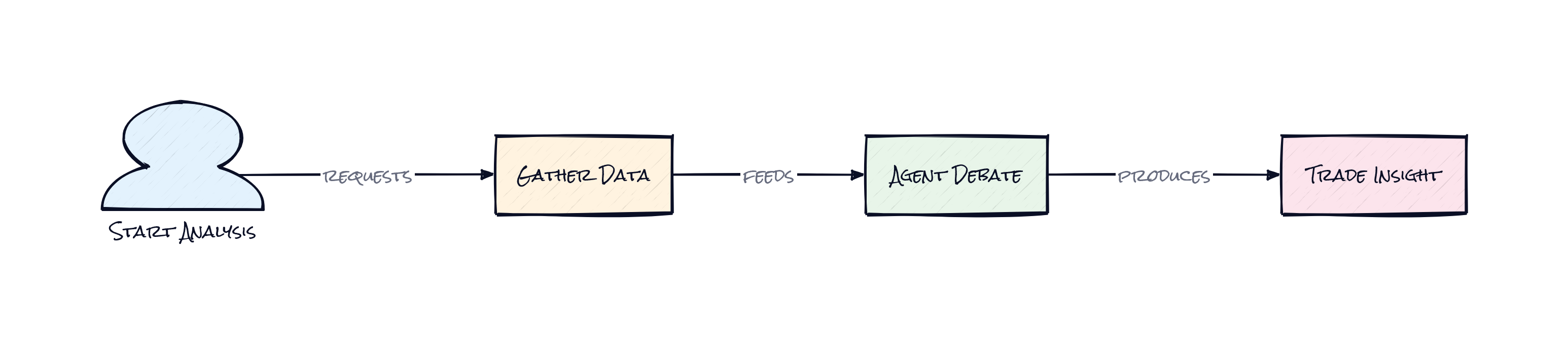
Anyone who has tried AI for investing has seen the same failure mode. A model sounds polished, cites a few indicators, maybe references recent news, then jumps straight to a confident buy or sell call with almost no visible reasoning discipline. The problem is not raw intelligence. The problem is role collapse. One model is being asked to gather evidence, weigh conflicting signals, manage risk, and produce a portfolio action in a single pass.
Trading Agents is built around that gap. Markets are messy because signals conflict by default. Fundamentals can look strong while sentiment is turning, news can whipsaw a stock while technicals stay intact, and risk tolerance changes the right answer even when the facts are identical. A generic chatbot tends to flatten those tensions into a neat paragraph.
TauricResearch turns that frustration into a workflow that looks more like an investment shop than a chat box. Separate analyst roles, bull and bear researchers, a trader, and a portfolio manager all get distinct jobs. The point is not realism for its own sake. The point is forcing disagreement to surface before capital gets allocated, even in a simulated environment.
The Stack: LangGraph With a Trading Desk Skin
Under the hood, LangGraph orchestrates the agent workflow, checkpoints, and state transitions, while Python handles the overall framework, data flows, and CLI experience. Market data comes from sources like yfinance and Alpha Vantage, and model access spans OpenAI, Anthropic, Google, xAI, DeepSeek, Qwen, GLM, OpenRouter, Azure, and local Ollama setups.
The Sauce: Debate as an Architectural Primitive
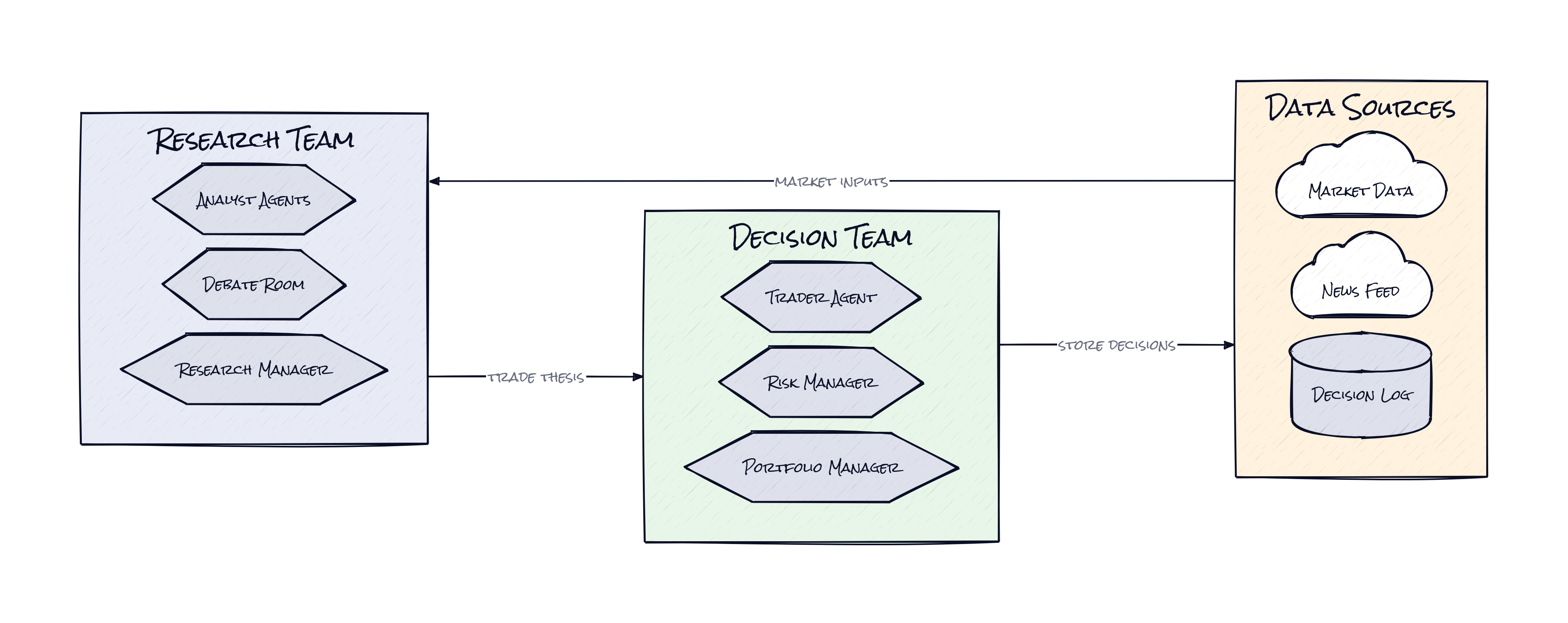
Instead of treating collaboration as a prompt trick, Trading Agents encodes an actual decision chain. The key move is structured-output agents, where roles like the Research Manager, Trader, and Portfolio Manager are expected to produce typed, bounded decisions rather than sprawling prose. That matters more than it sounds. Once outputs become structured objects instead of vibes in paragraph form, downstream agents can reason over prior work with less ambiguity and fewer prompt-level misunderstandings.
Another smart layer is the repo’s checkpoint resume system. Multi-step market analysis is expensive, brittle, and full of external dependencies, e.g. model providers, news fetches, or indicator pulls. Persisting progress means the workflow behaves more like a business process than a chatbot session. That makes long-running analysis practical, and it creates a path toward auditability.
Then there’s the persistent decision log, which is quietly the most important piece. Financial tooling lives or dies on traceability. A recommendation without a rationale trail is entertainment. A recommendation with role-specific reports, explicit ratings, and preserved decision states starts looking like infrastructure. The graph is not just coordinating agents, it is producing a replayable record of how evidence became action.
That design choice is clever because the interesting part is not “many agents talk to each other.” Plenty of demos can fake that. The interesting part is turning debate into a constrained pipeline where each role narrows uncertainty before the next one acts. Think less group chat, more investment memo assembly line.
The Move: From Demo Candy to Research Edge
Plenty of people will open Trading Agents to test whether AI can pick stocks. That is the least interesting use case. The stronger angle is using the framework as a decision lab for any workflow where competing signals need to be surfaced and documented before a call gets made.
A solo investor could run repeatable analyses on a watchlist and compare how different model providers or analyst selections change the conclusion. A startup building fintech products could wrap the engine into an internal research console, then give analysts a way to inspect where bullish and bearish arguments diverged. A quant-curious product team could use the saved reports as training data for what “good investment reasoning” should look like across volatile news cycles.
Because Trading Agents exposes each stage of the process, the repo is useful even when the final trade signal is wrong. That sounds counterintuitive, but it is the whole strategic advantage. Wrong answers with visible reasoning are easier to debug, benchmark, and improve. Black-box conviction is not. For anyone building AI products in finance, wealth tech, or market intelligence, that difference compounds fast.
The Aura: Trust Starts Needing a Paper Trail
Confidence alone is getting cheaper. A model can sound sure about anything, and users already know that. What changes behavior is the expectation that a machine-generated decision should come with visible dissent, intermediate reasoning, and a record of who said what before the final call.
Trading Agents leans into that instinct. People do not just want answers, they want procedural trust. In finance, that is obvious, but the same expectation is spreading everywhere decisions carry cost. The broader thesis seems simple: AI stops feeling competent when it speaks smoothly, and starts feeling competent when it can show its work under pressure.
The Play: Open Source Workflow, Premium Wrapper Potential
This looks less like a pure 0-to-1 category creation and more like a sharp wedge into the massive TAM around retail investing, advisor tooling, research automation, and institutional decision support. The repo’s star velocity is a real PMF signal, 53,000-plus stars in a short window is not normal, and the community surface area, Discord, multilingual docs, active releases, suggests more than curiosity. The moat is not deep data or network effects yet. It is execution speed, workflow design, and the chance to become the default open architecture that commercial products build on top of. Sticky behavior change comes if users start expecting every AI recommendation to include role-based debate and an audit trail.
Winners:
Rogo: Research workflow standardization gets easier because open-source agent orchestration trains users to expect modular analysis, which lowers adoption friction for higher-end financial copilots.
Alpaca: API-driven brokerage usage can compound if more builders create AI-native trading and simulation layers that need execution rails underneath.
Robinhood: Retail engagement deepens when explainable AI research becomes part of the investing surface, increasing session frequency and potential LTV without pure CAC-heavy education content.
Losers:
Composer: No-code investing automation gets pressured if users start demanding transparent multi-role reasoning instead of strategy blocks that feel opaque once markets turn messy.
AlphaSense: Premium research platforms risk margin pressure when open-source systems package news, sentiment, and synthesis into workflows that are “good enough” for a big chunk of users.
Bloomberg: Terminal-style information dominance erodes at the edges if decision support shifts from owning data screens to owning the reasoning layer built on top of commodity data and model APIs.
tl;dr
Trading Agents turns stock analysis into a multi-role AI workflow, with analysts, debaters, a trader, and a portfolio manager producing structured decisions instead of one-shot chatbot opinions. The clever part is the audit-friendly graph architecture, not the finance cosplay. Worth a look for fintech builders, serious retail investors, and anyone tracking where agent systems become operational software.
Stars: 53,519 | Language: Python
