

The Push: April 16th, 2026
Smarter agents, durable coding workflows, and file detection that actually knows when it’s guessing


Generic Agent: Agents Should Grow Skills
github.com/lsdefine/GenericAgent | License: MIT

An AI agent that can book food delivery, read messages, poke around your browser, and control your desktop sounds flashy. Honestly, flashy is not the interesting part. The interesting part is what happens on the second run, when the system no longer has to rediscover the same workflow, reinstall the same package, or reason through the same UI. Generic Agent is built around that loop. Give it a vague task once, let it fumble productively, and the result becomes a reusable capability instead of a forgotten transcript.
The Drop: The First Time Tax Is Brutal
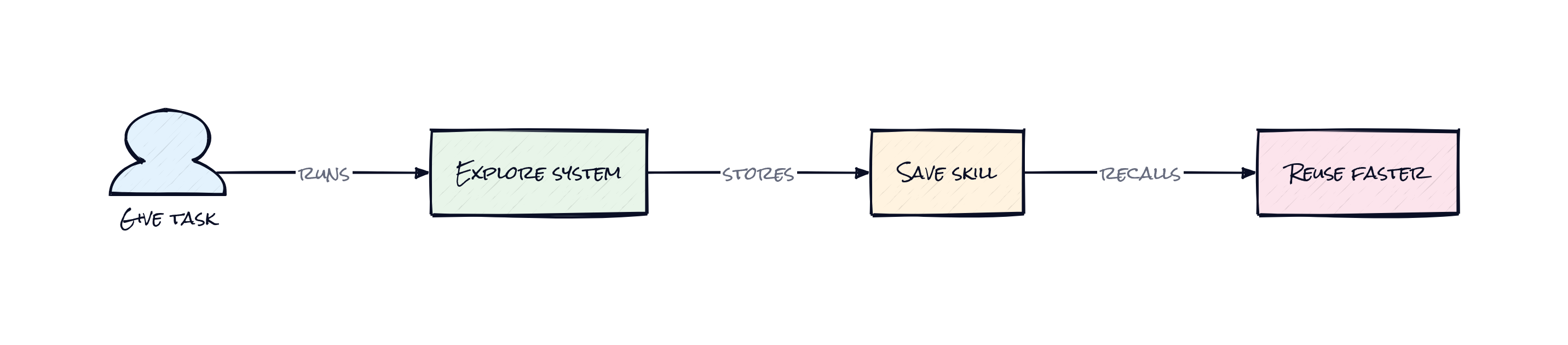
Every general-purpose agent has the same annoying habit: it burns money and context rediscovering work it already did yesterday. Ask for a stock screen, an inbox sweep, or a file export, and the model has to replan the whole thing from scratch, dragging a giant prompt window behind it like carry-on luggage. That gets expensive fast, and it also makes these systems feel strangely stateless, even when they claim to automate your computer.
Generic Agent comes from that frustration. The repo’s pitch is not “here are more tools” or “here is a bigger framework.” The pitch is that a thin Agent Loop paired with a small set of atomic actions should be enough to solve a new task once, then save the successful execution path as a durable skill. That matters because browser control and desktop automation are messy in the real world. Logins persist, pages change, dependencies break, and one-off scripts pile up. A framework that treats each solved task as something worth crystallizing starts to look less like another agent demo and more like compounding infrastructure.
The Stack: Small Core, Wide Reach
Under the hood, Generic Agent is mostly Python, with a lightweight UI layer via Streamlit and desktop wrappers like PyWebView and Qt. Browser control runs through a custom TMWebDriver bridge, while model access spans Claude, Gemini, MiniMax, and others through a shared session layer.
The Sauce: Memory as a Skill Factory
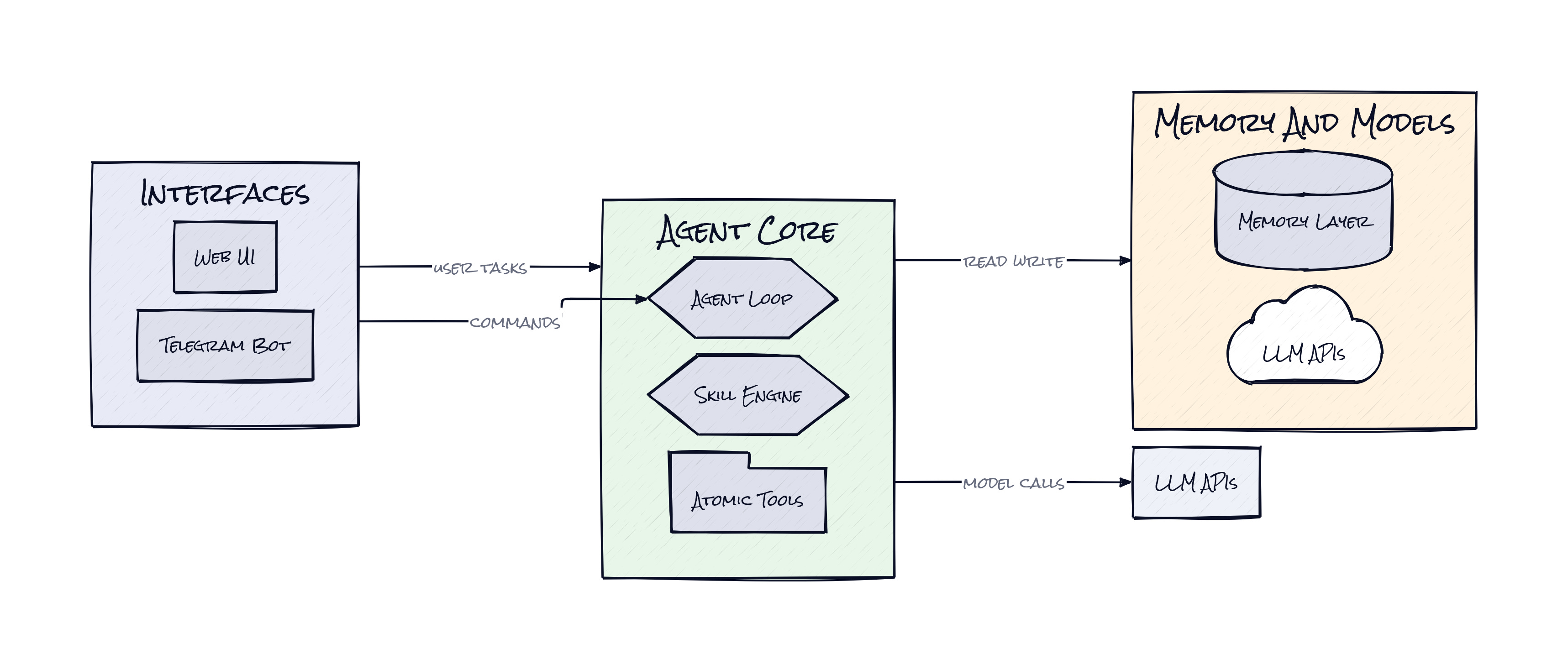
Buried inside the repo is the architectural bet that makes Generic Agent worth paying attention to: Layered Memory is not just a notes system, it is the routing layer for future action. The project splits memory into levels, from L0 Meta Rules and L1 Insight Index up through L3 Task Skills and L4 Session Archive. That sounds tidy on paper, but the clever part is how each layer has a different job in keeping token use low while preserving useful behavior.
Instead of stuffing long transcripts back into the prompt, Generic Agent distills what happened into compact operational knowledge. The first time the model completes a task, it can install dependencies, write helper scripts, manipulate the browser, and debug its own path using a tiny toolset. Then the framework stores the successful pattern as a reusable skill, effectively turning exploratory reasoning into a callable shortcut. That is why the repo claims dramatically lower context usage than many agent systems. The model is not carrying yesterday’s full conversation, it is carrying a compressed map of what worked.
Another smart choice: 9 Atomic Tools are intentionally broad, not specialized. With code execution, file access, browser scanning, browser action, and memory update primitives, Generic Agent can create temporary capabilities on the fly and then promote them into permanent ones. That resembles plugin creation, but done by the agent itself during task execution. Think Notion templates, except the template writes itself after surviving the first messy run.
The Move: Build a Personal Ops Layer
Plenty of agent repos are fun to watch and hard to operationalize. Generic Agent seems more useful when treated as a persistent operator for repetitive digital chores that already cost real attention. A founder could turn recurring browser workflows into saved capabilities, e.g. lead research, CRM updates, expense checks, or marketplace monitoring. A PM could use the same setup to watch competitor pricing, scrape release notes, and summarize specific dashboards on a schedule.
Because the browser session is real, not a sterile sandbox, Generic Agent can act inside products where your existing logins matter. That changes the equation. Instead of waiting for every SaaS tool to expose perfect APIs, teams can automate the last mile themselves and keep the learned workflow. Over time, the skill tree becomes a proprietary operational asset, even if the underlying model changes.
That is the strategic angle. The repo is not just a cheaper agent runtime, it is a way to convert repeated human-computer interactions into reusable internal infrastructure. If that works reliably enough, the value compounds in saved tokens, yes, but more importantly in saved rediscovery.
The Aura: Software That Learns Your Weirdness
Repeated tasks usually get trapped in one of two places: inside a person’s head or inside brittle documentation nobody updates. Generic Agent suggests a third option, where habits become executable memory. That sounds subtle, but it changes what people may start expecting from software. Not generic personalization, but systems that accumulate your odd workflows, local tools, login states, and preferences over time.
Human behavior shifts when the machine stops acting like every request is the first date. The emotional effect is trust through familiarity. Not perfect trust, obviously, because desktop control raises real risk. Still, the idea of software that grows around your actual routines, instead of forcing everything through vendor-defined integrations, feels like a deeper unlock than another chat box with tools.
The Play: A Memory Moat, if Reliability Holds
From a VC lens, Generic Agent looks less like a pure 0-to-1 category creation and more like a sharp wedge into the crowded agent infrastructure market. The wedge is strong because the repo targets a real pain point, token-heavy statelessness, with an opinionated architecture that compounds over time. TAM is broad, spanning prosumer automation, SMB ops, and eventually enterprise workflow tooling, but PMF still depends on whether skill reuse stays reliable across messy environments.
Open source signals are promising, though early. 2,606 stars on a young repo, concrete demos, autonomous dogfooding claims, and community activity suggest curiosity is turning into experimentation. The moat probably is not raw code. The moat is execution speed now, then user-specific memory, switching costs, and maybe a network effect if shared skill libraries become standard.
Winners:
Zapier: Distribution expands if agent-built skills become another automation layer businesses want to trigger, monitor, and monetize.
Duolingo: Personalized tutor workflows get cheaper when agents can remember recurring learning patterns and operate across tools, not just inside one app.
Browserbase: Demand rises for reliable browser infrastructure when more autonomous systems need persistent sessions and real-world web control.
Losers:
UiPath: High-friction enterprise automation loses some edge when lighter agent systems can learn workflows incrementally without heavy setup.
Intercom: Repetitive support operations get easier to internalize when companies can grow their own task memory instead of buying more workflow seats.
Replit: General “AI does your task from scratch” narratives weaken if users start preferring systems that accumulate reusable behaviors over time.
tl;dr
Generic Agent turns one-off agent work into a growing library of reusable skills. What makes it interesting is the layered memory architecture, which stores compact operational knowledge instead of hauling giant transcripts back into context. Worth a look for anyone tracking AI agents, browser automation, or software that gets better through repeated use.
Stars: 2,606 | Language: Python
