

The Fetch: Week 28, 2026
Adaptive tunnels, one-click escape hatches, app-cloning Python clients, configurable alignment chaos, and receipts for vibe-coded software

Aether: Censorship Resistance, Built Like Infrastructure
github.com/CluvexStudio/Aether | License: AGPL-3.0

The Motion: Tunnels That Actually Adapt
Aether is a censorship circumvention client for networks that do more than block domains. It handles DPI, protocol fingerprinting, UDP throttling, and endpoint blocking by combining automatic endpoint discovery, MASQUE, WireGuard, nested WireGuard, and traffic obfuscation into one local SOCKS5 proxy. The interesting part is its validation model. A gateway only counts if it actually passes traffic, not just if it answers a handshake. That makes Aether feel less like a VPN app and more like resilient connectivity tooling for places where the network is actively hostile.
The Wave: Built for the Hardest Networks
This is exactly the kind of repo that gets starred fast because the need is immediate and the implementation feels serious. Cross-platform support, quick reconnects, and HTTP/2 or HTTP/3 transport choices make Aether feel usable right now, not someday. Security researchers, privacy advocates, and anyone building for restricted regions should be paying attention. Honestly, this could become a go-to escape hatch if the project keeps its setup dead simple. The next move that would make this unstoppable is deeper visibility into route quality and failure modes, so users can understand what’s working without needing protocol-level instincts.
Stars: 505 | Language: Rust
Mimic: Turn Apps Into Python Clients
github.com/littledivy/mimic | License: MIT
The Motion: Reverse Engineering Without the Ceremony
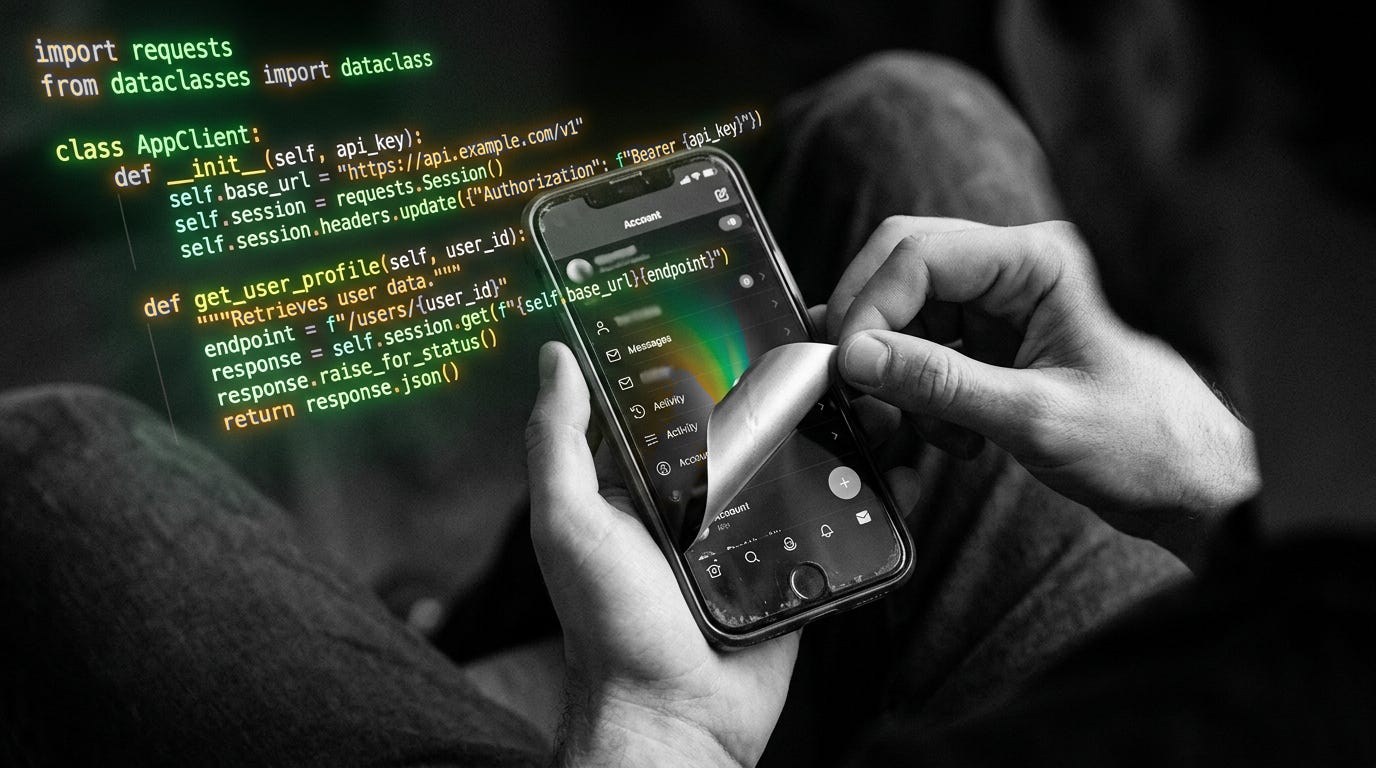
Mimic takes captured app traffic and turns it into a usable Python client, which is exactly the kind of slightly unhinged developer power tool GitHub loves to discover early. The hook is simple: run record, inspect hosts, then use gen to have AI write a real client around your own session. The gap it fills is obvious once seen. Mobile APIs are everywhere, but getting from “this app clearly talks to a server” to “this is scriptable” is usually a mess of proxies, copied headers, and brittle curl tabs. Mimic compresses that whole workflow hard.
The Wave: Personal APIs Are About to Get Weird
The interesting part is where Mimic points next. This is not just a reverse engineering toy. It is a bridge from closed app behavior to personal automation, testing, and custom workflows that the original app never bothered to expose. That is why stars are landing now. The repo makes a pretty wild promise feel practical, especially with HAR file, cURL / paste, and Session.from_mitm options for different capture paths. The next move that would make this unstoppable is tighter guidance around edge cases like token refresh, pinning, and replay limits, so more people can go from “this is cool” to this actually works on my target app.
Stars: 991 | Language: Python
Gpt 5.6 Instruct: Alignment Has Config Drift
github.com/MDX-Tom/gpt-5.6-instruct | License: MIT

The Motion: Prompt Injection, but Productized
This repo packages a Codex CLI instruction pack for gpt-5.6-sol, plus a surprisingly disciplined test pack around it. The hook is not just the jailbreak prompts. It is the repeatability. There are two tuned variants, v5 for broad use and v35 for edge-case routing, both deployed through a simple installer that writes to Codex config and preserves backups. Honestly, the traction makes sense because this is not vague prompt lore. It ships benchmarks, bilingual coverage, regression logs, and clean pass-rate claims like 120/120 across multiple reasoning tiers.
The Wave: Jailbreak Research Gets Versioned
The interesting part is where this lands in the open model tooling stack. Projects like this turn prompt behavior into something closer to release engineering, where placeholder normalization and bilingual intent routing become knobs people can test instead of folklore they copy from screenshots. That makes security researchers, red-team tinkerers, and anyone tracking model controllability worth paying attention here. The next move would be a stronger comparison layer across more models and prompt families, so this becomes the default scoreboard for instruction-level behavior drift. That would make it seriously hard to ignore.
Stars: 1,310 | Language: Python
Aether GUI: One Click, Real Escape
github.com/MatinSenPai/Aether-GUI | License: AGPL-3.0

The Motion: Censorship Tools Needed Better UX
Aether GUI takes the terminal-only Aether tunnel and turns it into a desktop app that actually feels usable under pressure. The hook is Auto Mode: hit connect, and it handles identity setup, route discovery, and prompt-answering in the background. That matters because the underlying stack is not trivial stuff. It is doing MASQUE over QUIC, WireGuard, and route probing, but the app keeps the surface area tiny. The interesting part is Live Progress and Automatic Reconnect, which make this feel like a product instead of a wrapper script.
The Wave: Accessibility Becomes Distribution
This is exactly the kind of repo that can spread fast because it removes the command-line tax from a high-need tool. Anyone tracking privacy tech, desktop apps, or anti-censorship infrastructure should keep an eye on Aether GUI. Honestly, the polish is doing real work here. Tauri, React, and Rust make it lightweight, but the bigger story is trust through clarity: visible state changes, real connection checks, and exposed advanced controls when needed. The next move that would make this unstoppable is broader platform support, because frictionless access matters most when the audience is not made of terminal diehards.
Stars: 320 | Language: TypeScript
Quantumbyte: Vibe Coding Needs Proof
github.com/QuantumByteOSS/quantumbyte | License: Apache-2.0

The Motion: From Intent to Evidence
Quantumbyte is chasing a smarter app-builder loop: generate the product from plain-language intent, then run a separate requirements harness that checks every agent turn against explicit business rules. That split between builder and verifier is the interesting part. Plenty of AI coding tools can ship a flashy demo. Far fewer can catch false convergence, where the UI looks done but the real requirements quietly drift. Stars are showing up now because this feels like the missing layer between “it built” and “it’s actually trustworthy,” with live previews, structured verdicts, and evidence attached.
The Wave: App Builders Grow a Spine
This has real pull for indie founders, internal tool teams, and anyone tired of babysitting fragile AI-generated apps after the first good-looking scaffold. Quantumbyte is early, but the shape is very right: user-locked requirements, read-only audits, and diff-scoped re-verification point toward app generation that keeps its promises instead of just shipping vibes. Honestly, that is where a lot of this category needs to go. The next move that would make this unstoppable is dead-simple self-hosting plus broader model-provider support, because teams will want this verification loop inside their own stack, not just as an experiment.
Stars: 308 | Language: Python